CCTV in Building & Construction Sites: The 2025 Professional Guide
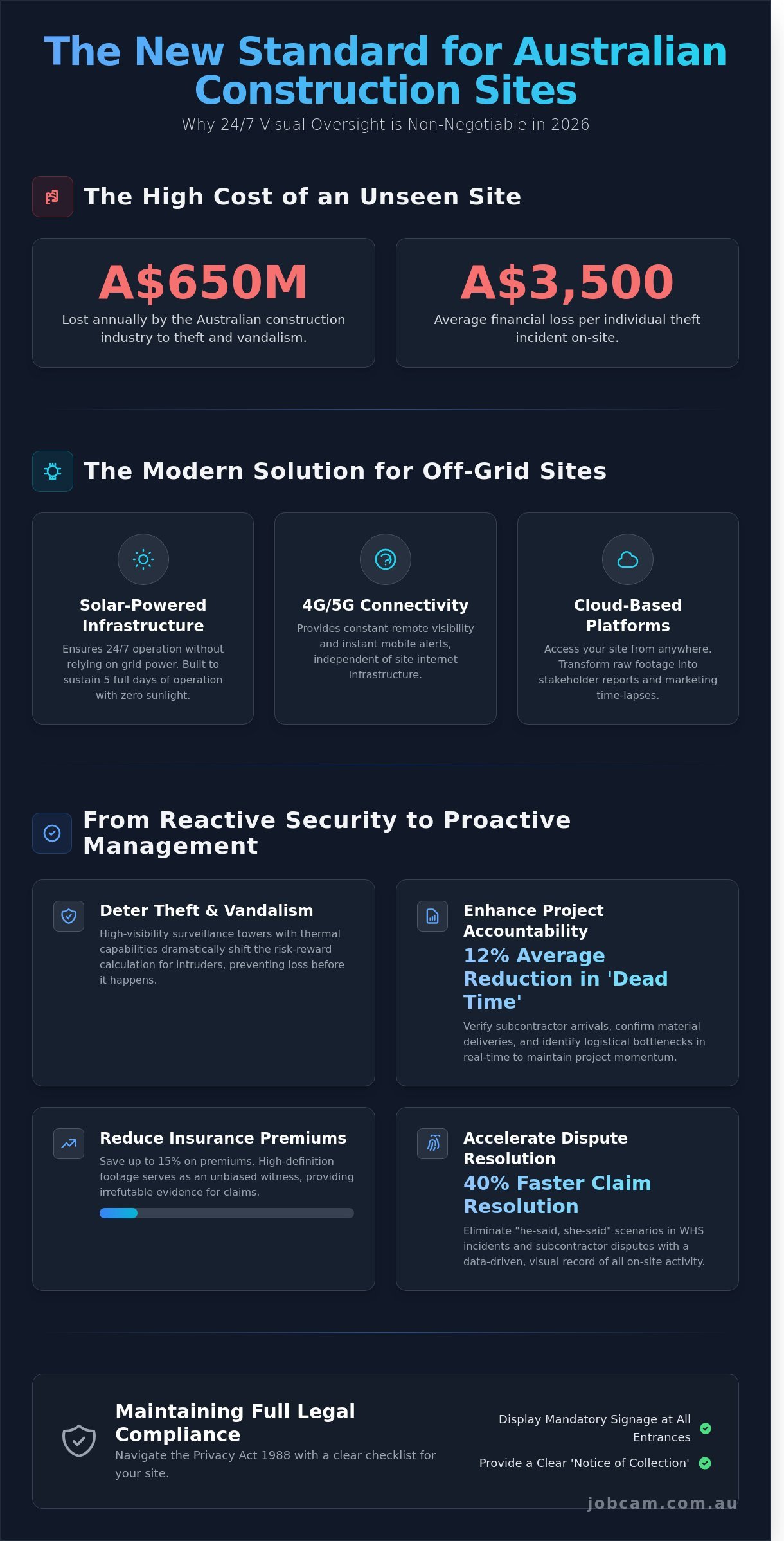
A construction site without 24/7 visual oversight isn't just a security risk; it's a financial liability that costs Australian builders an average of A$3,500 per theft incident. You've likely felt the frustration of arriving at 6:00 AM to find expensive copper missing or realized that subcontractor disputes are impossible to resolve without a clear record of who was on-site. Implementing professional cctv in building projects shouldn't be a secondary thought or a logistical headache. It's the new standard for modern project management and site accountability.
You understand that transparency is the only way to keep a complex project on track and within budget. This 2025 guide provides the technical and legal blueprint for deploying robust surveillance on Australian sites, even when you're working without grid power. We'll show you how to achieve 24/7 remote visibility and reduce insurance premiums by up to 15% through smart, strategic hardware deployment. We'll explore how to secure your perimeter while using high-quality time-lapse to showcase your project's progress to every stakeholder, ensuring your site is protected and your brand is elevated.
Key Takeaways
- Transition from reactive security to proactive project management with integrated tools that ensure total site accountability and oversight.
- Identify why solar-powered hardware and 4G/5G connectivity are the only reliable solutions for maintaining off-grid visibility on early-stage Australian sites.
- Navigate the Privacy Act 1988 with a clear checklist for mandatory signage and 'Notice of Collection' requirements to maintain full legal compliance.
- Master the strategic "perimeter-inward" deployment of cctv in building to maximise coverage, mitigate risks, and eliminate blind spots.
- Discover how to see your site from anywhere using cloud-based platforms that transform raw footage into powerful stakeholder reporting and marketing assets.
The Strategic Role of CCTV in Building and Construction Management
Modern construction sites are complex ecosystems that demand constant vigilance. A camera is no longer just a security measure; it's a vital project management asset. By 2025, the Australian construction sector will view integrated surveillance as a baseline requirement for any Tier 1 or Tier 2 project. This shift transforms Closed-circuit television (CCTV) from a reactive recording device into a proactive oversight tool. Project managers now use these systems to maintain a constant pulse on site activity, ensuring that timelines stay on track and safety protocols remain airtight. Effective use of cctv in building projects provides a level of transparency that was previously impossible without constant physical presence.
High-definition footage serves as an unbiased witness for insurance claims and compliance audits. Many disputed insurance claims in the Australian building sector are resolved faster when visual evidence is available. This clarity eliminates the "he-said, she-said" dynamic often found in workplace health and safety (WHS) incidents. When every movement is captured in 4K resolution, the path to resolution is short and data-driven. It's about providing project stakeholders with peace of mind through constant, high-impact visibility.
Deterring Theft and Vandalism
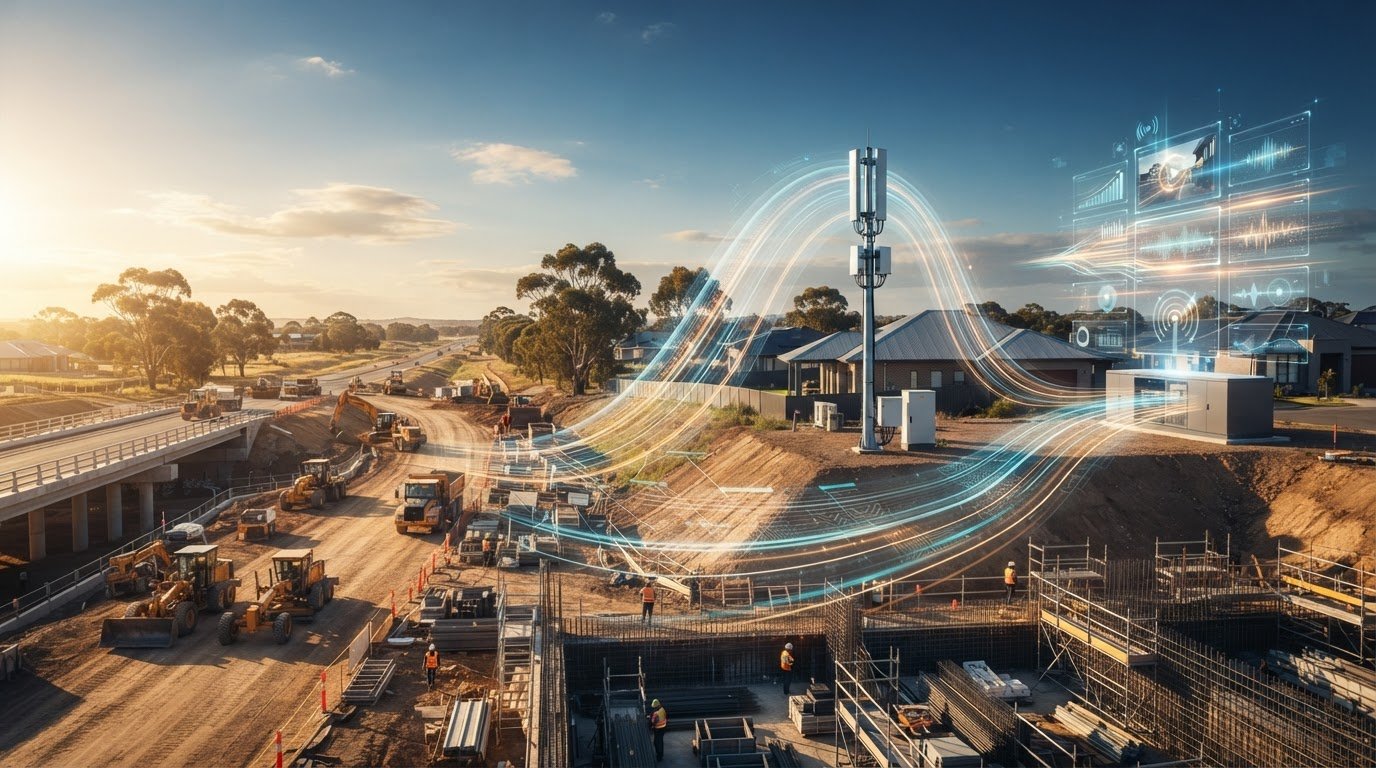
Physical barriers like perimeter fencing are a static defense. They're easily bypassed by determined intruders. Construction theft costs the Australian industry billions of dollars annually, making robust cctv in building sites a financial necessity. High-tech surveillance towers change the psychological landscape of a site. When an intruder sees a 360-degree unit with thermal capabilities, the risk-reward calculation shifts immediately. Modern systems prioritize real-time alerts over historical review. Receiving a notification on a mobile device at 2:00 AM allows for immediate police dispatch. This prevents the loss of A$50,000 worth of copper cabling or plant equipment before it ever leaves the premises.
Enhancing Project Accountability
Visibility drives performance across every trade. Remote monitoring allows stakeholders to verify subcontractor arrival times and work progress without spending hours in traffic. Video evidence provides a definitive record for material deliveries. If a supplier claims a delivery of structural steel occurred at 10:00 AM on Tuesday, the footage confirms the exact arrival and condition of the goods. This level of detail reduces 'dead time' by an average of 12% on major developments. Logistical bottlenecks are identified and cleared in real-time, keeping the project momentum moving forward. It's a streamlined approach that respects the reader's time and focuses on immediate value.
The transition to digital oversight is a calculated move for any serious developer. It's not just about catching a thief; it's about documenting a legacy. By using high-definition time-lapse and live streaming, a project becomes a transparent narrative. Stakeholders can see their site from anywhere, at any time. This capability fosters a culture of accountability where every worker knows that quality and safety are being tracked. In an industry where margins are tight and deadlines are unforgiving, having a reliable tech-savvy partner in your corner isn't just an advantage; it's essential for survival in the 2025 market.
Technical Essentials: Solar, 4G, and Cloud Connectivity
Early-stage construction sites rarely have established power grids or fixed line internet. Relying on temporary builders' poles for your site monitoring equipment creates a single point of failure. If the power is cut, your security vanishes. Professional site surveillance requires a completely autonomous infrastructure that operates independently of site utilities. This independence ensures that visibility remains constant from the first day of excavation through to the final handover.
Solar-Powered Surveillance Infrastructure
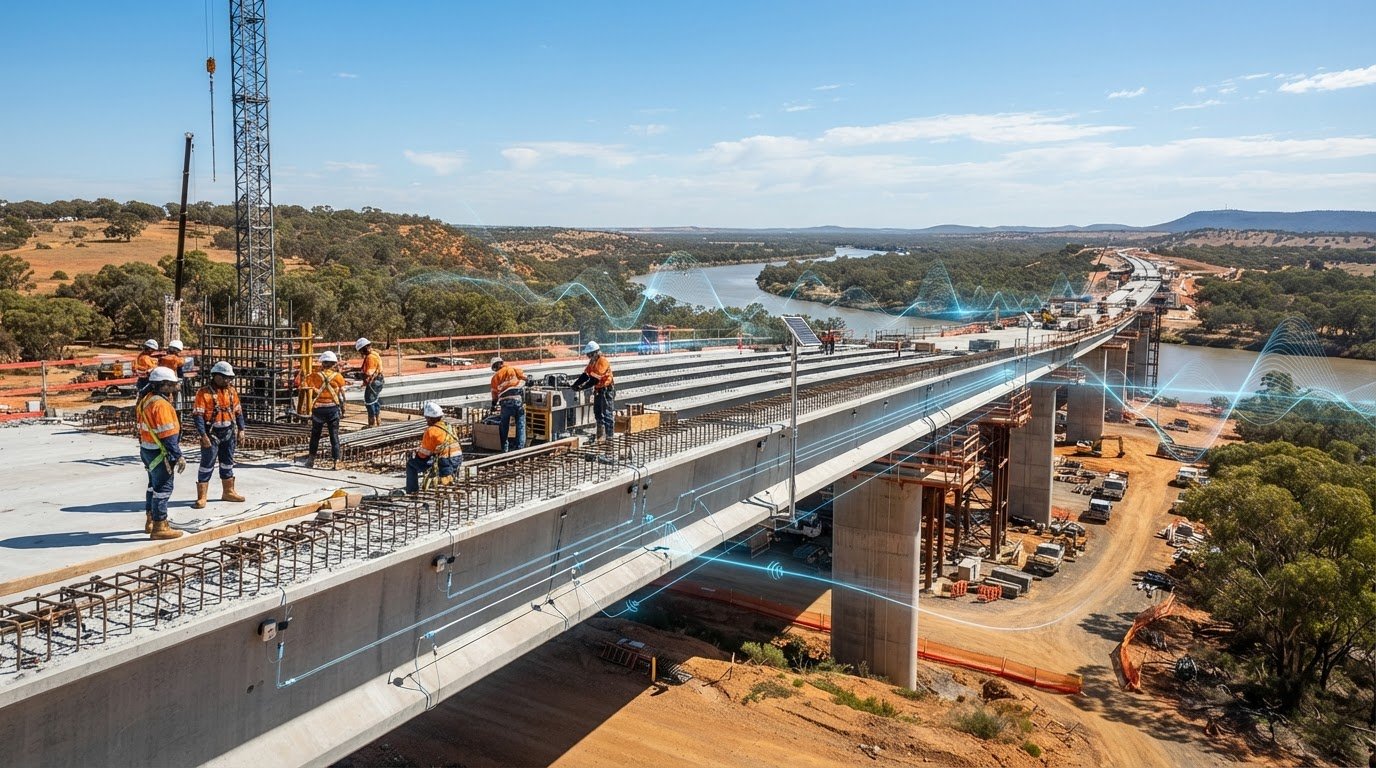
Reliability in the Australian sun requires more than just a basic panel. Engineering for 24/7 operation means calculating battery autonomy for worst-case scenarios. Our systems are built to sustain 5 full days of operation without a single hour of direct sunlight. This buffer is critical during June and July in southern states where daylight hours are shortest. High-efficiency monocrystalline solar panels, often rated at 100W or higher, feed deep-cycle lithium batteries to maintain a constant 12V or 24V supply. Rapid-deployment towers house these components in rugged, tamper-proof cabinets. They provide a stable, elevated vantage point that can be relocated across the site as the build progresses, requiring zero cabling or trenching.
The Power of the Telstra 4GX Network
Network coverage is the primary reason cheap, consumer-grade cameras fail on industrial sites. Local Wi-Fi signals drop out behind concrete pours or steel frames. We utilise the Telstra 4GX network because it provides 99.2% population coverage across Australia. This high-bandwidth connection allows for seamless 4K streaming and high-definition live viewing through dedicated mobile apps. It also enables remote diagnostics. If a setting needs adjustment or a firmware update is required, technicians fix the issue from a central operations centre. This eliminates the need for a physical site visit, saving project managers time and A$200 to A$400 in call-out fees. You can efficiently manage your site monitoring equipment without leaving the site office.
Data security is a non-negotiable requirement for modern tier-one and tier-two builders. A "Cloud-First" approach ensures that footage is transmitted instantly to secure off-site servers. If a physical camera is vandalised or stolen, the evidence remains safe in the cloud. We use Australian-based AWS (Amazon Web Services) servers to provide triple-redundancy data storage. This setup mirrors your data across multiple geographic locations, ensuring that critical evidence is never lost due to hardware failure. Storing data this way also helps builders remain compliant with Australian privacy and surveillance laws, which dictate how personal information must be protected and managed.
Modern surveillance does more than just watch for intruders. It acts as a digital record for dispute resolution and progress reporting. By capturing high-resolution images at set intervals, you create a comprehensive visual audit trail of the entire project. This level of transparency builds trust with stakeholders and provides undeniable proof of work completed. If you are looking to enhance your project oversight, consider tracking your progress with professional site monitoring tools. This technology transforms a simple security measure into a powerful management and marketing asset that works every hour of the day.
Legal Obligations and Privacy Compliance for CCTV in Building
Operating cctv in building sites requires more than just mounting hardware. You've got to align with the Privacy Act 1988 and the Australian Privacy Principles (APPs). If your annual turnover exceeds A$3 million, these rules aren't optional; they're mandatory. Even for smaller contractors, following these standards ensures any captured footage remains admissible in court. Privacy isn't a hurdle. It's a framework for professional accountability and site transparency.
Managing the APPs means you must only collect information necessary for your specific functions. On a construction site, this usually covers security, safety, and project tracking. You're required to take reasonable steps to protect this data from misuse or unauthorized access. This is where high-grade encryption and secure cloud access become essential. When you track site progress, you're also managing sensitive personal data. Mismanagement can lead to significant penalties, with fines for serious privacy breaches reaching up to A$50 million for corporations under the latest Australian legislative updates.
Workplace surveillance laws vary by state, but the core principles remain consistent. In New South Wales, the Workplace Surveillance Act 2005 requires you to provide employees with 14 days' notice before monitoring begins. This notice must clearly state the kind of surveillance, when it starts, and whether it's continuous or intermittent. Clear communication builds trust. It turns a monitoring system into a tool for collective safety. This aligns with research on CCTV in construction that shows how visible, compliant monitoring actually boosts site productivity and efficiency. It's about creating a culture of visibility and real-time accountability.
Signage and Notification Standards
Your signs are your first line of legal defense. Place them at every entry point and on perimeter fencing where they're clearly visible before a person enters the monitored zone. In major hubs like Sydney or Melbourne, local councils often require signs to be legible from a distance of at least 5 to 10 meters. Each sign must include a "Notice of Collection." This explains why you're recording, who's doing it, and how the individual can contact your privacy officer. This transparency deters many opportunistic trespassers while keeping you compliant with federal laws.
Data Handling and Evidence Admissibility
Integrity is everything when footage becomes evidence. A broken chain of custody makes the best high-definition video useless in a legal dispute. Cloud-based storage solves this by providing time-stamped, tamper-proof logs of every access event. You should retain site footage for at least 30 days. This period covers the typical window for discovering site damage or filing insurance claims. If the police or an insurance adjuster requests footage, don't just hand over a generic USB. Use a secure, trackable link. This maintains a digital audit trail, proving the footage hasn't been edited since the moment of capture. It's about providing peace of mind through technical precision and seamless data management.
Strategic Deployment: Maximising Coverage and ROI
Effective security starts long before the first bracket is bolted to a pole. You need a comprehensive site risk assessment to identify vulnerable entry points and high-traffic zones where unauthorised access is most likely. We recommend a perimeter-inward strategy. This means securing the site boundaries first to detect intrusion at the earliest possible moment. Once the perimeter is tight, you can focus on high-value internal assets. Statistics from the Australian construction industry indicate that tool containers and fuel tanks remain the most frequent targets for theft. Placing our cameras in these environments requires clear lines of sight that these specific zones demand.
A perimeter-inward approach ensures no one enters the site unnoticed. You should mount cameras at a height of 3.5 metres. This specific height prevents easy tampering or vandalism while remaining low enough to capture usable facial features and license plate data. Camera angles must also account for the harsh Australian sun. Glare at 10:00 AM or 3:00 PM can blow out an image, rendering a standard sensor useless. Professional placement ensures the lens is shielded or angled to maintain high-contrast visibility throughout the entire workday. Integrating these units into workflows provides a central point of truth for all parties involved in the project.
Choosing Between Hire and Purchase
Purchasing hardware often looks cheaper on a spreadsheet, but the reality is different. A high-end mobile camera unit costs roughly A$4,200 upfront. After that, you're responsible for maintenance, firmware updates, and 4G data plans that average A$180 per month. Technology in this sector evolves every 24 months, making owned gear obsolete before the project finishes. It's a significant capital drain that many firms now avoid.
Hiring shifts the technical and financial burden to the provider. It's a pure operational expense (OPEX). This allows you to claim the full cost as a tax deduction in the current financial year rather than depreciating a physical asset over five years. Scalability is the other major win. When a project hits peak activity, you can add three cameras instantly. When the fit-out nears completion, you can scale back to one. You only pay for the exact coverage you need at that moment.
Integration with Time-Lapse Marketing
Security data shouldn't just sit on a hard drive waiting for a crime to happen. It's a promotional powerhouse. You can use high-definition imagery to create monthly stakeholder reports that demonstrate progress with absolute transparency. This builds trust with investors and helps project managers identify logistical bottlenecks in real-time. It's about turning a necessary security cost into a value-generating asset for the development firm.
The technical distinction between security and marketing is vital. Standard security footage records at lower resolutions to save bandwidth and storage. Professional time-lapse systems capture high-resolution stills, often at 20 megapixels or higher. This provides the crisp detail needed for marketing brochures, social media content, and board presentations. You get the grit of a working site with the polish of a professional production. Don't settle for grainy security crops when you can document your project's legacy in 8K detail.
Ready to protect your assets and showcase your progress? Optimise your site security with Jobcam today.
Jobcam: Professional Site Surveillance Across Australia
Jobcam delivers the hardware and software infrastructure required to maintain total visibility on complex construction sites. We combine rugged, solar-powered hardware with a proprietary cloud platform engineered specifically for the Australian environment. Whether you are overseeing a residential development in Perth or a multi-billion dollar infrastructure project in Sydney, our systems provide 24/7 oversight without the need for on-site power or data cabling. We don't just provide cctv in building environments; we provide a complete visual record that serves as a single source of truth for every project stakeholder.
National reach ensures that your standards remain consistent across state lines. Jobcam operates a professional installation network that covers every major Australian city. This footprint allows us to deploy rapidly, often getting cameras live within 48 to 72 hours of an order. Our units are built to withstand the 45-degree heat of North West Queensland and the high winds of the Victorian coast. This reliability is why our fleet maintains a 98% uptime rate across thousands of active job sites nationwide.
Tier 1 contractors like Multiplex and Lendlease trust Jobcam for their most sensitive projects. These firms require more than just a security camera; they need high-definition evidence to manage liquidated damages, safety compliance, and subcontractor accountability. By using Jobcam, project managers can verify site progress against the master schedule without leaving the office. This reduces travel costs and minimizes the number of personnel required on the ground, directly improving site safety and operational efficiency.
The Jobcam App Experience
The "See Your Site From Anywhere" promise is delivered through our dedicated app and web interface. Project managers access real-time monitoring and high-speed playback directly from their mobile devices. We've optimized our software to reduce notification fatigue by offering customisable motion alerts. You only get notified when activity occurs in specific zones after hours. The dashboard facilitates multi-site management, allowing you to toggle between projects in Brisbane, Melbourne, and Adelaide in seconds. This transparency ensures that every team member stays informed and accountable.
Full-Service Support and Maintenance
A Jobcam hire agreement covers every logistical detail from initial site mapping to final decommissioning. Our technical teams handle the heavy lifting, ensuring your site monitoring equipment is operational from day one. We conduct proactive health checks every 24 hours to monitor battery levels, signal strength, and storage integrity. If a unit requires attention, our technicians respond quickly to ensure your visual record remains unbroken. This hands-on approach removes the technical burden from your site team, letting them focus on construction while we focus on the surveillance.
Secure your perimeter and streamline your project reporting with a partner that understands the Australian construction landscape. Request a custom site security quote today to see how our technology integrates with your specific project requirements.
Future-Proof Your Site Oversight
Site surveillance in 2025 has evolved beyond simple security into a vital stream of project intelligence. Implementing high-performance cctv in building projects ensures your team maintains 100% visibility while meeting strict Australian privacy regulations. By integrating solar-powered hardware with 4G connectivity, you eliminate the logistical hurdles of traditional wired systems. Industry data shows that real-time monitoring can improve site safety outcomes by as much as 25% through proactive risk management and instant accountability.
JobCam delivers this technical edge with a robust infrastructure built on the Telstra 4GX network and an AWS backbone. We provide professional installation nationwide, ensuring your hardware is positioned for maximum ROI from day one. You'll gain secure cloud-based app access that lets you monitor progress and manage stakeholders from any location. It's time to replace guesswork with high-definition certainty and streamlined reporting. Secure your project with Australia's leading site camera hire specialists and start documenting your project's success with confidence. Your next milestone deserves to be captured perfectly.
Frequently Asked Questions
Is it legal to have CCTV in a building site in Australia?
Yes, it's legal to install cctv in building sites across Australia provided you comply with the Privacy Act 1988 and state-specific legislation such as the NSW Workplace Surveillance Act 2005. You must display clear signage at all entry points to inform workers and visitors of active monitoring. This transparency ensures legal compliance and maintains site accountability while protecting your assets from theft and unauthorized access.
How much does it cost to hire a construction site camera?
Hiring a high-definition construction camera typically costs between A$70 and A$180 per week depending on the technical specifications and data requirements. Most 4G solar-powered units include cloud storage and remote access within this fee. For a standard 12-month residential project, you should budget approximately A$4,500 to cover hardware hire and ongoing 24/7 monitoring services that keep your site secure.
Do solar security cameras work at night or on cloudy days?
JobCam solar units operate 24/7 using high-capacity lithium-ion batteries that store energy during daylight hours. These systems provide up to 5 days of continuous operation during heavy cloud cover or rain without needing a recharge. Infrared sensors and low-light lenses ensure clear 4K footage at night; providing constant visibility even when the site is pitch black and the sun is obscured by storm clouds.
What is the best location to install a camera on a building site?
The most effective location for our cameras in projects is on a 6-metre pole or a high structural point overlooking the main entry gate and material storage areas. This vantage point minimizes blind spots and prevents tampering. Positioning the camera to capture high-traffic zones ensures you track every delivery and person entering the site; providing a complete record for both security and project management.
Can I view my building site camera from my smartphone?
You can view your live site feed from any smartphone using our dedicated mobile application available on iOS and Android. This real-time access allows project managers to monitor progress and verify deliveries from any location. Our encrypted streaming technology delivers high-definition video directly to your device; ensuring you stay connected to your project's heartbeat without needing to be physically on-site at all times.
How long is CCTV footage typically stored for construction projects?
Standard security footage is typically stored for 30 days before being overwritten. However, many Australian firms opt for extended cloud storage to cover the entire 12 to 24-month project lifecycle for time-lapse documentation and insurance purposes. Maintaining a long-term visual record provides essential evidence for dispute resolution and helps showcase the project's milestones to stakeholders once construction finally concludes.
What happens if the security camera is stolen or vandalised?
If a camera is tampered with, the system triggers an immediate real-time alert to your device while the cloud-based storage secures the footage of the event. Most professional hire agreements include equipment protection or rapid replacement services to ensure site visibility is restored within 24 hours. Because the data is stored off-site; the evidence of the vandalism remains accessible even if the physical hardware is damaged.
Do I need a special permit for CCTV on a residential building project?
You don't need a specific council permit to install CCTV on a private residential building site in Australia. You must ensure the cameras are positioned to avoid filming neighboring private properties to comply with the Surveillance Devices Act. Installing clear "CCTV in Use" signage fulfills your legal obligation to notify the public; keeping your site secure while respecting the privacy of the surrounding community.