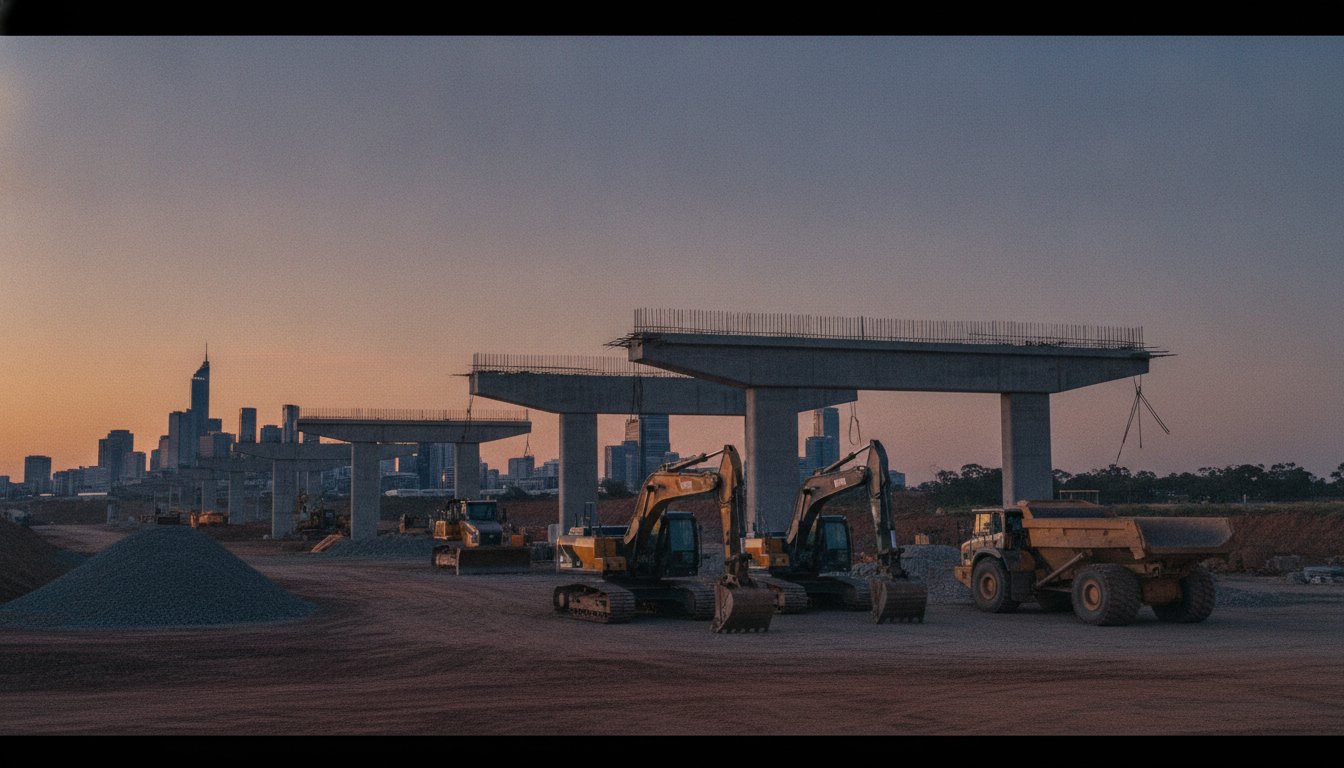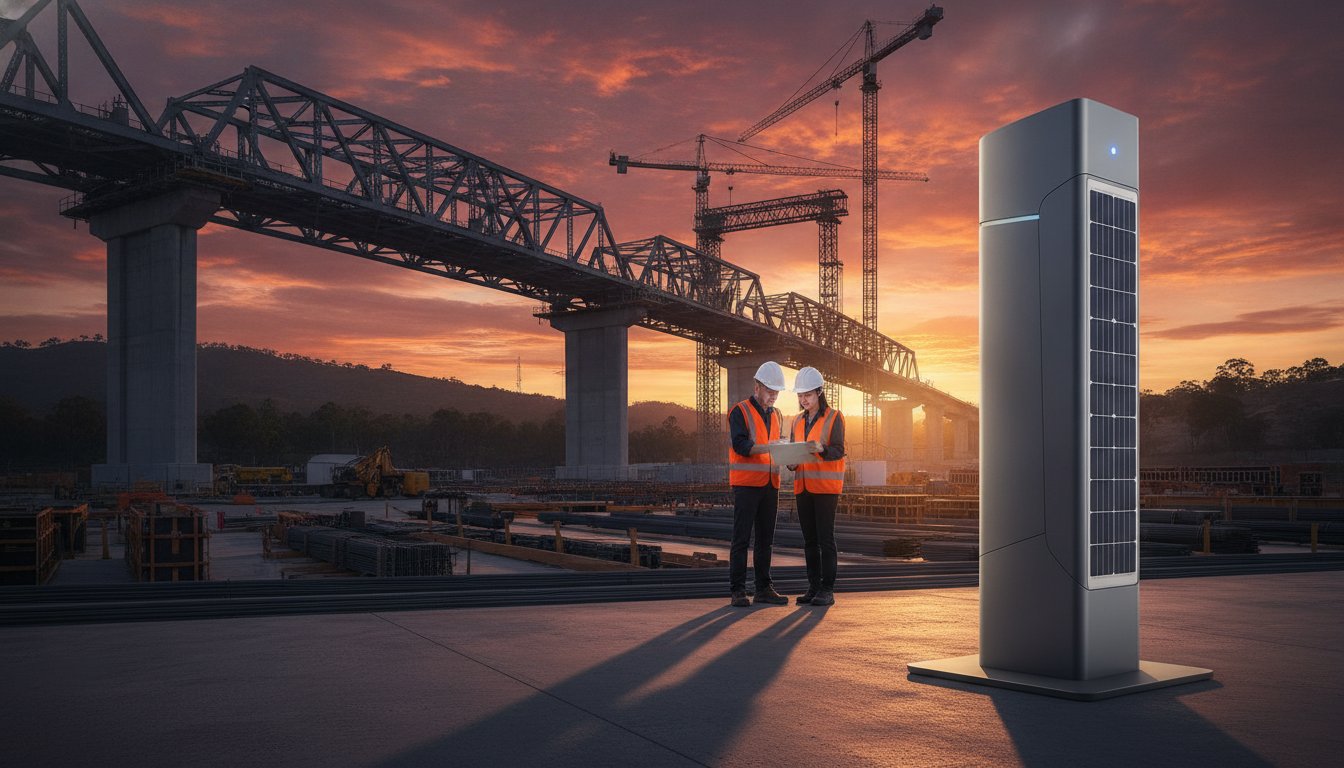
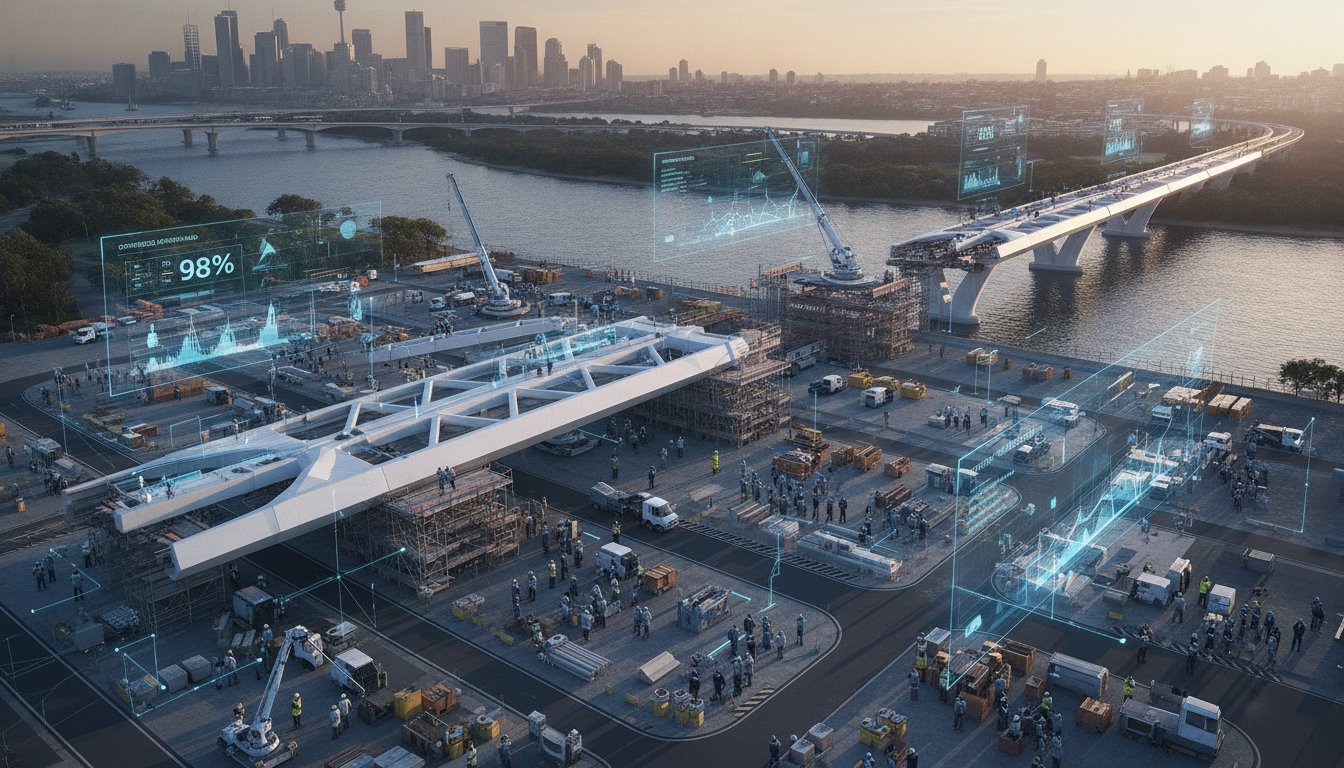
Using CCTV for Lean Construction Management: A 2026 Operational Guide
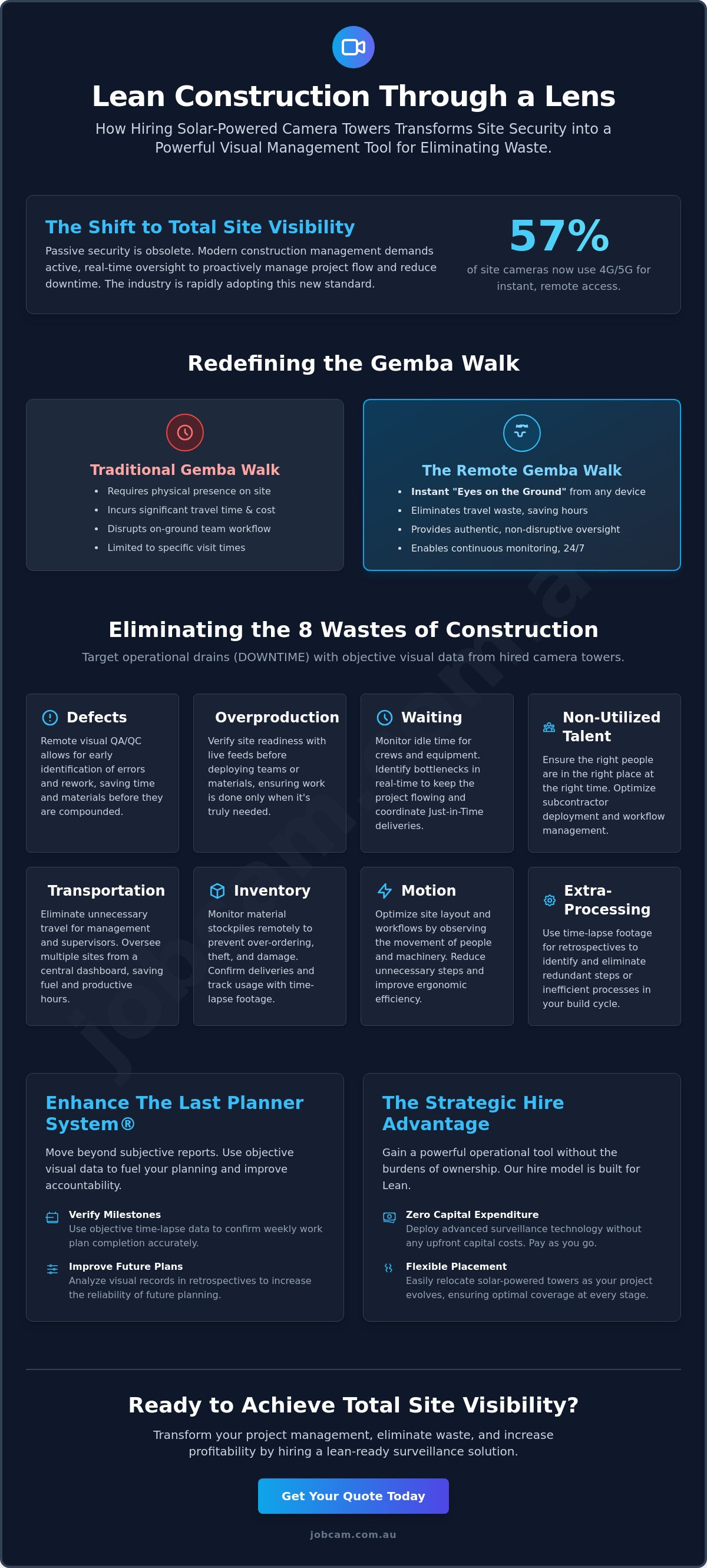
What if the equipment you hired for site security was actually the most effective tool for eliminating operational waste? Most project leads view surveillance as a passive necessity; however, using cctv for lean construction management transforms these solar-powered towers into active visual management hubs. You're likely tired of losing hours to cross-site travel or struggling to verify Just-in-Time deliveries when you aren't physically present. It's a common frustration in an industry where over 57% of site cameras now leverage 4G or 5G connectivity for instant, remote oversight.
This guide shows you how to move beyond basic monitoring to achieve total site visibility. We'll demonstrate how hiring mobile surveillance towers provides the high-definition data needed to coordinate sub-contractors and reduce downtime. You'll discover how to use AI-powered analytics and accurate time-lapse footage to fuel your Lean retrospectives and improve project flow. By the end, you'll understand how to turn 2026’s surveillance technology into a strategic asset for a more profitable, waste-free build.
Key Takeaways
- Target and eliminate the eight types of construction waste by replacing manual site visits with high-definition remote oversight.
- Discover how using cctv for lean construction management transforms site security into a proactive tool for visual workflow optimization.
- Support the Last Planner System with objective time-lapse data to verify weekly milestones and improve the accuracy of future work plans.
- Utilize the flexible hire model for solar-powered towers to ensure strategic camera placement as your project evolves without upfront capital costs.
What is Lean Construction Management and the Role of Visual Surveillance?
Lean Construction Management is a production-based approach designed to maximize value for the client while ruthlessly eliminating waste. In the building sector, waste isn't just physical scrap; it's lost time, unnecessary movement, and waiting. To manage these inefficiencies, site leads require constant, high-fidelity information. This is where using cctv for lean construction management becomes a critical operational strategy. By hiring solar-powered surveillance towers, project teams gain a continuous visual feed that serves as the foundation for modern visual management.
Traditional site monitoring often focuses on reactive security, such as catching intruders after hours. Lean principles require a shift toward proactive oversight. By using cctv for lean construction management through a flexible hire model, you aren't just protecting assets; you're documenting the flow of work. This transparency allows stakeholders to see the physical reality of the site in real-time, ensuring that decisions are based on facts rather than optimistic reports.
The Concept of the Remote Gemba Walk
In the Lean methodology, "Gemba" refers to the actual place where value is created. For a developer or project lead, that is the job site. Historically, a Gemba walk required a physical presence, often involving hours of travel time between multiple locations. Hiring remote monitoring cameras allows managers to observe workflows from any device without interrupting the team on the ground, providing the essential "eyes on the ground" needed for remote Gemba walks. This creates a more authentic view of site activity. Remote Gemba walks directly reduce "Motion" waste by eliminating the need for management to physically traverse the site for every routine check.
Surveillance as a Visual Management Tool
Visual Management is a core Lean pillar that demands site status be visible at a glance. High-definition solar towers provide the clarity needed to verify site readiness for sub-contractors before they arrive. If a concrete pour is delayed or a site isn't cleared, you can see it instantly and adjust schedules. This level of visibility is essential for the "Just-in-Time" (JIT) delivery principle. By using live feeds, you can identify material bottlenecks or access issues that would otherwise stall progress. Hiring mobile towers ensures this visual tool is always positioned where the most critical work is happening, providing the technical pride of a well-run, transparent operation.
Eliminating the 8 Wastes of Construction with CCTV
Lean construction principles define eight specific categories of waste, often summarized by the acronym DOWNTIME: Defects, Overproduction, Waiting, Non-utilized talent, Transportation, Inventory, Motion, and Extra-processing. While many security providers focus exclusively on theft, using cctv for lean construction management allows project leads to tackle the more pervasive operational drains that erode profit margins. By hiring solar-powered surveillance towers, you gain the visual data required to identify where these wastes occur in real-time, moving from guesswork to evidence-based management.
Reducing Motion and Transportation Waste
Transportation and motion represent significant non-value-adding activities for management and site supervisors. Every hour spent driving between remote project sites or walking across large developments to verify progress is a loss of potential productivity. Utilizing Telstra 4GX-powered remote access enables project leads to oversee multiple national projects from a single central dashboard. This centralized visibility eliminates the need for frequent site visits. You can verify sub-contractor presence and plant deployment in seconds rather than hours. Quantifying the travel time saved across a multi-month project demonstrates the immediate operational value of a surveillance hire model.
Monitoring Inventory and Waiting Times
Waiting is the silent killer of project flow. It occurs when crews wait for materials, plant, or site readiness. Hiring solar site cameras provides a 24/7 view of delivery gates and inventory laydown areas. You can verify material arrivals instantly, ensuring that Just-in-Time deliveries haven't stalled at the perimeter. This visibility also ensures site access points remain clear during high-frequency logistical phases, such as concrete pours or structural steel deliveries. By monitoring these flows, you prevent "Waiting" waste and ensure plant and equipment are positioned correctly for the next day's tasks.
Visual evidence is also a powerful tool for reducing "Defects" through constant remote quality checks. If a reinforcement layout or formwork installation appears incorrect on the high-definition feed, you can address it before the pour. This proactive approach aligns with The Last Planner System, where reliable site data informs every weekly work plan. When you have total visibility, you stop reacting to problems and start preventing them. If you're looking to optimize your site's operational flow, consider how a modular camera hire can provide the oversight your project requires.
Enhancing the Last Planner System with Real-Time Data
The Last Planner System (LPS) is only as effective as the data feeding into it. Reliability is the cornerstone of this methodology, requiring a clear understanding of what can be done versus what will be done. Using cctv for lean construction management provides the granular, real-time evidence needed to make these distinctions. Instead of relying on anecdotal site reports, project leads use visual feeds to confirm site readiness and resource availability before committing to a weekly work plan. This ensures that the plan remains realistic and achievable, reducing the risk of broken promises between trades.
Visual data serves as an unbiased source of truth. When a schedule slips, the first step in Lean is identifying the root cause. Video playback allows teams to look back at the exact moment a bottleneck formed. Was it a delayed delivery at the gate, or was the work area not cleared by the previous trade? This level of clarity removes the friction from coordination and focuses the team on problem-solving rather than finger-pointing. By hiring solar-powered towers, you're placing a permanent, objective witness on the site that documents every move with precision.
Visual Proof for Daily Stand-ups
Integrating live feeds into digital project management boards transforms the daily huddle. Managers pull up the current site state to discuss logistics with trade partners in real-time. This visibility significantly reduces disputes between trades because every claim is backed by clear, time-stamped video evidence. Reliability is a technical priority. AWS cloud storage ensures footage is never lost and remains accessible for review whenever a discrepancy arises, providing project leads with total peace of mind and constant visibility.
Retrospective Analysis via Time-Lapse
While live feeds manage the immediate site activity, construction time-lapse cameras are essential for long-term Lean retrospectives. Reviewing a week’s worth of work in a few minutes helps identify recurring flow bottlenecks that aren't obvious in real-time. This visual context is vital when calculating the Percent Plan Complete (PPC). It allows the team to see exactly why a task wasn't finished, providing the evidence needed to adjust future work plans. For those looking to master these reporting techniques, our Construction Videography Guide offers practical tips on using visual assets for both operational oversight and stakeholder reporting. Hiring this technology allows for high-level presentation and practical site management without the burden of equipment ownership.
Implementing CCTV for Lean: Strategy and Placement
Effective placement prioritizes operational flow over perimeter defense. While traditional security focuses on the fence line, using cctv for lean construction management requires cameras aimed at the value stream. This means positioning units where materials are staged, where trades interface, and where logistics bottlenecks typically occur. By hiring solar-powered towers, you gain the flexibility to monitor the entire site production cycle without the constraints of fixed wiring or permanent mounts.
Achieving 100% site coverage is essential for a complete Lean analysis. Gaps in visual data lead to blind spots in your waste identification process. If you can't see the loading bay and the primary work zone simultaneously, you can't accurately correlate delivery delays with labor downtime. Leveraging 4G-enabled units ensures that even remote civil sites or early-stage developments have the infrastructure needed for total visibility from day one. This technical standard allows for constant visibility regardless of the site's local power or data availability.
Choosing Between Fixed and Mobile Units
The choice between unit types depends on the project's scale and duration. For large-scale civil works, remote site surveillance towers offer the height and range necessary to oversee vast areas. The primary advantage of the hire model is the ability to relocate equipment as site boundaries shift. As a building rises or a road progresses, your visual management needs change. Mobile towers can be moved to new Value Stream pinch points, such as temporary loading bays or high-traffic assembly zones, ensuring your oversight remains relevant throughout the build.
Connectivity and Data Security for Lean Teams
Reliable remote management in Australia relies on robust network performance. Telstra 4GX connectivity provides the high-bandwidth stream required for high-definition visual audits. This technical standard ensures that project leads can review live feeds without lag or dropouts, which is critical during fast-paced logistical phases. Secure cloud access allows multiple stakeholders, from site supervisors to corporate executives, to view feeds simultaneously. This shared visibility supports safety compliance through high-angle oversight, enabling features like PPE detection to be monitored remotely. If you're ready to optimize your site's strategic oversight, you can hire remote monitoring cameras that integrate directly into your Lean workflow.
The Jobcam Advantage: Lean-Ready Surveillance Hire
Implementing a Lean strategy requires more than just a conceptual framework; it demands the right technical infrastructure to bridge the gap between theory and site reality. Jobcam provides the specialized hardware that powers these workflows. By focusing exclusively on a hire model, we ensure that project leads can access premium technology without the burden of capital expenditure (CAPEX). This approach allows you to scale your visual management tools alongside your project's needs, ensuring that using cctv for lean construction management remains a cost-effective operational choice. Full technical support and maintenance are included in the rental fee, removing the logistical headache of equipment upkeep from your team's plate.
We position ourselves as a partner in project efficiency rather than just another outside vendor. This means our team understands the fast-paced nature of industrial developments and the specific data requirements of Lean practitioners. When you hire our solar-powered towers, you're gaining a reliable extension of your site management team. We provide the transparency and constant visibility required to keep stakeholders informed and projects moving forward. Our commitment to professional service ensures that your focus remains on production, while we handle the technical continuity of your site oversight.
Solar-Powered Reliability for Uninterrupted Data
Autonomous operation is a non-negotiable requirement for modern sites. Our solar-powered surveillance towers provide constant visibility even on off-grid locations, ensuring that your Lean data collection never skips a beat. The hardware is ruggedized and specifically built for the harsh Australian construction environment, from extreme heat to heavy dust. Data integrity is a technical priority. Jobcam’s AWS integration protects data from site-level hardware damage by ensuring every frame is securely stored in the cloud for instant remote access. This technical pride ensures that your visual evidence is always available for retrospective analysis or dispute resolution.
National Reach and Professional Installation
Success on large-scale projects often depends on geographical reliability. Jobcam offers comprehensive hire services that include professional setup and relocation across Australia. Whether you are managing urban high-rises or sprawling civil works, our team ensures your cameras are positioned for maximum operational impact. We understand that site boundaries shift as work progresses. Our flexible hire model allows for the quick relocation of equipment to new "Value Stream" pinch points, maintaining the flow of information throughout the build lifecycle. If you're ready to eliminate waste and gain total site visibility, Contact Jobcam to optimize your site for Lean today.
Optimizing Site Production through Visual Management
Shifting from reactive security to proactive oversight transforms site operations from the ground up. By targeting the eight wastes of construction, project leads reclaim lost hours and significantly improve the flow of work. Integrating high-definition data into the Last Planner System ensures your weekly work plans are based on physical reality rather than optimistic reports. Using cctv for lean construction management isn't just a security choice; it's a strategic move toward a more transparent and efficient build.
Achieving this level of visibility requires reliable infrastructure that doesn't fail when the grid does. Jobcam provides solar-powered autonomous towers backed by Telstra 4GX connectivity and AWS cloud security, ensuring your data remains accessible and secure. With our national Australian hire and maintenance support, your team can focus on production while we handle the technical continuity of your site. Enquire about Solar Camera Hire for your next project to start eliminating operational waste today. You have the tools to build smarter; we have the technology to help you lead with confidence.
Frequently Asked Questions
How does CCTV help with Lean Construction specifically?
CCTV serves as a primary visual management tool by identifying the eight types of construction waste in real-time. Using cctv for lean construction management allows project leads to spot "Waiting" and "Motion" wastes instantly; it turns a passive security tool into an active production asset. This visibility ensures that management decisions are based on the physical reality of the site rather than anecdotal reports.
Can I use site cameras to monitor sub-contractor performance?
Yes, you can use high-definition feeds to verify sub-contractor attendance and site readiness before work begins. This reduces disputes and ensures that trades aren't arriving to a site that isn't prepared for their specific tasks. It provides a clear, time-stamped record of progress that holds all parties accountable to the agreed weekly work plan.
What is the best camera placement for monitoring site flow?
The best placement focuses on "Value Stream" pinch points like loading bays, material staging areas, and high-traffic trade interfaces. While security cameras often point at fences, Lean-focused towers should oversee the flow of materials and labor. This strategic positioning allows you to identify specific bottlenecks that slow down the entire project's momentum.
Do I need power on-site to use these Lean management tools?
No, you don't need established power infrastructure to utilize these management tools. Our surveillance towers are entirely solar-powered and autonomous, making them ideal for early-stage developments or remote civil works. They provide constant visibility from day one, regardless of site conditions or the status of local utility connections.
How does cloud storage benefit project management retrospectives?
Cloud storage provides an objective, permanent "source of truth" for analyzing project performance after completion. By reviewing time-lapse footage and recorded events, teams can identify the root causes of schedule slips. This data is essential for calculating Percent Plan Complete (PPC) and improving the accuracy of all future Lean work plans.
Is hiring surveillance equipment better than buying for Lean projects?
Hiring is the preferred model for Lean projects because it eliminates upfront capital expenditure and provides maximum operational flexibility. As your site boundaries and production needs shift, hire equipment can be relocated or scaled without the burden of ownership. All technical support and maintenance are included in the rental fee, ensuring your data stream remains uninterrupted.
Can remote monitoring replace physical site visits for project managers?
Remote monitoring doesn't replace the need for project managers, but it significantly optimizes their time by enabling "Remote Gemba Walks." Using cctv for lean construction management reduces the "Motion" waste associated with traveling between multiple sites for routine checks. Managers can oversee national projects from a central dashboard, focusing their physical presence on high-value problem-solving instead.
What data speeds are required for real-time visual management?
Reliable real-time visual management requires high-bandwidth connectivity, typically delivered via Telstra 4GX or 5G networks. These speeds allow for high-definition streaming and instant playback without lag or dropouts. This technical standard ensures that you can conduct detailed visual audits and safety checks from any remote device with total clarity.