Video Evidence for Construction Disputes: A Practical Guide
What if the footage needed to explain a site event was never captured, or is scattered across different people and systems? Video evidence for construction disputes can help document progress, deliveries and visible site activity. But footage alone cannot establish who was responsible or why an event occurred.
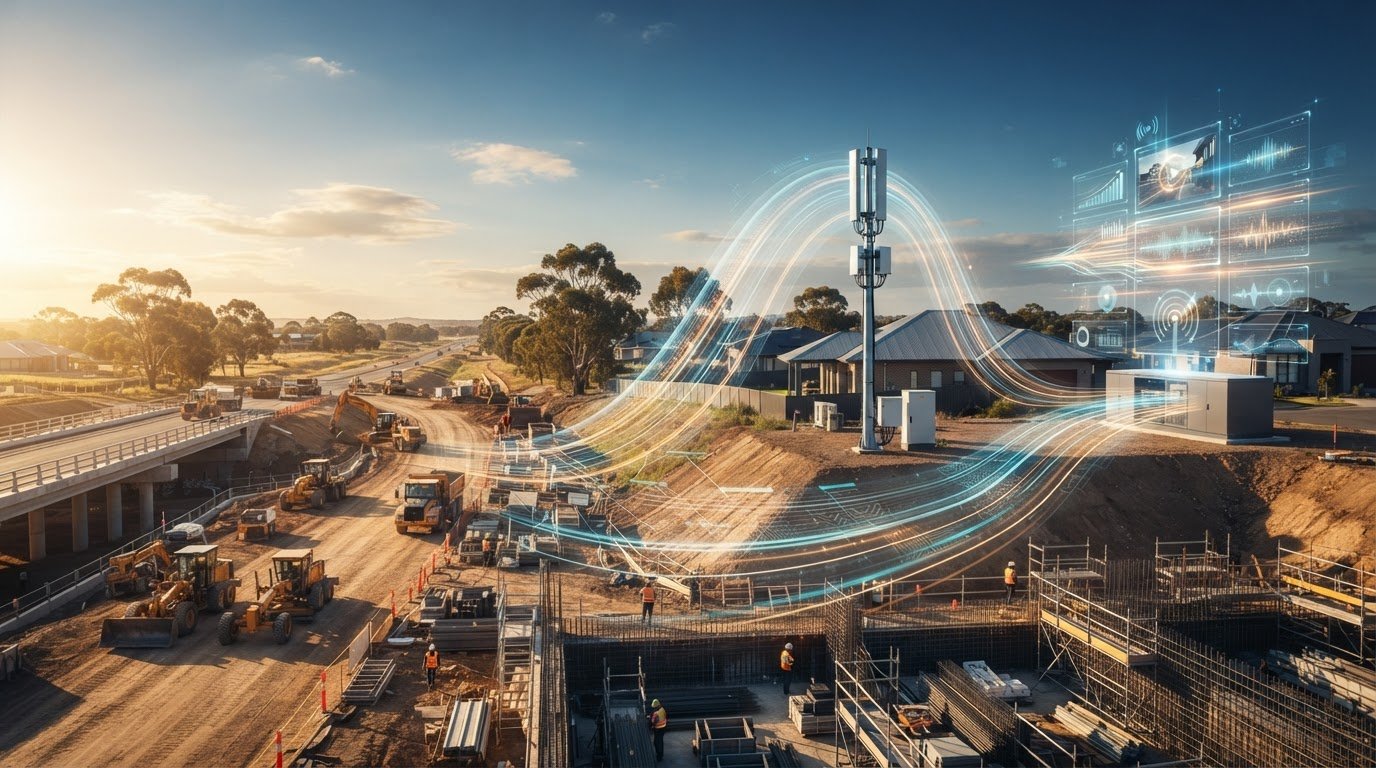
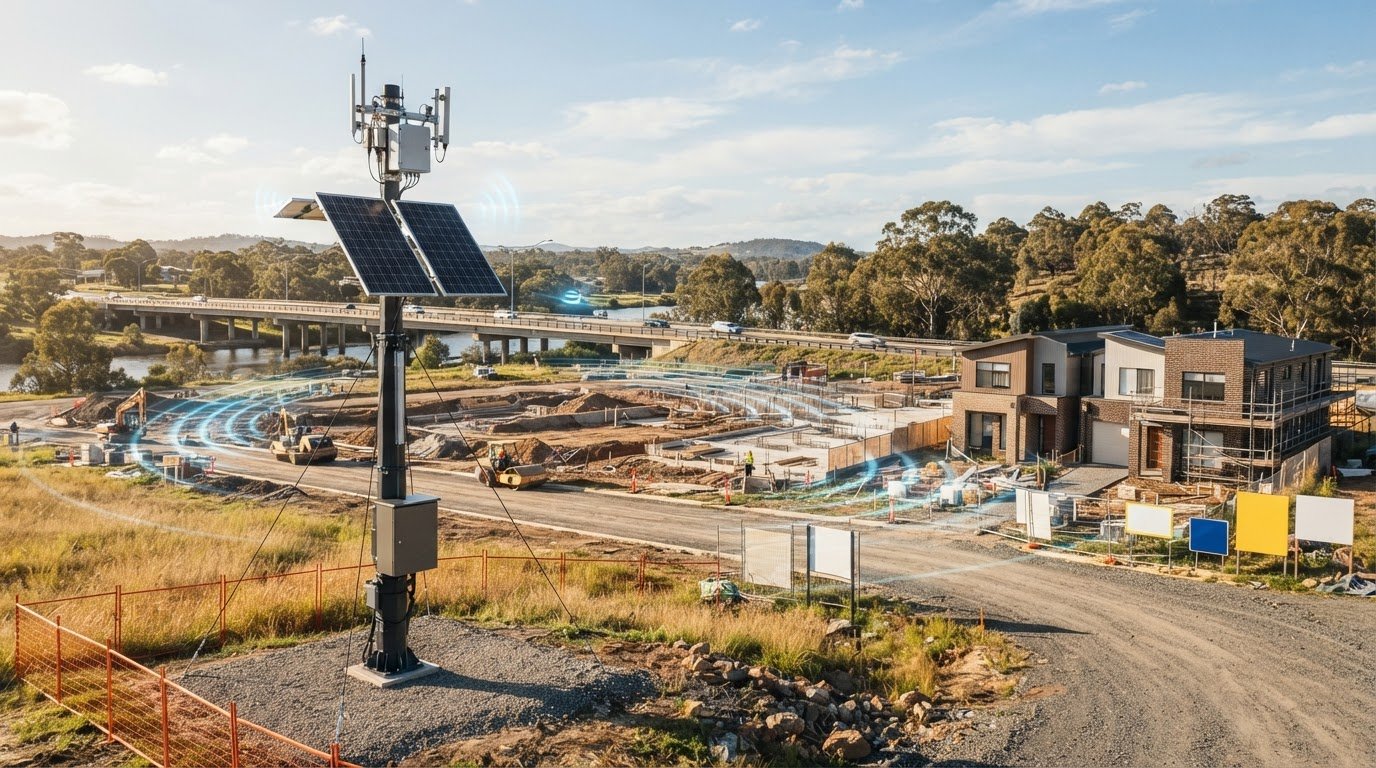
The value of construction footage depends on how consistently it’s planned, preserved and reviewed alongside other project records. Hired solar-powered camera towers can provide ongoing site visibility without mains power or Wi-Fi. Remote playback and secure cloud storage help project teams access available footage during a review.
This guide explains what footage can and can’t show, and how to organise it for review alongside other evidence. It also distinguishes ongoing monitoring from time-lapse documentation and branded project videos. Jobcam’s Free Site Assessment and Free Quote can help project teams plan camera tower hire around their site and documentation needs.
Key Takeaways
- Video evidence for construction disputes is most useful when reviewed alongside contracts, correspondence, site diaries and schedules.
- Before relying on a recording, assess what it visibly captures, its clarity and coverage, and whether the available footage provides enough context and continuity.
- Identify relevant periods and site areas, then index and preserve footage with a clear note explaining its potential relevance.
- Ongoing monitoring footage, time-lapse documentation and branded project videos serve different documentation purposes.
- JobCam camera tower hire can support a consistent visual site record, with remote viewing and cloud storage for project review.
Video Evidence for Construction Disputes: What It Can Show
Construction video evidence is visual material that can be reviewed alongside contracts, correspondence, site diaries, photographs and other project records. It shows what was visible within the camera’s view and during the available recording period. This can help reviewers examine site activity when recollections differ or an event is difficult to reconstruct later.
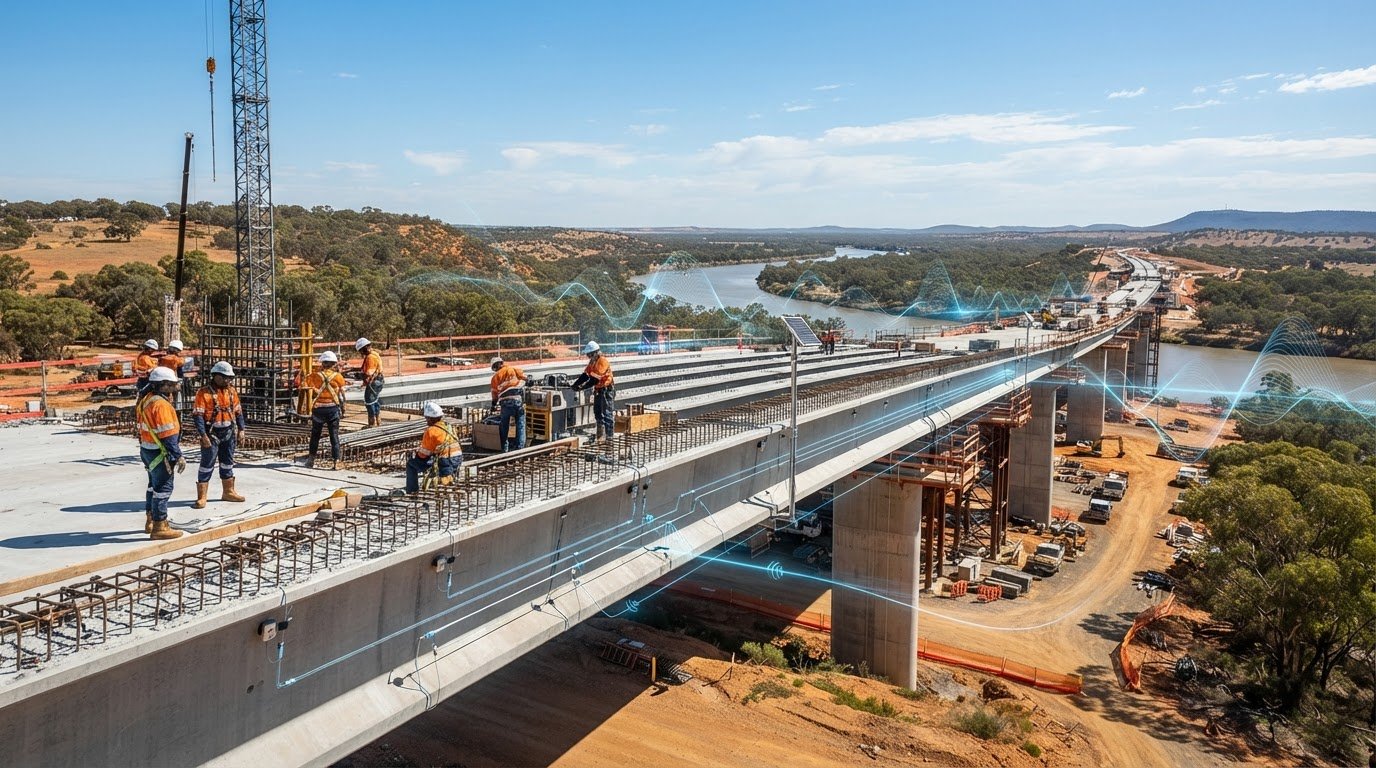
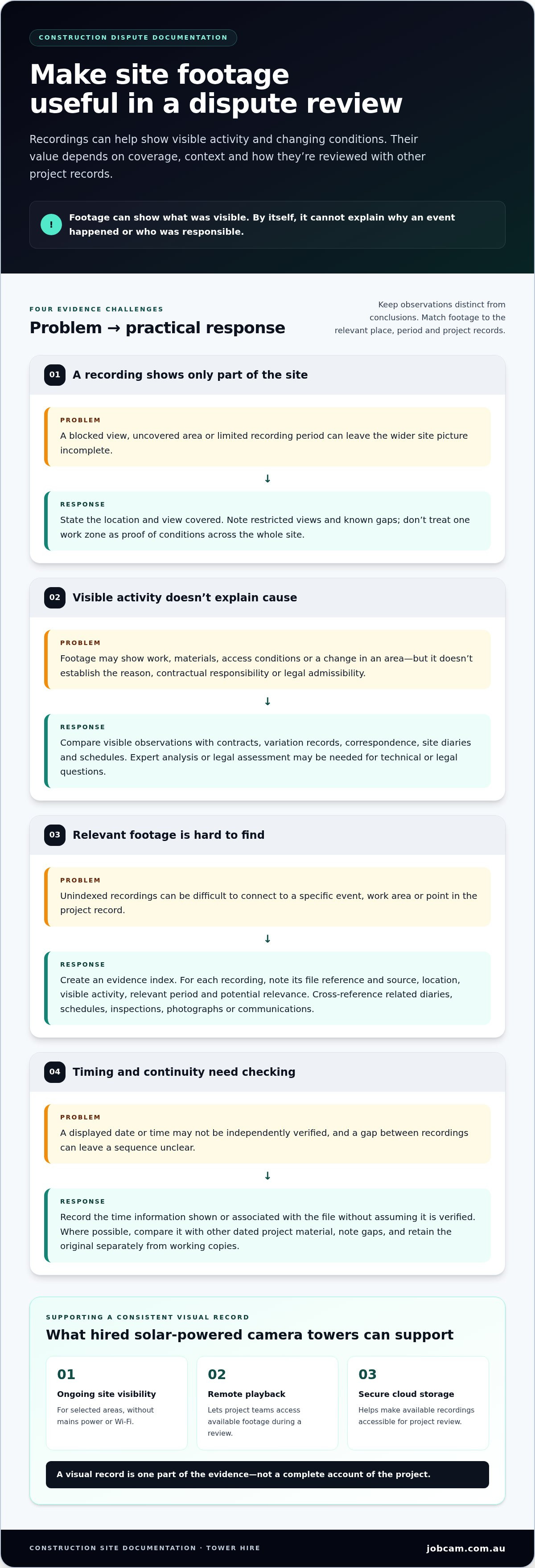
Depending on camera position and the scene in view, footage may show work progressing, materials or equipment on site, changing conditions and sequences of visible activity. It can also reveal the limits of the record: a blocked view, an area outside coverage or a gap between recordings. A camera provides a partial view, not a complete account of the project, so those limits belong in any assessment.
“Footage can show that an event was visible; it cannot, by itself, explain why the event happened.” That distinction is central to using video evidence for construction disputes responsibly. A recording doesn’t automatically establish cause, contractual responsibility or legal admissibility. Technical conclusions may require expert analysis, while legal questions depend on the circumstances and applicable rules. Forensic Video Analysis describes specialist examination of video material, which may help assess what a recording can reliably show.
What questions can construction footage help answer?
Footage may help reviewers establish what was visible at a particular point in the project. For example, they may examine whether an area appeared accessible, what work activity could be seen, or how site conditions changed across available recordings. Compare those observations with dated diaries, schedules, photographs and communications. This can show where records align and where further explanation may be needed. The camera records visible details; interpreting their significance may call for technical or legal analysis.
Which dispute issues may benefit from a visual record?
Progress and sequencing are practical areas to examine. A sequence of recordings may help show when observable work activity occurred, what was happening in a monitored area, or how site conditions appeared during a period discussed in a delay or disruption claim. Footage may also add context to a variation discussion by showing the visible state of an area before or after work. It cannot, on its own, establish the contractual basis or cause of a change.
- Progress: What work is visibly underway, completed or not visible in the recorded area?
- Sequencing: Which observable activities appear before or after others in the available footage?
- Site conditions: What materials, access conditions or physical changes can be seen, without treating the recording as a defect diagnosis?
- Delay or disruption context: What visible site activity coincides with the period under review?
Camera placement and continuity shape the value of the record. A view of one work zone won’t establish conditions across the whole site, and a gap in footage can leave part of a sequence unclear. Hired construction site camera towers can support visual documentation of selected areas. Match recordings to dates, locations and other project records before drawing conclusions.
How Construction Video Fits With Documents and Expert Evidence
Footage is one part of a construction dispute record, not a substitute for documents that explain what was planned, agreed or reported. A camera may show an area changing over time, while contracts, variation records, correspondence and site diaries provide context for that change. Reviewing these sources together can reveal whether they support the same sequence or leave questions unresolved.
“A visual record is more useful when distinct project records corroborate what it shows.” Corroboration doesn’t mean every record must tell the same story. If a recording and a diary entry differ, for example, that may identify a point needing clarification rather than prove either account is correct.
Connect footage with the project record
- Identify the recording: Record its file name or reference and the source from which it was obtained.
- Describe the view: Note the location or work area and the activity that can be observed.
- Record the timing carefully: Note the time information displayed or associated with the file, without assuming it has been independently verified.
- Cross-reference documents: Link relevant diary entries, schedule items, inspection records or communications.
- Preserve context: Note any known gaps, restricted views or circumstances that may affect how the recording is interpreted.
Where expert and witness evidence add context
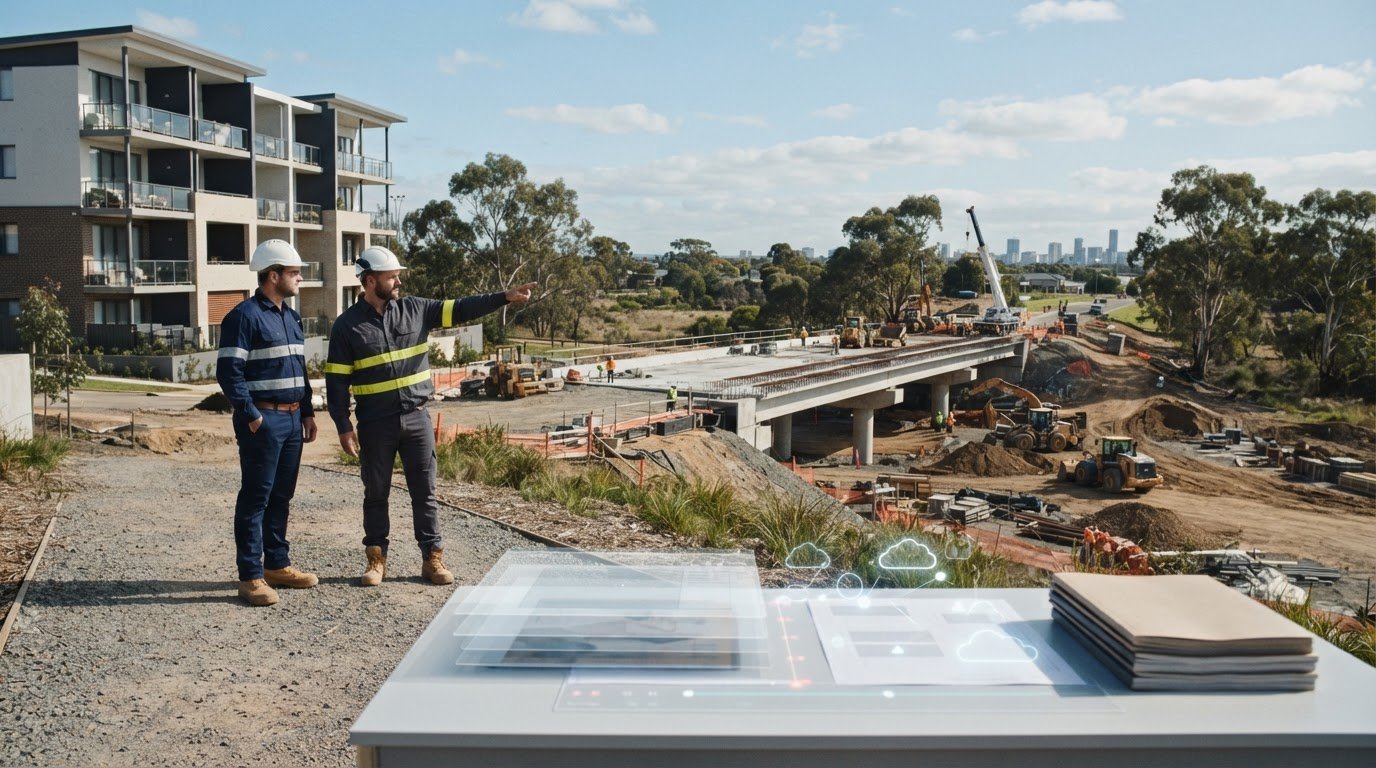
A witness may explain what they personally observed, where they were and what was happening around the recorded event. An appropriately qualified expert may assess technical matters that aren’t apparent from images alone, such as the significance of a visible condition or its possible effect on the work. Keep observation, witness recollection and expert interpretation distinct in your notes. Case-specific questions about how evidence should be used belong with the project’s legal advisers.
Hired camera towers can support a consistent site record, with remote viewing and cloud storage helping teams access footage during project review. JobCam’s construction site camera towers can form part of that documentation approach, alongside project records and professional review.
Does Video Prove a Construction Claim? Value, Limits and Context
No. Video can contribute useful observations, but recording an event doesn’t automatically prove fault, establish the cause of a problem or guarantee that a court or tribunal will consider the footage. The value of video evidence for construction disputes depends on what the recording shows, what it leaves out and how it fits with the circumstances and other evidence.
What video may establish, and what it cannot establish alone
Assess a clip in stages. First, describe only what is visible. Then identify what other information is needed to interpret it. Even a clear image can provide an incomplete account if the camera shows only one angle, misses activity outside its view or captures just part of an event.
Footage can show: visible actions, physical conditions in view and an observable sequence within the recording.
Footage cannot establish alone: why an event occurred, who was contractually responsible, whether a condition is a defect, or what caused a delay or impact.
Evidence that may add context: contracts, dated site records, schedules, correspondence, photographs, witness accounts and expert analysis relevant to the issue.
Consider footage showing work taking place or an area being accessed. It may document what appears in the frame, but not necessarily who authorised the activity, what instructions applied or what happened outside the camera’s view. Even an apparently clear sequence can be misleading if the recording starts late, ends early or lacks surrounding context.
Clarity, coverage, context and continuity all matter. Ask whether the relevant detail can be seen, whether the camera covers the area in question and whether the available footage captures enough of the sequence to interpret it fairly. Treat gaps and limits as part of the record, rather than details to explain away.
Why admissibility and evidentiary weight are different questions
Admissibility concerns whether evidence may be considered in a particular proceeding. Weight concerns how persuasive it is once considered. These are separate questions: footage may be considered but given limited weight if its context, quality or relevance is challenged. Applicable rules depend on the forum and circumstances, so a recording alone can’t settle either question.
A historical residential building dispute discussed by Baker Love illustrates that footage may be examined in the context of how it was obtained and used. It should not be treated as a universal rule for construction disputes or as current legal advice. The circumstances of another matter may differ from those of your project.
Before relying on or sharing disputed footage, seek advice from your legal advisers about the specific circumstances. Keep descriptions factual: note what is visible, identify what remains uncertain, and avoid presenting an inference as an established finding. This helps reviewers assess the recording alongside the rest of the project record.
How to Capture, Preserve and Organise Footage for a Dispute
A useful record starts before a disagreement escalates. Plan coverage around project objectives, connect footage to dated project records, and document why a recording may matter as soon as an issue is identified. This makes video evidence for construction disputes easier to locate and review without assuming that a recording will answer every question.
Build a reviewable record during the project
Set a proportionate coverage plan for relevant work areas and activities. A hired solar-powered camera tower can support a visual record without mains power or Wi-Fi, but its view is limited to the areas it covers. Revisit the plan as work zones or site boundaries change. Check coverage against the current site layout rather than assuming it will follow every change automatically.
Use this workflow to organise material for review:
- Identify the issue. Describe the event, activity or project question that may make footage relevant. Keep the description factual and avoid deciding fault in the index.
- Identify relevant periods. Note the recording periods and work areas that may relate to the issue. Include surrounding footage where it may help explain what happened before or after the visible event.
- Index the material. Give each recording a clear reference and note its location description, recording period, event summary and related project records.
- Preserve copies. Follow the project’s established process for retaining the original material and making review copies. Keep an access or export record if that is part of the project procedure.
- Seek review. Compare the material with relevant project documents, then involve legal advisers or appropriate experts where the issue requires professional interpretation.
A useful evidence index identifies each item by issue, location description and recording period. Add a concise note explaining why the footage may be relevant, and link it to related diaries, schedules, inspection records or correspondence. Keep the index separate from the recording so reviewers can navigate the material without changing the source file.
Preserve relevant recordings and control access
Once a potentially relevant event is identified, act promptly under the project’s evidence-preservation process. Record who accesses or exports material using the project’s established procedures, and note any copies created or review activity. Retention periods depend on project needs and legal advice, so don’t assume there is one standard duration. Ask legal advisers about retention, disclosure and privacy decisions for the specific matter.
JobCam’s hired camera towers provide remote viewing and secure cloud storage to support access to footage during project review. To plan a visual record around active site work, explore construction site camera tower hire or request a Free Site Assessment and Free Quote.
Using Jobcam Camera Towers to Support Construction Documentation
JobCam provides camera towers for hire to support construction site documentation. The service includes professional installation and standard maintenance throughout the hire period. Solar- and battery-powered towers connect through 4G/5G, so they don’t rely on site Wi-Fi or mains power. A mobile connection is needed at the camera location.
This can help project teams maintain visibility across selected work areas and access recordings during review. It doesn’t turn footage into proof of a claim by itself. Footage remains one part of the project record, to be considered alongside relevant documents and professional advice.
Remote viewing and cloud access during project review
JobCam’s web and mobile monitoring platform supports remote viewing and playback, so authorised users can review available footage away from the site. Recordings are stored securely in AWS cloud storage. A short-term upload buffer supports footage upload, but it doesn’t extend the storage period included with the selected plan.
Construction site camera towers provide a managed hire option for camera coverage planned around work areas. Professional installation and standard maintenance are included, along with access to the monitoring platform. Project teams can use the platform to view footage and bring relevant recordings into a review process, while keeping a separate index of events and associated project records.
Choose documentation that fits the project
Ongoing monitoring footage and time-lapse documentation serve different purposes. Monitoring provides views of observable activity in selected site areas for later review. Time-lapse cameras create a separate visual record of project progress, which may suit communicating milestones and development over time to stakeholders. Neither format replaces contracts, diaries or other project records.
Consider the documentation objective before planning coverage:
- For ongoing site visibility: Plan tower placement around work areas and activities that matter to project oversight.
- For progress communication: Consider construction time-lapse cameras for a visual account of project development over time.
- For later review: Keep relevant recordings organised alongside dated project documents, and follow the project’s evidence-handling process.
A Free Site Assessment can help map camera placement to the site layout and documentation objectives. Request a Free Site Assessment and Free Quote to plan camera tower hire around your project.
Make Site Documentation Part of the Plan
A dispute record is easier to work with when documentation is considered before questions arise. Build the process into project planning: identify areas where ongoing visibility would be useful, decide how footage will be organised, and align it with the records your team already maintains. Video evidence for construction disputes is most valuable when it supports a clear, reviewable project history, not when it’s treated as a substitute for one.
JobCam brings practical experience to construction camera tower hire, with 2,500+ cameras deployed nationwide, a 98% client retention rate and 15+ years of experience. A planned camera setup can help your team maintain visual oversight as site activity changes.
Map your project’s documentation needs and camera coverage with JobCam. Arrange a Free Site Assessment and request a Free Quote to plan a hire solution around your site. A consistent visual record starts with a clear plan.
Frequently Asked Questions
Can video footage be used as evidence in a construction dispute?
It may be relevant, but whether it can be used and how persuasive it is depends on the dispute, the forum and how the material was obtained and presented. Video evidence for construction disputes doesn’t automatically prove a claim or guarantee admissibility. Keep the original recording with related project documents, note how it was collected, and ask a legal adviser to assess its use in the specific matter.
Does construction site footage prove who caused a delay or defect?
No, not by itself. A clip may show visible work or a site condition, but it may not reveal what caused it or who was responsible. For example, footage showing an inactive work area won’t necessarily explain why work stopped. Compare it with schedules, instructions, correspondence, site records and relevant witness or expert evidence before drawing conclusions about delay, defects or responsibility.
How should I preserve video evidence from a construction site?
Identify relevant recordings promptly and preserve them under the project’s evidence-handling process. Note the issue, site area and period each recording relates to, then keep a usable index alongside related records. Avoid relying only on edited clips or informal copies; retain material according to the established process. A short excerpt can be easier to review, but its surrounding footage may matter. Ask legal advisers about retention, disclosure and access for the specific dispute.
Can a solar-powered camera tower record a construction site without mains power or Wi-Fi?
Yes. JobCam’s camera towers are solar- and battery-powered, so they don’t require mains power, and they connect through 4G/5G rather than site Wi-Fi. A mobile connection is needed, so include connectivity at the intended camera location in site planning. Professional installation is included with the camera-hire service, helping position the tower for the project’s selected coverage area.
How long should construction dispute footage be kept?
There isn’t one retention period suitable for every project or dispute. The appropriate period depends on project requirements, the issue and legal advice. JobCam’s cloud storage periods vary by plan: Essential includes 90 days, Professional includes 1 year, and Enterprise includes up to 5 years. These are plan storage periods, not a substitute for deciding whether particular footage should be preserved for a dispute.
Is time-lapse video the same as evidence footage?
No. Time-lapse condenses visual change over time into a progress record, while monitoring footage provides views for site oversight and playback. For example, a time-lapse may help communicate project milestones, while monitoring footage may show activity within a selected area. Either can contribute context, but neither establishes responsibility or causation on its own. Choose the format for the documentation purpose and keep relevant material linked to project records.
Can remote teams review construction footage during a dispute?
Yes. JobCam provides remote viewing and playback through its web and mobile platform, allowing authorised users to review available footage away from the site. Secure AWS cloud storage supports access to recordings for project review. Identify the relevant clip, record its project area and period, then share it through the project’s established access process. Remote access doesn’t determine the footage’s legal significance.