How to Demonstrate Security Compliance for Government Tenders in 2026
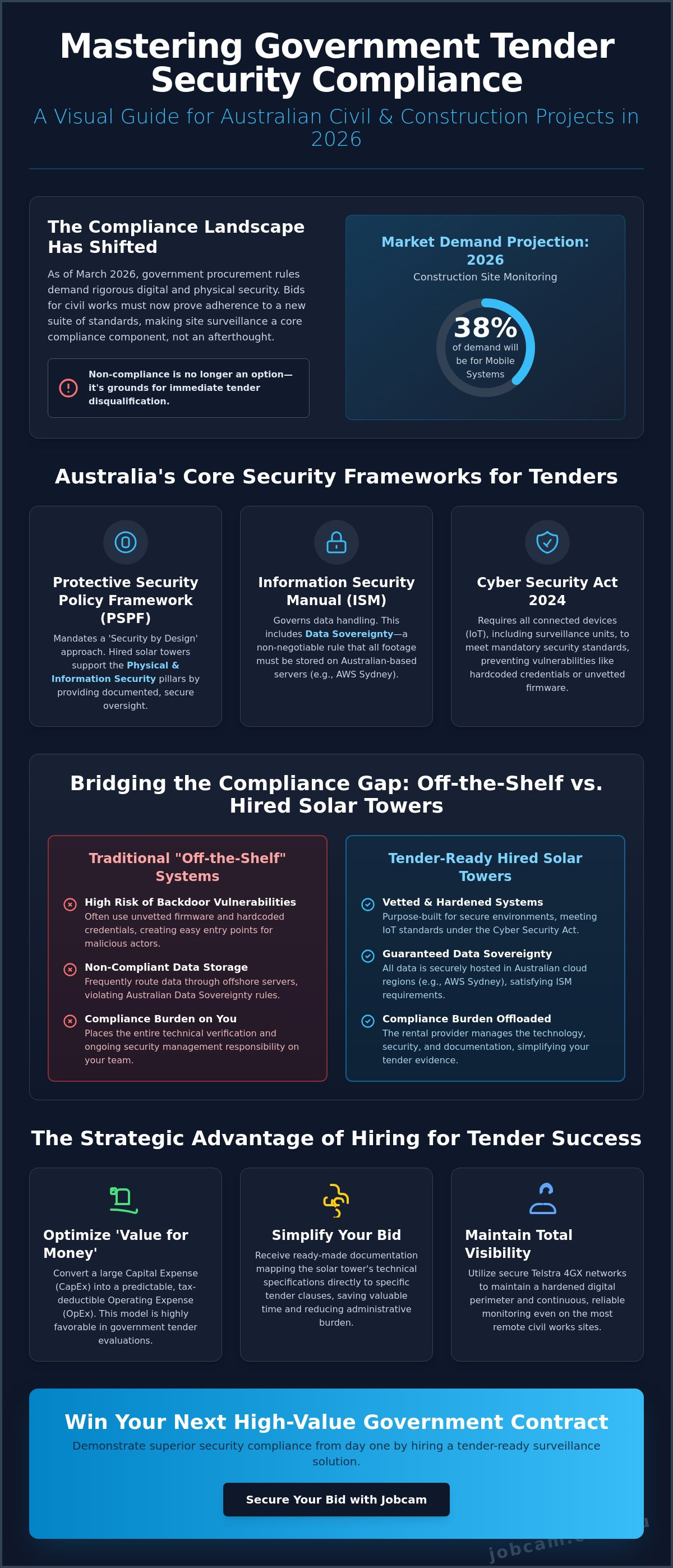
Physical site security is no longer just about fences; it's a digital compliance hurdle that requires vetted cloud architecture and data sovereignty. With mobile monitoring systems now representing 38% of the market demand for construction site monitoring in 2026, government evaluators are looking far beyond the perimeter line. You likely recognize that proving your project meets the March 2026 Information Security Manual (ISM) updates is now a baseline requirement for any serious bid. Successfully demonstrating security compliance for government tenders means showing you've accounted for everything from the Cyber Security Act 2024 to the latest Protective Security Policy Framework (PSPF) directions.
We'll show you how to master these complexities to win high-value contracts with a robust, compliant surveillance strategy. You'll learn how to turn your site’s security into a professional asset that eases the technical burden on your team. This article provides a clear checklist of compliance evidence and explores how hiring solar surveillance towers can help you win the 'Value for Money' evaluation while maintaining total visibility and professional responsibility.
Key Takeaways
- Learn how to align your project with the 2026 Protective Security Policy Framework (PSPF) and 'Security by Design' mandates for government civil works.
- Simplify the process of demonstrating security compliance for government tenders by mapping solar tower technical specifications directly to specific tender clauses.
- Understand how autonomous solar surveillance towers utilize secure Telstra 4GX networks to maintain a hardened digital perimeter on remote sites.
- Discover how the rental model shifts security from a capital expense to a tax-deductible operating cost while offloading the ongoing compliance burden.
- Eliminate site vulnerabilities by replacing local recording devices with secure cloud hosting that meets the latest Australian data sovereignty requirements.
Understanding the Australian Government Security Landscape in 2026
Government procurement shifted significantly following the update to Commonwealth Procurement Rules in late 2025. Evaluators now prioritize ethical conduct and sovereign capability alongside value for money. For contractors in the industrial and development sectors, demonstrating security compliance for government tenders is no longer an optional add-on. It's a core requirement of the bid. The Australian Government now mandates strict adherence to the Protective Security Policy Framework (PSPF) and the latest Cyber Security Act 2024 standards, which took full effect on March 4, 2026. This legislative shift means every piece of hardware on a project site, including mobile surveillance units, must meet mandatory security standards for smart devices.
Traditional "off-the-shelf" cameras frequently fail these modern benchmarks. These devices often rely on unvetted firmware or hardcoded credentials that create "backdoor" vulnerabilities. In contrast, the government expects a "Security by Design" approach for all civil works and infrastructure projects. This requires a surveillance strategy that functions as a proactive risk mitigation tool rather than a reactive recording device. By hiring purpose-built solar surveillance towers, project leads ensure their site security is an integrated part of the government department’s enterprise-level risk management strategy.
The Protective Security Policy Framework (PSPF) Explained
The PSPF outlines the essential security requirements for all non-corporate Commonwealth entities. It's built on four pillars: governance, personnel, information, and physical security. Solar surveillance towers directly support the physical security pillar by providing continuous, documented oversight of high-value assets. However, they also impact the information security pillar. When you are demonstrating security compliance for government tenders, you must prove that your surveillance partner is vetted. This ensures that the visual data captured on-site doesn't become a liability through poor encryption or unauthorized access.
Data Sovereignty and the ISM
Data sovereignty is a non-negotiable aspect of the Information Security Manual (ISM), which was updated by the Australian Cyber Security Centre (ACSC) in March 2026. The ISM dictates how sensitive information, including site footage, is stored and transmitted. Under these rules, cloud-based footage must remain on Australian-based servers, such as the AWS Sydney region. Using non-compliant hardware that routes data through offshore servers creates immediate grounds for tender disqualification. Professional rental providers manage this technical burden by ensuring all data stays within Australian borders, providing the transparency and visibility required for high-stakes government contracts.
Aligning Site Surveillance with Information Security Standards
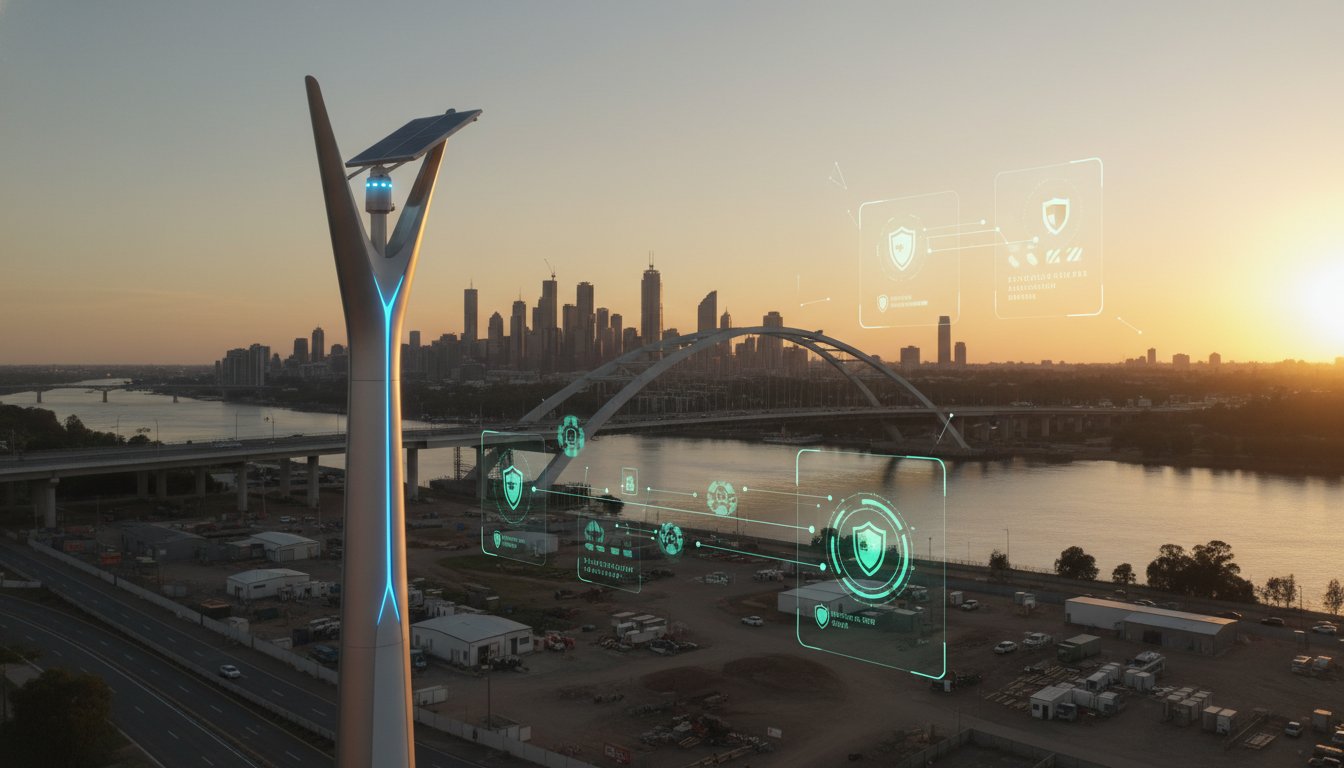
Solar surveillance towers function as critical IoT nodes within a project's digital perimeter. When demonstrating security compliance for government tenders, contractors must prove that their on-site hardware doesn't create a vulnerability in the broader agency network. Modern government departments view site cameras as more than just visual tools; they are data-generating assets that must be secured with the same rigor as any office-based IT system. This requires a shift away from standalone recording devices toward integrated, managed systems that prioritize data integrity from the moment a lens captures an image.
Encryption is the first line of defense for any project site. All video data must be secured using high-level encryption protocols both in transit and at rest. This means that as footage travels from a remote tower to the cloud, it's protected against interception by unauthorized parties. Using professional solar site cameras through a rental model ensures your project utilizes the latest firmware updates and security patches, which is a key requirement for maintaining a hardened security posture throughout the contract duration.
Secure Cloud Architecture for Site Footage
Cloud-based storage is the benchmark for government-approved data management. Utilizing AWS servers located within Australia provides the redundancy and sovereignty required by the Information Security Manual (ISM). If a physical tower is tampered with or stolen, the footage remains safe and accessible in the cloud. This prevents data loss and ensures that project leads maintain total visibility regardless of on-site incidents. Managed cloud platforms generate detailed audit trails. These logs prove exactly who accessed specific footage and when, providing the transparent documentation needed for demonstrating security compliance for government tenders during mid-project audits.
Network Reliability in Remote Environments
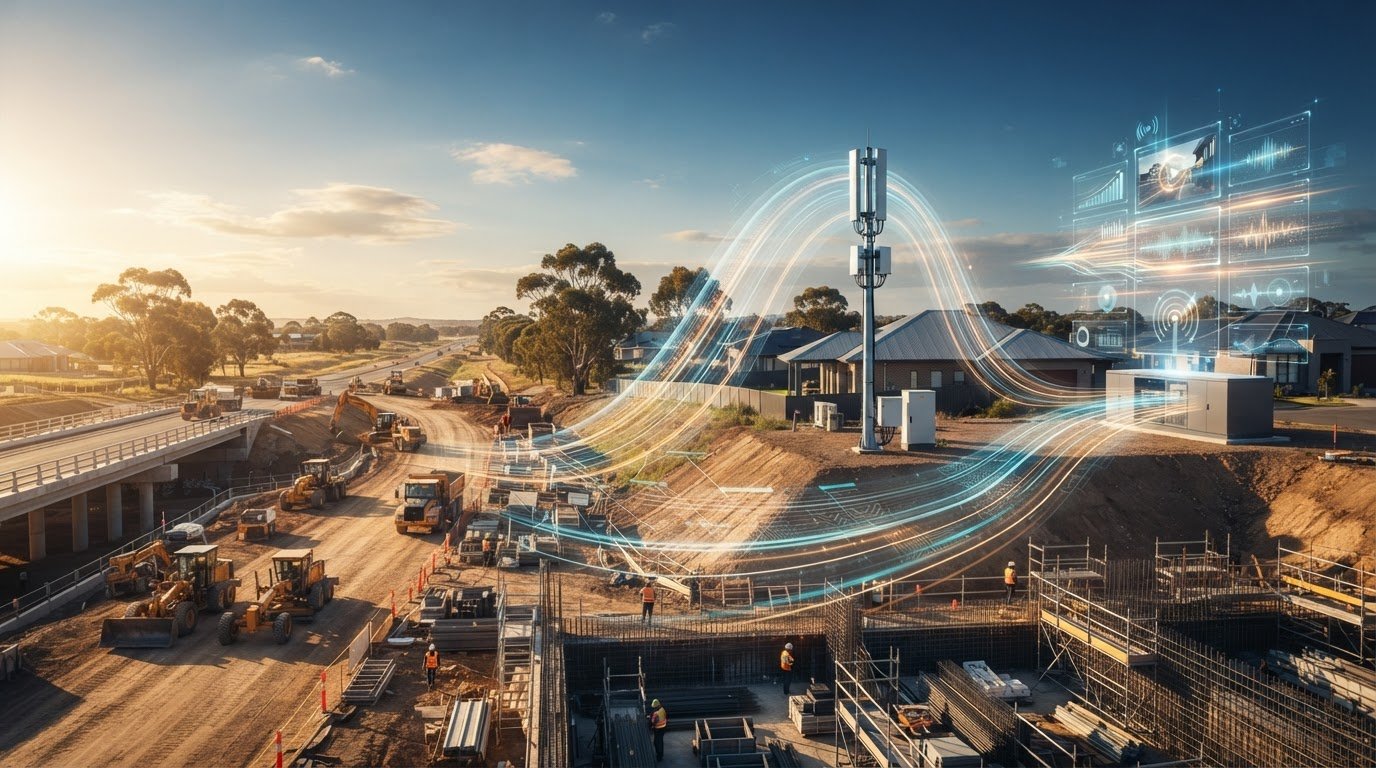
Consumer-grade SIM cards are a liability for industrial projects. They lack the robust encryption and prioritized bandwidth required to maintain a secure, continuous link to government standards. Professional surveillance towers utilize Telstra 4GX connectivity to ensure high-speed, encrypted transmission even in geographically isolated areas. These systems maintain a "heartbeat" connection, a constant signal that alerts the provider if a unit goes offline. This proactive monitoring ensures your site is never left unobserved, which reinforces your commitment to professional responsibility. If you're preparing a bid for a major infrastructure project, hiring remote monitoring cameras ensures these technical standards are met without increasing your team's administrative load.
- Data Sovereignty: All footage is stored on Australian-based servers to meet ISM requirements.
- End-to-End Encryption: Protection for data both in transit via 4GX and at rest in the cloud.
- Accountability: Comprehensive audit trails for every user interaction with the system.
- Continuous Uptime: Reliable heartbeat monitoring prevents unrecorded security gaps.
A Step-by-Step Guide to Documenting Compliance in Your Bid
Winning a government contract requires more than a competitive price. You must provide a meticulous paper trail that satisfies the procurement officer's risk assessment. Start by dissecting the Approach to Market (ATM) documents to identify specific security clauses. These requirements often reference the PSPF or the ISM updates from March 2026. Don't leave these answers until the final day of the submission. Successful bidders treat demonstrating security compliance for government tenders as a core component of their technical response, not an afterthought.
Every piece of hardware on your site must be accounted for in your risk strategy. You'll need to gather technical specifications for your surveillance hardware and its associated cloud platform. This includes providing clear evidence of data sovereignty. Ensure your response includes server location certifications proving that footage never leaves Australian borders. This level of detail confirms you understand the gravity of government data protection and the implications of the Cyber Security Act 2024.
Gathering Technical Evidence
The most efficient way to build your evidence base is by requesting formal compliance statements from your solar site cameras provider. These documents should outline the specific encryption protocols used for data at rest and in transit. You must also document the access control measures within the software. Show the evaluators that only authorized personnel can view site footage. Additionally, provide proof of Australian-based support and maintenance. Having a local team ensures that security gaps are addressed immediately, which is a key metric for government-grade reliability.
Drafting the Security Response
When you write your response, use punchy, declarative statements. Confirm compliance with specific tender codes directly. Instead of saying you "aim to be secure," state that your site "utilizes solar surveillance towers with end-to-end 256-bit encryption." Highlight "Remote Access" as a powerful tool for government transparency. By giving stakeholders the ability to view project progress remotely, you provide a level of oversight that reduces their perceived liability. This approach positions your security choice as a strategic advantage that supports the government's need for constant visibility and professional storytelling.
Finally, integrate your chosen surveillance model into a comprehensive Site Security Plan. Show how autonomous towers solve the "No Power, No Internet" problem while maintaining high security standards. Including case studies of previous successful deliveries on high-security projects adds the final layer of quiet confidence needed to win the 'Value for Money' evaluation. This structured approach ensures your bid is both technically superior and logistically sound.
Overcoming Compliance Hurdles for Remote and Civil Works
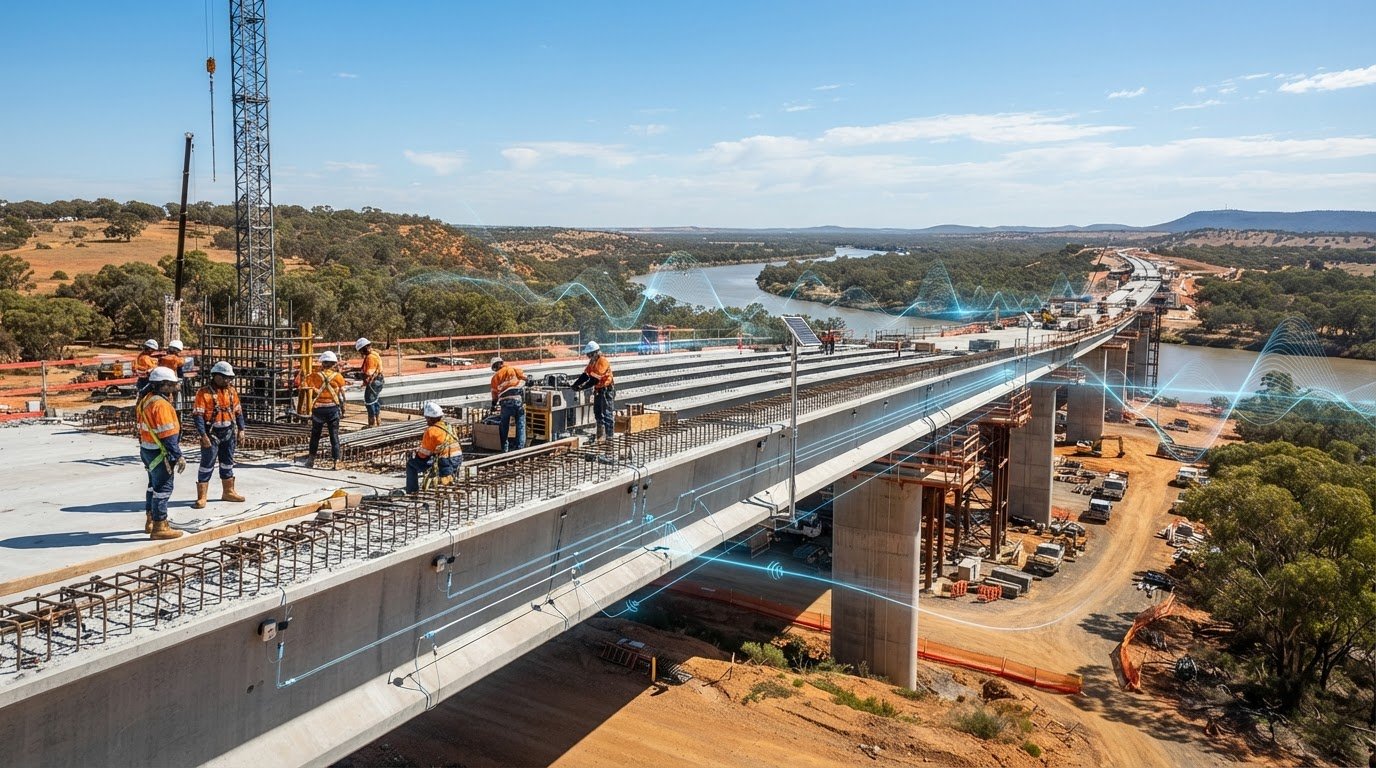
Remote environments shouldn't mean compromised security. Traditional setups often fail because they require fixed infrastructure that doesn't exist on a new development site. When demonstrating security compliance for government tenders, you must show that your plan works from day one, regardless of power availability. Autonomous solar towers solve this by operating independently of the grid. They eliminate the need for on-site recording hardware, which is often a target for theft or tampering. By sending data directly to the cloud, you remove a significant physical vulnerability from your project's risk profile and ensure your documentation remains intact.
Supply chain integrity is another major hurdle in the current landscape. The Australian Government is increasingly wary of "security cowboys" who provide unvetted equipment with unknown data-routing paths. Vetting your rental partner is essential to maintain your professional standing. You need to ensure every component in the chain meets the standards discussed in previous sections. This protects your bid from being undermined by weak links in your hardware choice. It also provides peace of mind to stakeholders who require constant visibility of the site's progress.
Addressing the Connectivity Gap
Solar-powered systems provide 24/7 uptime in civil works environments. These units use high-gain antennas to maintain secure, encrypted signals even in deep fringe areas where standard mobile reception might struggle. This hardware is built to withstand extreme Australian weather, ensuring your visual documentation remains continuous during heatwaves or storms. This resilience is a powerful point to include when demonstrating security compliance for government tenders, as it proves your site remains visible when other systems might go offline. Reliable connectivity ensures that your remote accessibility is never compromised.
Managing Access and Privacy
Privacy obligations are just as critical as physical security. Implementing Role-Based Access Control (RBAC) allows you to manage multi-user access effectively without violating privacy principles. A Project Manager might need a broad overview for timeline tracking, while a Security Officer requires high-resolution detail for incident response. Using PPE detection cameras and AI analytics further enhances your safety compliance by identifying risks before accidents happen. For a deeper look at autonomous hardware, read our guide on Remote Site Surveillance Towers. This level of granular control demonstrates a sophisticated understanding of modern site management requirements.
If your project requires robust, autonomous oversight, you can hire temporary site security cameras that are specifically engineered for these high-compliance environments.
Leveraging the Jobcam Rental Model for Tender Success
Choosing a rental model for solar surveillance towers provides a distinct advantage when demonstrating security compliance for government tenders. Instead of committing large sums to capital expenditure (CAPEX), you transition to predictable, tax-deductible operating costs. This financial structure appeals to government evaluators focused on fiscal responsibility. It also ensures your project isn't saddled with aging hardware. By hiring your equipment, you maintain access to the latest secure cam technology, which is critical as regulatory standards evolve throughout the project lifecycle.
Outsourcing the technical burden allows your team to focus on construction and delivery. We handle the complex maintenance, software updates, and secure hosting requirements that government frameworks demand. This partnership ensures that your site security remains a compliant asset rather than an administrative headache. As site perimeters shift or tender requirements change, the flexibility to scale your fleet ensures you're never paying for more than you need. This adaptability is a core component of modern project management.
The 'Value for Money' Advantage
Government procurement rules prioritize a low Total Cost of Ownership (TCO). Professional installation and relocation services reduce the risk of project delays, which is a key metric in demonstrating security compliance for government tenders. You don't have to worry about the logistical costs of storing or maintaining hardware between projects. For a full breakdown of how this hire model supports your bottom line, see our Solar Powered Security Camera Rental guide. This approach proves to evaluators that you've chosen a sustainable, high-performance security solution that minimizes long-term risk.
Partnering for Compliance
We bring extensive experience working with councils and government agencies to ensure every deployment meets high-security standards. Our AWS-backed cloud platform provides the redundancy and sovereignty required for sensitive data handling. This isn't just about placing cameras; it's about providing a verified security ecosystem that supports your project's professional storytelling and long-term legacy. Contact Jobcam today to discuss how our compliant solar surveillance towers can strengthen your next government bid and provide the total visibility your stakeholders demand.
Securing Your Competitive Edge in Government Procurement
Adhering to the PSPF and ISM updates isn't just a regulatory hurdle; it's a way to prove your team's professional responsibility and operational maturity. By shifting from hardware ownership to a managed rental model, you ensure your project site always utilizes the latest secure technology without the risk of obsolescence. Successfully demonstrating security compliance for government tenders requires a partner who understands the nuances of data sovereignty and the logistical challenges of remote civil works.
We provide the technical foundation your bid needs to stand out. Our solar surveillance towers offer AWS Sydney-based cloud storage and Telstra 4GX secure connectivity, backed by national hire and maintenance support. This ensures your data remains on Australian soil while providing the total visibility required by government stakeholders. You can secure your next government tender with Jobcam’s compliant solar towers and focus on delivering the project with confidence.
Your success in 2026 depends on a proactive approach to site management. With the right surveillance strategy, you don't just meet the standards; you set them.
Frequently Asked Questions
What is the PSPF and how does it affect my site security tender?
The Protective Security Policy Framework (PSPF) is the overarching set of rules for security governance, information, personnel, and physical security in Australian Government entities. When demonstrating security compliance for government tenders, you must prove your site security strategy aligns with these pillars. This requires showing that your chosen surveillance model manages physical risks while protecting the integrity of the data captured on-site.
Does government site footage need to be stored in Australia?
Yes, data sovereignty is a non-negotiable requirement under the Information Security Manual (ISM) and PSPF. All site footage must be stored on Australian-based servers, such as the AWS Sydney region, to ensure it remains under Australian jurisdiction. Using hardware that routes data through offshore servers will likely lead to tender disqualification because it violates these strict data residency rules.
How do I prove a solar security camera is reliable enough for a government project?
You can prove reliability by providing technical compliance statements and uptime records from your hire provider. Document the use of high-gain antennas for signal stability and "heartbeat" monitoring that ensures the system is always online. Professional solar surveillance towers are specifically engineered for industrial resilience, which is a key factor when demonstrating security compliance for government tenders.
What are the common cyber security requirements for surveillance hardware?
Hardware must meet the mandatory standards established by the Cyber Security Act 2024, which took effect in March 2026. These requirements include end-to-end encryption for data in transit and at rest, the absence of hardcoded passwords, and a clear schedule for firmware updates. Hiring your equipment ensures you always have access to units that meet these evolving cyber security benchmarks.
Can I use hired security equipment for high-security government sites?
Hiring is often the preferred model for high-security sites because it guarantees the hardware is current and professionally maintained. You can use hired solar surveillance towers provided the rental partner offers a vetted cloud architecture and secure network transport. This model allows you to scale security as project requirements change without the burden of maintaining your own fleet of equipment.
What is the difference between a standard camera and a government-compliant surveillance tower?
Standard cameras often lack the hardened firmware and secure data paths required for government work. A compliant surveillance tower is an integrated system featuring encrypted Telstra 4GX connectivity, Australian-hosted cloud storage, and autonomous solar power. These units are built to function as a secure IoT device within the government's digital perimeter, providing a higher level of transparency and documentation.
How does the Information Security Manual (ISM) apply to physical site cameras?
The ISM provides the detailed cyber security guidelines that govern how visual data is captured, transmitted, and stored. For physical site cameras, this means managing access through Role-Based Access Control (RBAC) and ensuring the network transport is secure. The March 2026 ISM update specifically emphasizes executive accountability for technology choices, making it vital to choose a partner with a proven compliance record.
Why is Telstra 4GX preferred for government surveillance data transport?
Telstra 4GX provides the high-bandwidth, encrypted connection necessary for reliable video transmission in remote areas. It offers superior coverage and security features compared to consumer-grade SIM cards, which often fail to meet government reliability benchmarks. Using a trusted carrier ensures your site remains visible to stakeholders at all times, supporting the "Security by Design" approach required for major infrastructure projects.