How to Use Video Evidence for Variation Order Claims in 2026
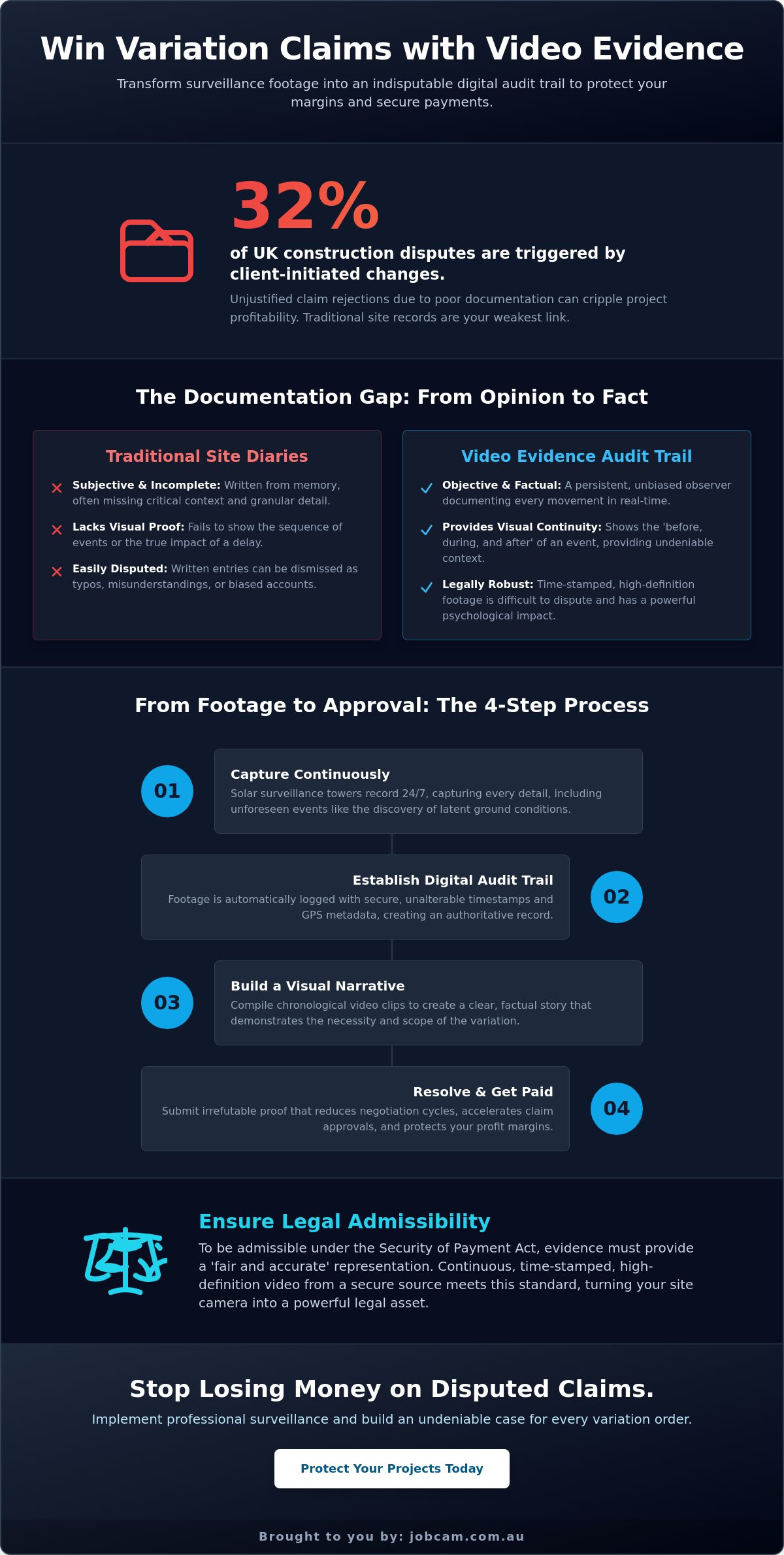
A 2023 report from King's College London revealed that 32% of all construction disputes in the UK are triggered by changes made by clients. When scope creep or latent conditions threaten your project's profitability, your site records are your only line of defense. You've likely experienced the frustration of an unjustified claim rejection simply because the documentation didn't capture the exact moment a site condition changed. It's a common industry pain point that often leads to prolonged, expensive disputes. We're here to change that dynamic by providing total visibility through professional surveillance solutions. This article explains how to use video evidence for variation order claims to protect your margins and ensure your team is compensated for every hour of work.
We'll walk you through transforming solar surveillance tower footage into an indisputable digital audit trail. You'll learn the technical requirements for admissible evidence in 2026, the importance of secure metadata, and how hiring remote monitoring technology can streamline your dispute resolution process. By the end of this guide, you'll understand how to turn your site cameras from simple security tools into powerful assets for professional storytelling and legal protection.
Key Takeaways
- Use visual continuity as the ultimate arbiter of truth when traditional site diaries fail to provide sufficient context for scope changes.
- Learn how to use video evidence for variation order claims by establishing a digital audit trail with secure timestamps and GPS metadata.
- Understand the legal standards for 'fair and accurate' visual representation to ensure your evidence is admissible under the Security of Payment Act.
- Automate your site documentation by hiring solar surveillance towers that offer 24/7 visibility and remote accessibility through a mobile app.
The Role of Video Evidence in Construction Variation Claims
In high-stakes construction, a variation order represents a shift in the original scope of work. This change carries a heavy burden of proof. It's the contractor's responsibility to demonstrate exactly why the change occurred and what resources were deployed to address it. Without an airtight record, these claims often face rejection or significant "haircuts" during the valuation process. The core challenge is that the contractor carries the financial risk until the claim is approved. Professional documentation is the only way to shift that risk back to the client.
Traditional site diaries often fall short. They are subjective, frequently incomplete, and written from memory at the end of a long shift. These manual logs lack the granular detail required for a contested claim. This is why project leads are learning how to use video evidence for variation order claims to create a superior record. Video moves the conversation from conflicting opinions to objective reality. It provides a persistent, unbiased observer that documents every site movement in real time.
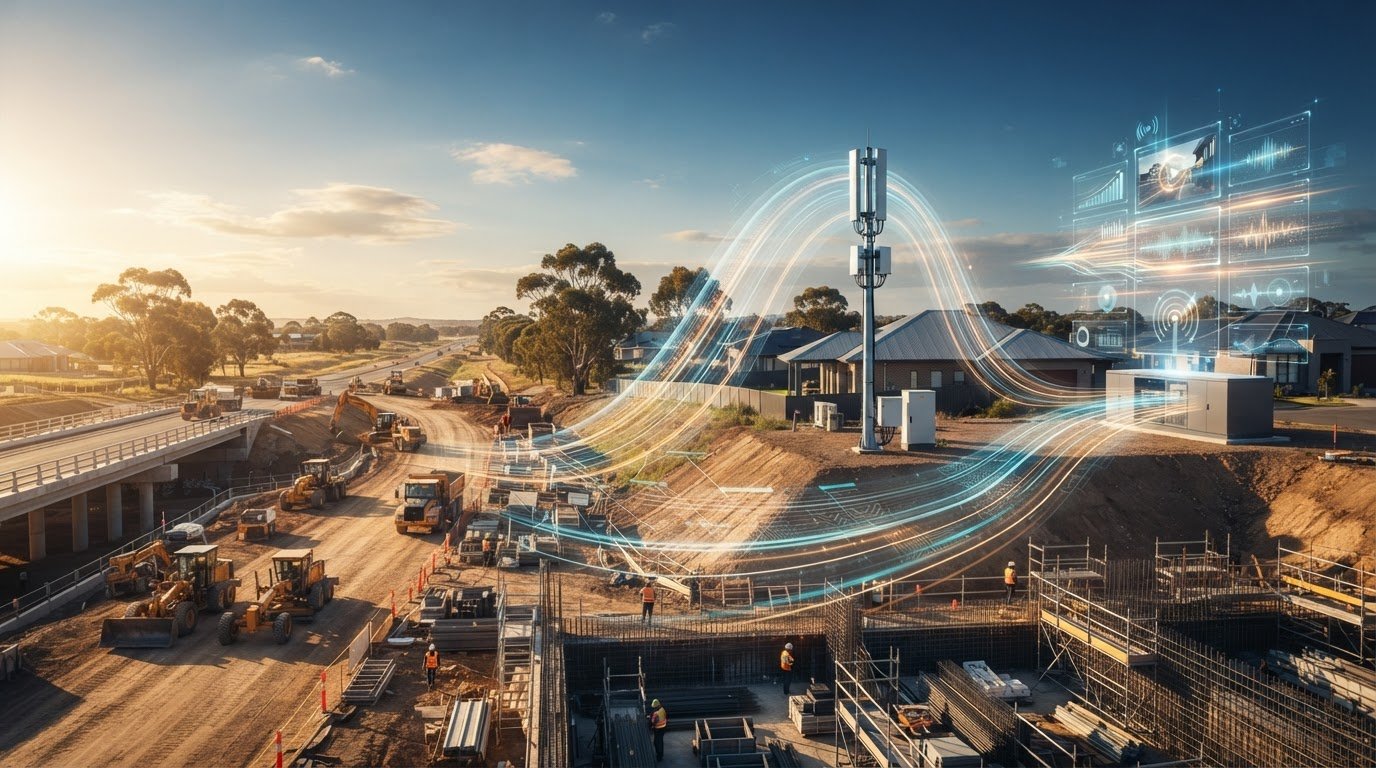
The Australian industry is currently pivoting toward a framework known as 'Visual Contract Administration'. This approach integrates continuous monitoring into the standard project management workflow. By opting for a solar site camera hire, developers gain total visibility without the need for fixed power or data infrastructure. This technology captures the 'unseen' changes in site conditions, such as the exact moment a latent ground condition was uncovered, ensuring no detail is lost to time or poor memory.
Bridging the Documentation Gap
Static photos are merely snapshots. They fail to show the sequence of events or the cumulative impact of a delay. High-definition video sequences from hired solar towers provide the necessary context. They allow you to verify subcontractor resource levels and equipment usage patterns throughout the day. If a subcontractor claims they had five machines on site when the footage shows only two, the dispute is settled instantly. This level of visibility ensures that every additional hour billed is backed by visual proof, leaving no room for ambiguity.
Visual Evidence vs. Written Records
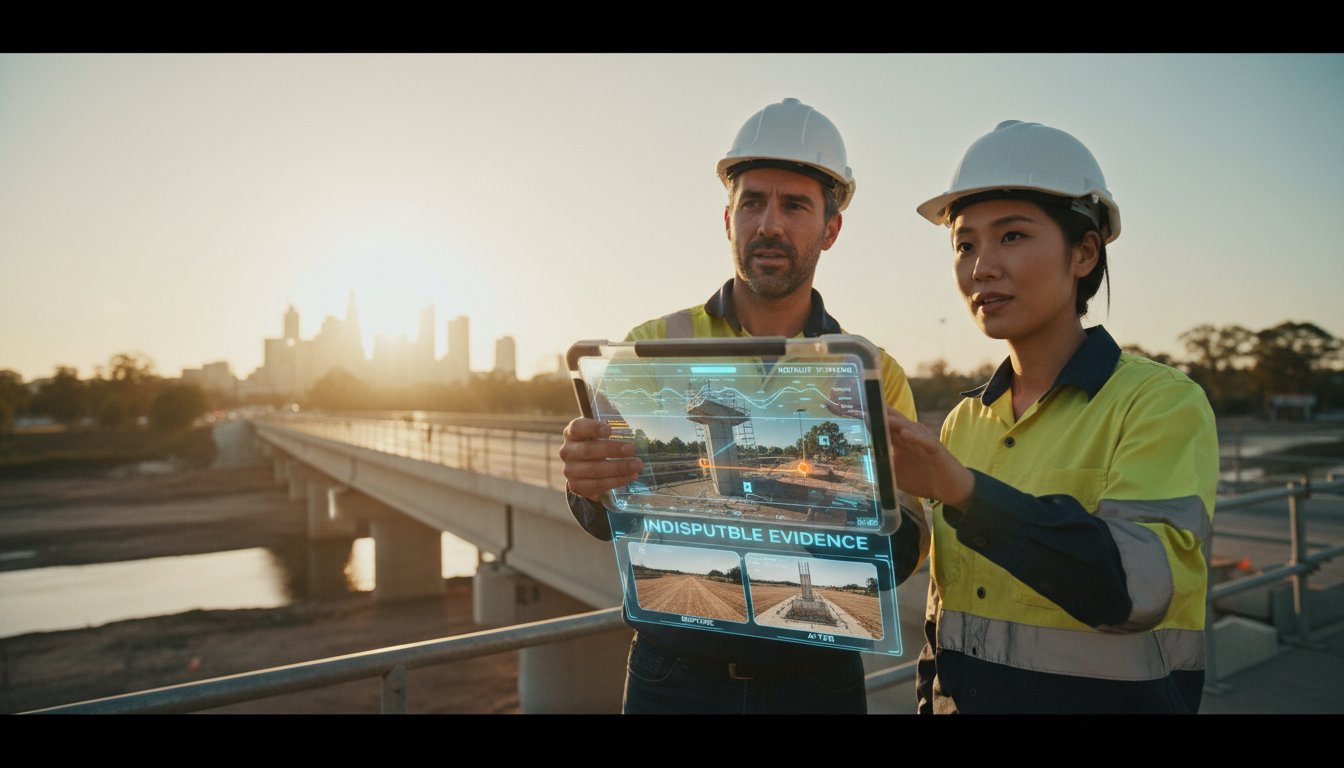
Video is remarkably difficult to dispute. A written entry can be dismissed as a typo or a misunderstanding; a time-stamped video from a secure construction site camera is a factual record. There's a powerful psychological impact on claim adjusters when they are presented with high-quality, chronological footage. It signals that your project management is organized and your documentation is robust. This clarity reduces the endless back-and-forth negotiation cycles. Claims move through the approval process faster because the evidence is visually undeniable.
Establishing a Reliable Digital Audit Trail
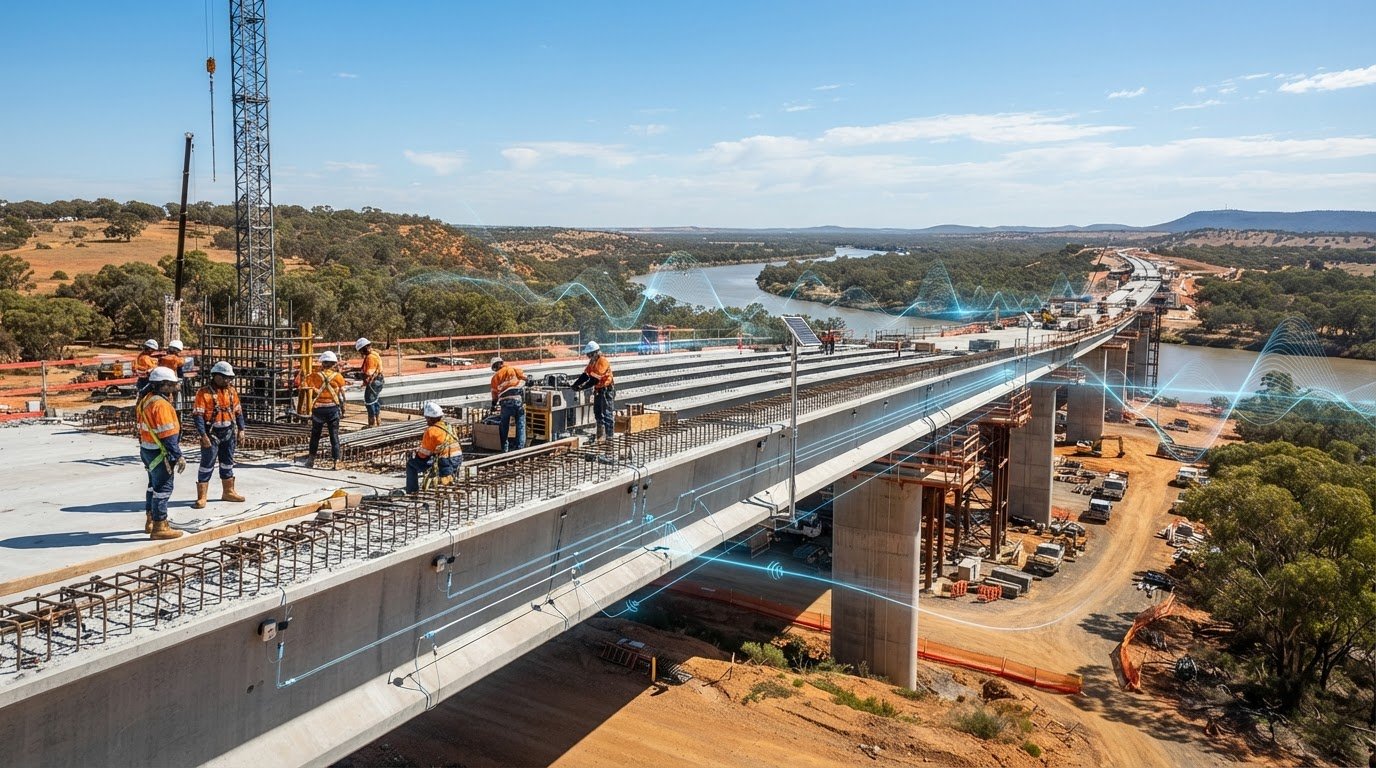
Metadata is the digital backbone of any construction claim. For a visual record to hold weight in a dispute, it must contain a verified fingerprint of time, location, and origin. Every video clip generated by a hired solar tower includes embedded timestamps, GPS coordinates, and unique camera IDs. This data ensures that the footage cannot be dismissed as "generic" or "out of context" by a skeptical client. When you're documenting a latent condition, this metadata proves exactly when the discovery occurred and where on the site it was located. This level of precision is fundamental to understanding how to use video evidence for variation order claims successfully.
Local storage is a significant liability in industrial environments. Relying on SD cards or onsite recorders creates a single point of failure. If site hardware is damaged, stolen, or tampered with, your entire evidence library disappears. We eliminate this risk by utilizing secure cloud hosting via AWS (Amazon Web Services). This infrastructure preserves evidence integrity by creating an immutable record that is accessible 24/7. By shifting to a cloud-based model, project leads can review site progress from any location, ensuring that the "truth" of the project is never stored in a vulnerable physical box.
Establishing this trail is about more than just security. It's about professional accountability. As noted in The Value of Photographic Evidence, visual documentation serves as a primary tool in construction litigation. Hiring a specialized tower ensures that your record-keeping meets these high legal standards without adding administrative burden to your field team.
Cloud Storage and Chain of Custody
Remote accessibility is the key to maintaining a clean chain of custody. When footage is synced directly to secure cloud storage, it remains untouched by human hands, reducing claims of evidence tampering. This continuous record stays intact even if site conditions become extreme or hardware is relocated. It provides a long-term project archive that is invaluable for post-project reviews or final account negotiations. If you need to verify a specific event from six months ago, the data is ready and searchable in seconds.
Connectivity and Data Integrity
A digital audit trail is only as reliable as its connection. We utilize the Telstra 4GX network to ensure high-speed, consistent transmission of high-definition footage. An "offline" camera is a blind spot that creates a gap in your variation strategy. To prevent this, our systems use automated backups and redundant storage protocols. If a network interruption occurs, the system caches data locally and uploads it immediately once the connection is restored. This ensures your remote monitoring cameras never miss a critical moment of site activity.
How to Document Site Changes for Variation Orders
Documenting a change starts the moment a discrepancy is identified on site. Whether it's an unexpected utility line or a client-requested design pivot, the speed of your response determines the success of your claim. You shouldn't wait for the weekly progress meeting to raise the issue. Instead, use your hired solar tower as a real-time diagnostic tool. By capturing the site state immediately, you create a baseline that prevents the "he-said-she-said" disputes common in complex developments. Understanding how to use video evidence for variation order claims effectively requires a disciplined workflow that moves from observation to formal submission.
Once you've identified a scope change, extract the relevant video segment right away. Don't let the footage sit in the cloud without a label. Cross-reference the visual data with your project schedule and site diary entries. If your diary says "excavation halted due to rock," your video should show the idle machinery and the specific ground conditions at that exact timestamp. Annotate the footage to highlight the specific area of impact. This structured approach transforms raw data into a persuasive narrative that claim adjusters can't easily ignore.
Step-by-Step Footage Extraction
The Jobcam app allows project leads to pinpoint specific dates and times with surgical precision. You can scrub through hours of site activity in minutes to find the exact moment a delay event began. Once located, download high-resolution clips for your formal submission. For long-term shifts in project scope, creating construction time-lapse sequences is highly effective. These sequences compress weeks of work into seconds, clearly illustrating how a variation forced a change in the original sequence of works. It's a powerful way to show the cumulative effect of small changes over time.
Mapping Video to Contractual Milestones
To make your evidence robust, align your video timestamps with your 'As-Built' schedule. This comparison proves exactly how a delay event pushed out your contractual milestones. When you submit an 'Extension of Time' (EOT) claim, the visual record serves as the ultimate verification. It shows the site was ready for the next phase, but the variation prevented progress. This level of transparency builds trust with stakeholders and significantly reduces the time spent in dispute resolution. You're not just asking for more time or money; you're providing the visual proof that justifies the request under the contract terms.
Admissibility and Compliance: Making Your Evidence Robust
Admissibility in a commercial construction dispute depends entirely on the integrity of your data. Under the Security of Payment Act (SOPA), an adjudicator requires evidence that is both contemporaneous and objective. This is the foundation of how to use video evidence for variation order claims effectively. If your footage appears edited or lacks a clear chain of custody, it can be dismissed as unreliable. Ensuring your building site CCTV hire meets Australian standards for data security and privacy is the first step in protecting your claim's validity.
The legal standard for visual representation revolves around the 'fair and accurate' rule. This means the footage must provide a true reflection of site conditions without distortion or selective editing. In 2026, adjudicators look for high-resolution, time-stamped files that have not been moved through multiple local storage devices. Secure cloud hosting provides a direct, encrypted link between the camera and the final record. This process is much harder for a client's legal team to challenge than a manual photo found on a supervisor's personal phone. It establishes a professional baseline for every claim you submit.
Compliance also extends to how you manage surveillance on an active job site. You must maintain a lawful basis for recording, which includes protecting the privacy of workers and the public. Procedural errors in how you record or store footage can lead to your evidence being ruled inadmissible, regardless of what it proves. Professional solar tower hire simplifies this by providing equipment that is designed for industrial compliance from day one.
Meeting Australian Standards for Digital Proof
Adjudicators prioritize non-editable original files when reviewing a dispute. When you hire a solar surveillance tower, the system automatically uploads footage to a secure cloud environment. This process proves the 'Originality' of the video because the file has never been stored in a format that allows for local modification. Working with your legal team to present these sequences allows you to build a timeline that is difficult to refute. You are providing a clear, chronological narrative of the work performed, backed by technical metadata that confirms the file's authenticity.
Privacy and Consent on Site
Procedural compliance requires proper signage at all site entry points. This informs individuals that surveillance is in progress and fulfills your obligations under the Privacy Act. You must balance your need for site security and documentation with the privacy rights of your workforce. Ensuring your evidence isn't thrown out due to a lack of signage is a simple but critical step in your variation strategy. Secure your project's legal standing by hiring a compliant solar camera tower for your next development.
Automating Evidence Collection with Solar Surveillance Hire
Automation is the final piece of the documentation puzzle. Manually recording site changes is prone to human error and oversight. By opting for a solar surveillance tower hire, you implement a managed evidence stream that operates independently of your field staff's daily workload. This is the most efficient way to understand how to use video evidence for variation order claims without adding administrative friction to your project. These units function as an autonomous extension of your team, providing a persistent record that doesn't sleep or forget to log an entry.
The "set and forget" nature of solar-powered systems is a significant operational advantage. These towers don't require site power, generators, or data cabling. They are completely self-sufficient. This autonomy ensures that even if the rest of the site loses power or connectivity, your digital audit trail remains unbroken. You gain total visibility in remote or unpowered areas of a development where traditional monitoring would be impossible. Our professional installation service ensures that solar site cameras are positioned at optimal angles to capture the most critical work zones, providing the best possible perspective for future claims.
The Benefits of the Rental Model
The rental model is designed to match the fluid reality of construction projects. Capital expenditure on hardware that depreciates and requires maintenance is a poor use of project funds. Hiring allows you to scale your surveillance footprint as project boundaries expand or shift. You get access to the latest high-definition technology for every new project, ensuring your evidence meets the highest standards of clarity. When the project ends, the equipment is removed, leaving you with a clean digital archive and no legacy hardware to store or repair.
Total Project Visibility
Modern project management requires remote accessibility. You can't be in three places at once, but the Jobcam app allows you to monitor multiple work fronts simultaneously. This visibility is a powerful tool for reporting and stakeholder communication. Beyond dispute resolution, you can integrate high-quality time-lapse footage into your marketing and project legacy stories. This dual-purpose utility makes the hire a value-add for both the site office and the corporate suite. Read more about Remote Site Surveillance Towers to see how autonomous technology is setting new standards for site oversight in 2026.
Protect Your Profitability with Visual Accountability
Visual continuity is the ultimate arbiter of truth in the 2026 construction landscape. We've explored how a reliable digital audit trail and robust compliance standards transform raw footage into a powerful legal asset. Mastering how to use video evidence for variation order claims ensures your project remains profitable despite inevitable scope shifts. By hiring solar-powered surveillance towers, you eliminate documentation blind spots and replace subjective site diaries with high-definition reality. This technological shift provides the transparency required to settle disputes before they escalate into costly arbitration.
Our systems feature reliable Telstra 4GX connectivity and secure AWS cloud hosting to keep your evidence accessible 24/7. With professional installation and maintenance included in the rental, your team can focus on delivery while the technology handles the record-keeping. It's time to move beyond the he-said-she-said disputes that drain your resources and delay your payments. Secure your project margins with Jobcam solar camera hire today. Take control of your documentation and build your next project with total confidence.
Frequently Asked Questions
Is video evidence admissible in Australian construction disputes?
Video evidence is admissible in Australian construction disputes provided it is relevant and its authenticity can be verified. Adjudicators and courts look for high-quality, unedited footage that provides a fair and accurate representation of site conditions. When you hire a professional solar camera tower, the system ensures the record is contemporaneous and objective. This makes it a powerful tool for settling disputes under the Security of Payment Act.
How long should I keep site footage for potential variation claims?
You should retain site footage for the duration of the project and the subsequent liability period specified in your contract. In many Australian jurisdictions, this can extend up to 10 years for structural defects. Understanding how to use video evidence for variation order claims requires long-term data accessibility. Professional hire services include secure cloud archiving, which ensures your project records are preserved and searchable long after the towers are off-hired.
Can I use time-lapse video to prove a delay in a project schedule?
Time-lapse video is an effective tool for proving project delays by comparing actual progress against the original schedule. It provides a compressed, visual narrative that highlights exactly where and when the work sequence was interrupted. By showing idle machinery or unworked areas, you can justify Extension of Time (EOT) claims with objective proof. This visual data is often more persuasive to stakeholders than dense spreadsheets or manual site logs.
What metadata is required for a video to be legally useful?
Legally useful video requires embedded metadata including precise timestamps, GPS coordinates, and unique camera identifiers. These details prove the "when" and "where" of the footage, preventing claims that the evidence is out of context. Our hired solar towers automatically embed this data into every frame. This technical fingerprint ensures the chain of custody remains intact and the evidence is admissible in formal adjudication or court proceedings.
How does cloud storage protect my evidence if the camera is stolen?
Cloud storage ensures your evidence remains safe because footage is transmitted via the Telstra 4GX network in real-time. If a solar tower is stolen or damaged, the recorded data is already secured on AWS servers. This remote accessibility eliminates the risk associated with local storage devices like SD cards. You can still access and download your site records from the mobile app, ensuring your variation claim strategy remains uninterrupted by site incidents.
Do I need to notify workers that they are being recorded for evidence purposes?
You must notify everyone on site that surveillance is active by displaying clear signage at all entry points. This is a requirement under the Australian Privacy Act and relevant state surveillance legislation. Proper notification ensures that the footage you collect is obtained legally and remains admissible as evidence. When you choose a professional tower hire, we provide the necessary guidance on signage to keep your project compliant with all procedural standards.
Can video footage help with Security of Payment Act (SOPA) claims?
Video footage is highly beneficial for SOPA claims because it provides undeniable proof of work performed. It allows you to demonstrate that specific milestones were met or that latent conditions required additional resources. This clarity helps adjudicators make faster, more accurate decisions. Learning how to use video evidence for variation order claims within the SOPA framework is essential for maintaining healthy cash flow on complex developments.
What is the difference between surveillance for security and surveillance for project management?
Security surveillance focuses on identifying unauthorized access and preventing theft; project management surveillance focuses on productivity and documentation. While a solar tower provides security, its primary B2B value lies in capturing resource levels, site movements, and scope changes. This high-level visibility allows project leads to manage subcontractors more effectively and provide professional storytelling for stakeholders. It turns a monitoring tool into a strategic project management asset.