Loss Prevention in Construction: A Comprehensive Guide for 2025
In 2023, theft and vandalism across Australian construction sites cost the industry an estimated A$650 million. A single incident involving stolen copper or specialized machinery can easily result in A$25,000 in immediate replacement costs and weeks of scheduling delays. Implementing a robust loss prevention strategy is the only way to safeguard your project's timeline and profitability in 2025. You're already aware that every missing tool represents a hit to your budget and a potential spike in your insurance premiums.
We believe that visibility is the key to total site control. This guide shows you how modern surveillance technology and strategic planning can eliminate theft and protect your project's bottom line. You'll learn how to achieve real-time asset tracking and implement the specific security measures that lead to lower insurance costs and zero-theft sites. It's time to see your site from anywhere and ensure your progress remains uninterrupted.
Key Takeaways
- Understand why a minor A$500 tool theft often results in over A$5,000 of indirect costs through project delays and increased insurance premiums.
- Learn how to implement a modern loss prevention strategy that replaces static security with proactive, high-definition site visibility.
- Compare the long-term ROI of traditional security guards against autonomous surveillance towers to secure large-scale developments more effectively.
- Master a 5-step framework to identify site-wide vulnerabilities and secure high-value zones like fuel tanks and tool containers.
- Discover the "Hire Advantage" of deploying premium surveillance technology across Australian projects with zero capital outlay and full maintenance included.
What is Loss Prevention in the Construction Industry?
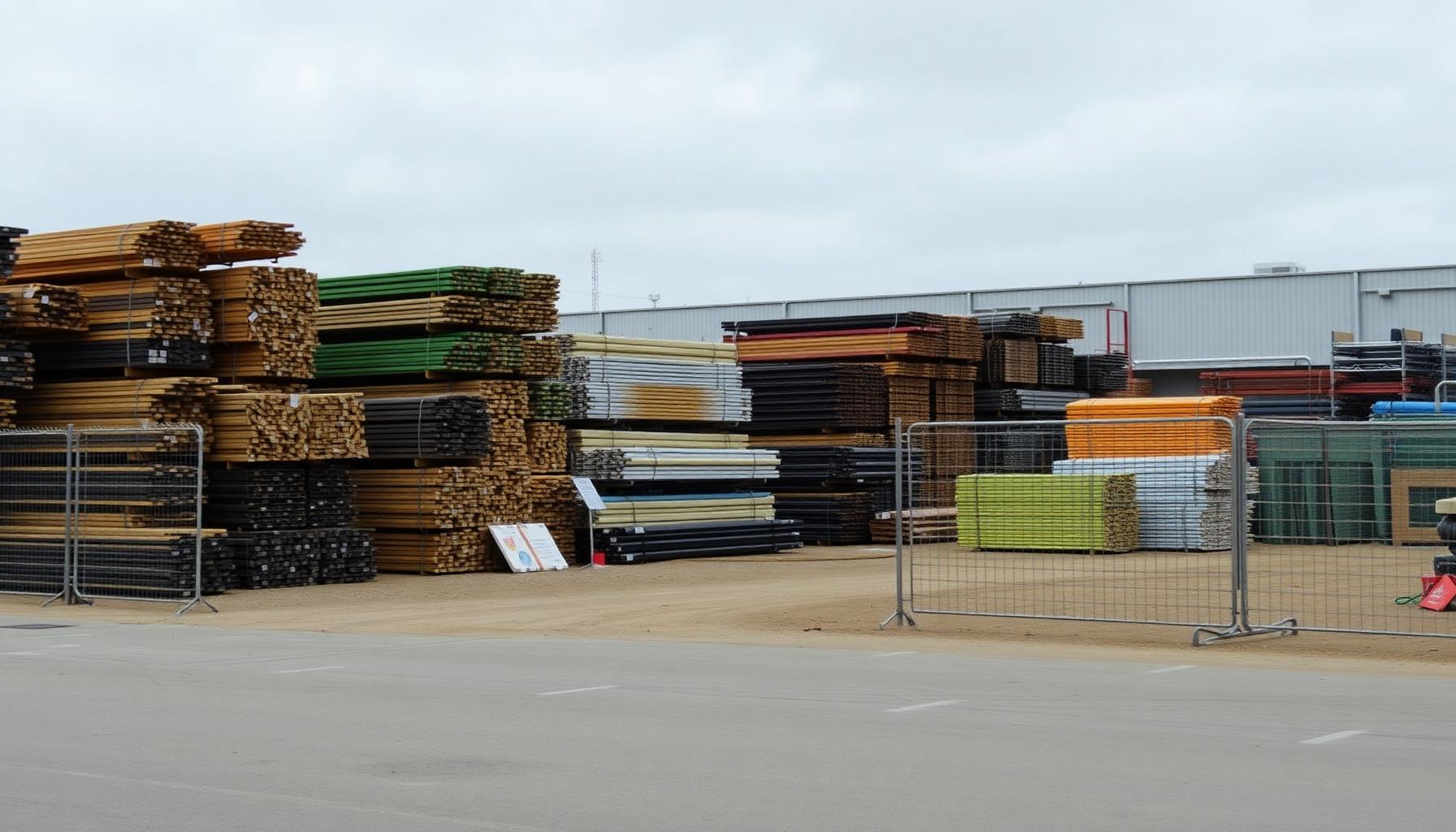
Forget the retail definition of shoplifting. In the high-stakes environment of 2025 Australian construction, loss prevention is a sophisticated risk management strategy designed to protect project margins from "shrinkage." This term encompasses the theft of materials, the siphoning of diesel fuel, and the unauthorised removal of plant equipment. Industry data from 2024 indicates that site theft and vandalism cost the Australian construction sector over A$650 million annually. For a project manager today, every dollar lost to a stolen generator or a stripped copper installation is a direct hit to the bottom line.
The industry has moved past reactive security. You can't just hire a night watchman and hope for the best. Modern loss prevention is a proactive, technology-led discipline. Leading firms now integrate Prevention through Design (PtD) principles during the early planning stages to design out risk. By identifying vulnerability points before the first slab is poured, developers create sites that are inherently difficult to exploit. It's about building a culture of transparency where every asset is tracked and every movement is documented in high-definition.
The Three Pillars of Site Asset Protection
Effective site protection relies on three interconnected layers of security. When one fails, the others provide the necessary redundancy to prevent a total loss.
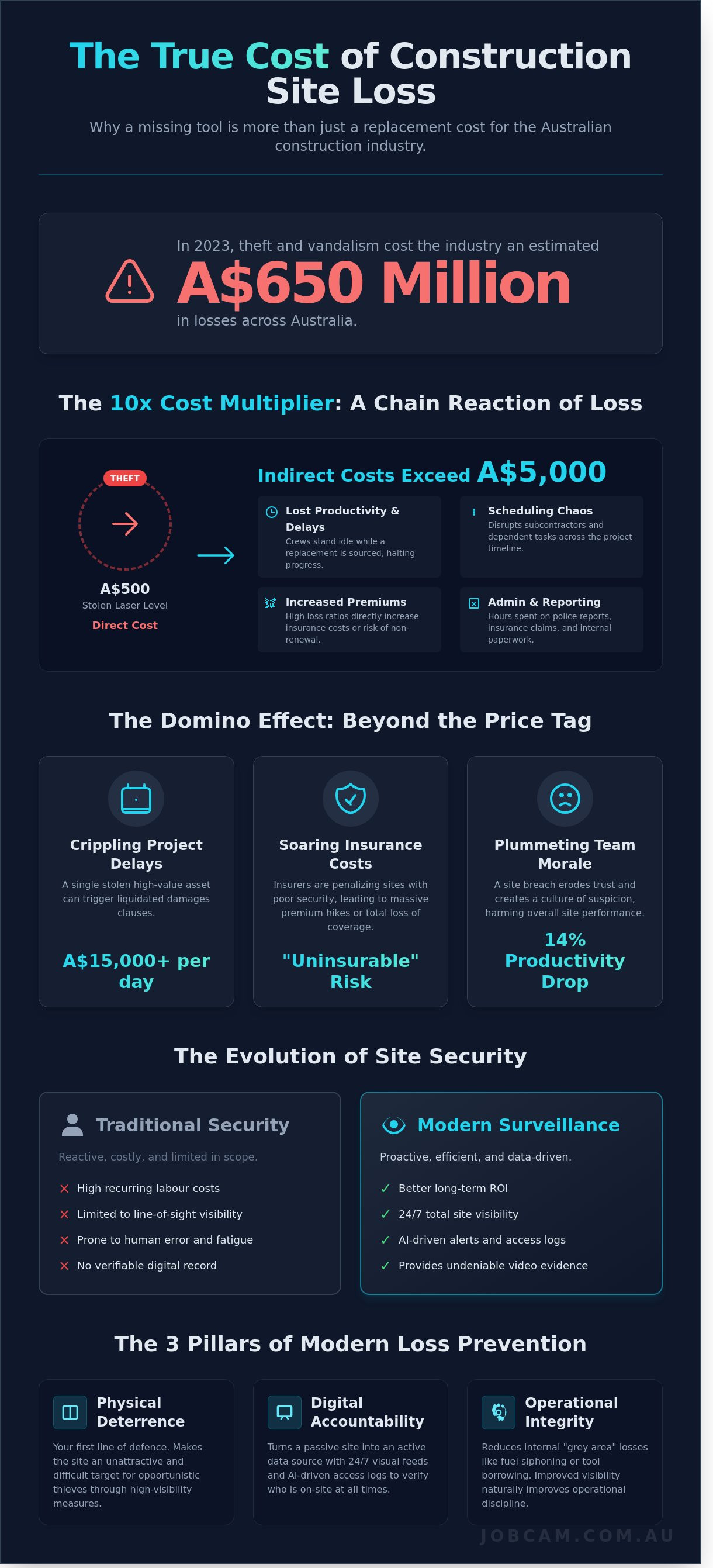
- Physical Deterrence: This is your first line of defence. It includes reinforced perimeter fencing, motion-activated lighting, and high-visibility surveillance towers. The goal is to make the site an unattractive target for opportunistic thieves.
- Digital Accountability: Real-time monitoring turns a passive site into an active data source. Using AI-driven access logs and 24/7 visual feeds, managers can verify exactly who is on-site. This digital trail ensures that every person through the gate is accounted for at all times.
- Operational Integrity: Internal loss is a quiet profit killer. Better site visibility reduces "grey area" losses, such as fuel theft or tool "borrowing" by subcontractors. When staff know that every corner of the site is visible from a central dashboard, operational discipline improves naturally.
Why Construction Loss Prevention is Different
A construction site isn't a locked warehouse. It's a living, breathing entity with porous boundaries that change daily. As the build progresses, fences move, new access points open, and thousands of tonnes of material arrive. This constant flux creates security gaps that don't exist in other industries. You're managing high-value, high-mobility assets like A$180,000 excavators and A$50,000 generators that can be loaded onto a trailer and gone in under six minutes.
The financial impact stretches far beyond the replacement cost of the hardware. If a specialised piece of plant equipment is stolen, the resulting project delay can trigger liquidated damages clauses. In many Tier 1 Australian contracts, these penalties can exceed A$15,000 per day. A single theft doesn't just cost you the tool; it threatens the entire project timeline and your reputation for delivery. In 2025, visibility isn't a luxury. It's the only way to maintain control over a chaotic environment.
The True Cost of Site Theft and Vandalism
Theft on an Australian job site is never an isolated event. It is a chain reaction that destabilises project timelines and budgets. If a thief takes a A$500 laser level from a site in Western Sydney, the financial bleed doesn't stop at the replacement cost. You lose hours of productivity while the site foreman files reports. You pay for a crew of 12 to stand idle at A$85 per hour while a replacement is sourced. By the time the new tool arrives, total delay costs often exceed A$5,000. This 10:1 ratio between indirect and direct costs is the reality of modern site management.
Insurance premiums reflect this volatility. In 2025, insurers are increasingly moving toward "uninsurable" classifications for projects that lack documented security protocols. High loss ratios don't just hike your premiums; they can lead to a total withdrawal of coverage. This forces developers to self-insure, which creates a massive liability on the balance sheet. Investing in construction supervisor training on loss control ensures that site leaders identify these vulnerabilities before they become expenses.
The psychological toll is equally damaging. A site breach erodes staff morale and creates a culture of suspicion. When workers feel their environment is insecure, productivity drops by an average of 14% in the week following an incident. Effective site monitoring restores confidence. It demonstrates that management values the tools and the people using them. Furthermore, the data captured through consistent monitoring improves future project bidding. By analysing historical loss patterns, estimators can move away from vague "contingency" percentages and use concrete figures to protect margins.
Quantifying the 'Hidden' Costs of Loss
Administrative time is a silent profit killer. A single theft incident requires roughly 6.5 hours of management time to handle police statements, insurance paperwork, and vendor coordination. This is time stripped away from critical path activities. Standing time for crews is another major leak. On a Tier 1 project, a half-day delay caused by missing equipment can cost upwards of A$12,000 in lost labour capacity. Beyond the internal books, reputational damage with developers and government stakeholders can lead to being blacklisted from future high-value tenders. Integrating high-definition site monitoring provides the visibility needed to stop these leaks.
Mitigating Risk with Modern Surveillance
High-definition footage serves as more than just a deterrent. It is a tool for vendor accountability. You can verify exactly when a delivery arrived and if the quantity matched the invoice, preventing "paperwork fraud" that often goes unnoticed. Recorded evidence also drastically reduces liability claims. When a site safety incident is captured on camera, the facts are indisputable, protecting the company from fraudulent "slip and trip" claims that can cost A$50,000 or more in legal fees. Shrinkage in a construction context refers to the loss of inventory due to theft, administrative errors, or damage, and by 2025, it is projected to account for 1.8% of total project value across the Australian residential sector. Constant visibility is the only way to drive that number down.
Personnel vs. Technology: Choosing the Right Strategy
Traditional site security often relies on a physical presence. However, static security guards face significant limitations on modern, large-scale developments. A guard stationed at a main gate cannot monitor a 20,000-square-metre perimeter effectively. Human error, fatigue, and restricted sightlines create blind spots that professional thieves easily exploit. This is why a technology-first approach has become the standard for effective site monitoring in the Australian construction sector.
The financial argument for technology is undeniable. In major hubs like Sydney or Brisbane, hiring a licensed security guard for after-hours patrol typically costs between A$55 and A$75 per hour. For a standard 108-hour week covering nights and weekends, your expenditure exceeds A$6,000 weekly. In contrast, hiring an autonomous solar surveillance tower costs approximately A$400 to A$600 per week. You gain 24/7 coverage for less than 10% of the cost of a single human guard. This massive price gap allows project managers to reallocate budget toward higher-quality materials or faster timelines.
The most effective sites now use a hybrid model. Technology acts as the eyes, while human teams act as the hands. Autonomous towers monitor the site constantly. When the system detects an intrusion, it sends a high-definition alert to a mobile device or a central monitoring station. This allows a rapid, targeted response rather than relying on a guard to happen upon a crime in progress. According to construction theft research, over 21% of sites experience theft monthly, proving that passive observation is no longer enough. You need a proactive system that combines digital vigilance with physical intervention.
The Case for Autonomous Surveillance
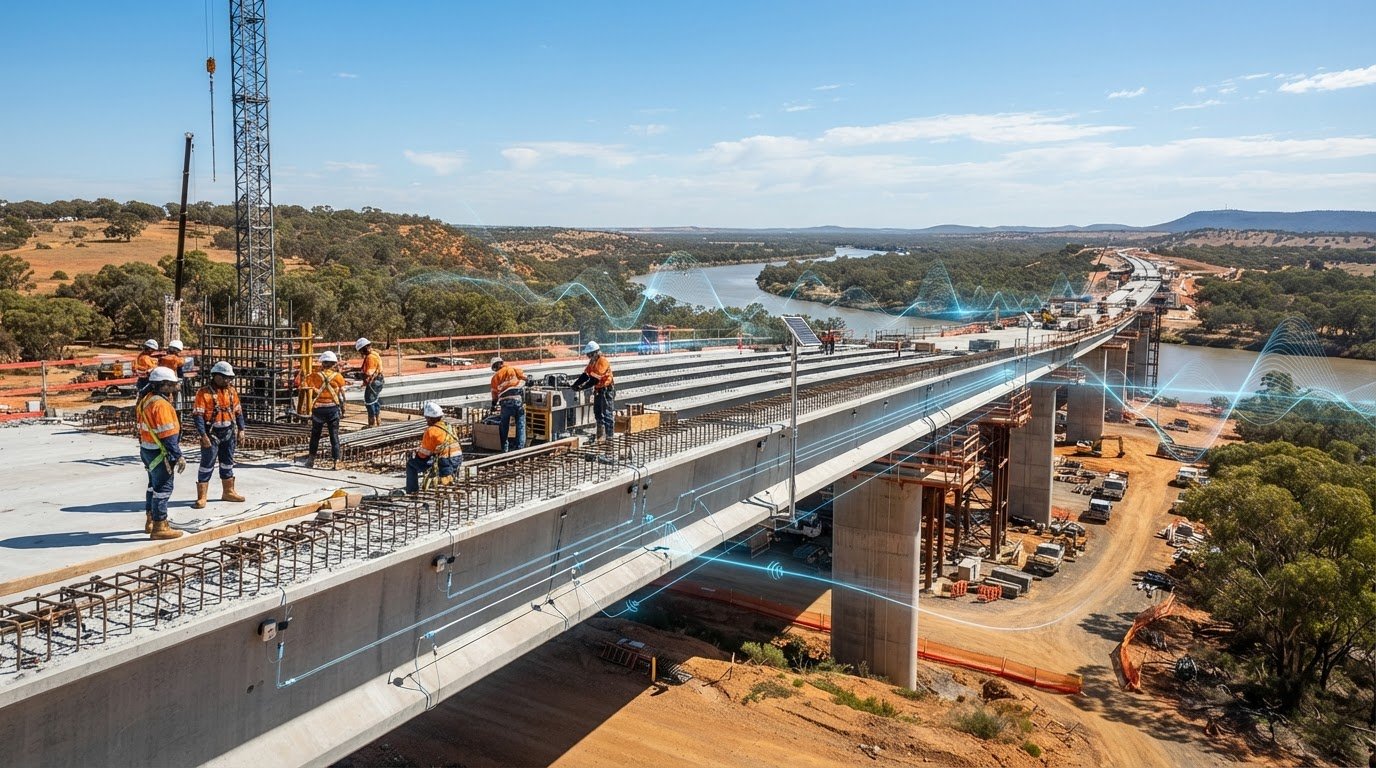
Autonomous towers provide 24/7 vigilance without the risks of human fatigue. These units don't blink or take breaks. Powered by high-efficiency solar panels and heavy-duty battery backups, they remain operational even if a site's mains power is cut by vandals. Modern systems utilise AI-driven motion detection. This technology distinguishes between a person climbing a fence and a wind-blown tarpaulin. By filtering out environmental noise, the system reduces false alarms by up to 90%, ensuring that every notification you receive is a legitimate threat.
Cloud-Based Data Security
On-site Digital Video Recorders (DVRs) are a major liability. If a thief breaks into the site office and steals the recording unit, your evidence is gone. Cloud-based storage eliminates this risk. By leveraging secure AWS servers, your video history is stored off-site and remains tamper-proof. You can access live streams and historical footage from anywhere in Australia via a dedicated mobile app. This transparency provides total accountability. It transforms your security setup from a simple camera into a comprehensive site monitoring and project management tool that you can check from your pocket at any time.
How to Implement a Loss Prevention Plan in 5 Steps
A functional loss prevention strategy isn't a static document. It's an active protocol that evolves with your project. In Australia, site theft and equipment loss cost the construction sector over A$650 million every year. Reducing your exposure requires a structured approach that combines physical barriers with high-definition oversight. You don't need to overcomplicate the process, but you do need to be precise.
- Step 1: Conduct a site-wide vulnerability assessment. Walk the perimeter. Identify every blind spot where temporary fencing might be compromised or where shadows mask movement. Map out access points that are hidden from the main road. The Australian Institute of Criminology reports that 70% of site thefts occur through poorly secured secondary entrances.
- Step 2: Define your high-value zones. Not all areas carry the same risk. Group fuel tanks, tool containers, and office trailers into central "hot zones." A single fuel pod can hold A$5,000 worth of diesel; a tool container often houses over A$50,000 in specialized gear. These assets need dedicated, high-definition oversight.
- Step 3: Deploy mobile surveillance hardware. Install solar-powered camera units for immediate coverage. These units don't require site power, making them effective from day one of excavation. They act as a visual deterrent and a recording hub.
- Step 4: Establish clear site policies. Make loss prevention part of the morning toolbox talk. Define staff accountability and ensure every sub-contractor knows the site is being recorded. Clear signage is a legal requirement and a powerful psychological barrier.
- Step 5: Review footage regularly. Don't just look for thieves. Use recorded data to identify operational inefficiencies. If a concrete pour is delayed by 45 minutes, the footage provides the "why." This leads to a 12% average increase in site productivity when managers use visual data to refine schedules.
Vulnerability Mapping for Remote Sites
Remote Australian sites face unique risks. Weak links often appear at the corners of temporary fencing or near unlit gate hinges. Lighting is your first line of defense; a well-lit site reduces opportunistic crime by 40% according to recent industry security audits. We use Telstra 4GX connectivity to ensure your remote monitoring remains seamless, even in regions with limited infrastructure. This high-speed link allows for real-time streaming without the lag that plagues older systems. It's about maintaining a digital presence when you can't be there physically.
Integrating Technology into Daily Workflows
Technology only works if your team uses it. The Jobcam app allows project managers to perform daily site check-ins from their phone, saving hours of travel time between regional projects. You can set up custom alerts for after-hours movement, ensuring you're only notified when it matters. Train your foremen to use recorded data for dispute resolution. When a delivery driver claims they arrived at 7:00 AM but the gate logs show 8:30 AM, you have the visual evidence to settle the invoice accurately. This transparency builds a culture of accountability that extends across the entire workforce.
Ready to secure your perimeter and eliminate blind spots? You can protect your project with JobCam today.
Jobcam: Australia’s Partner in Site Loss Prevention
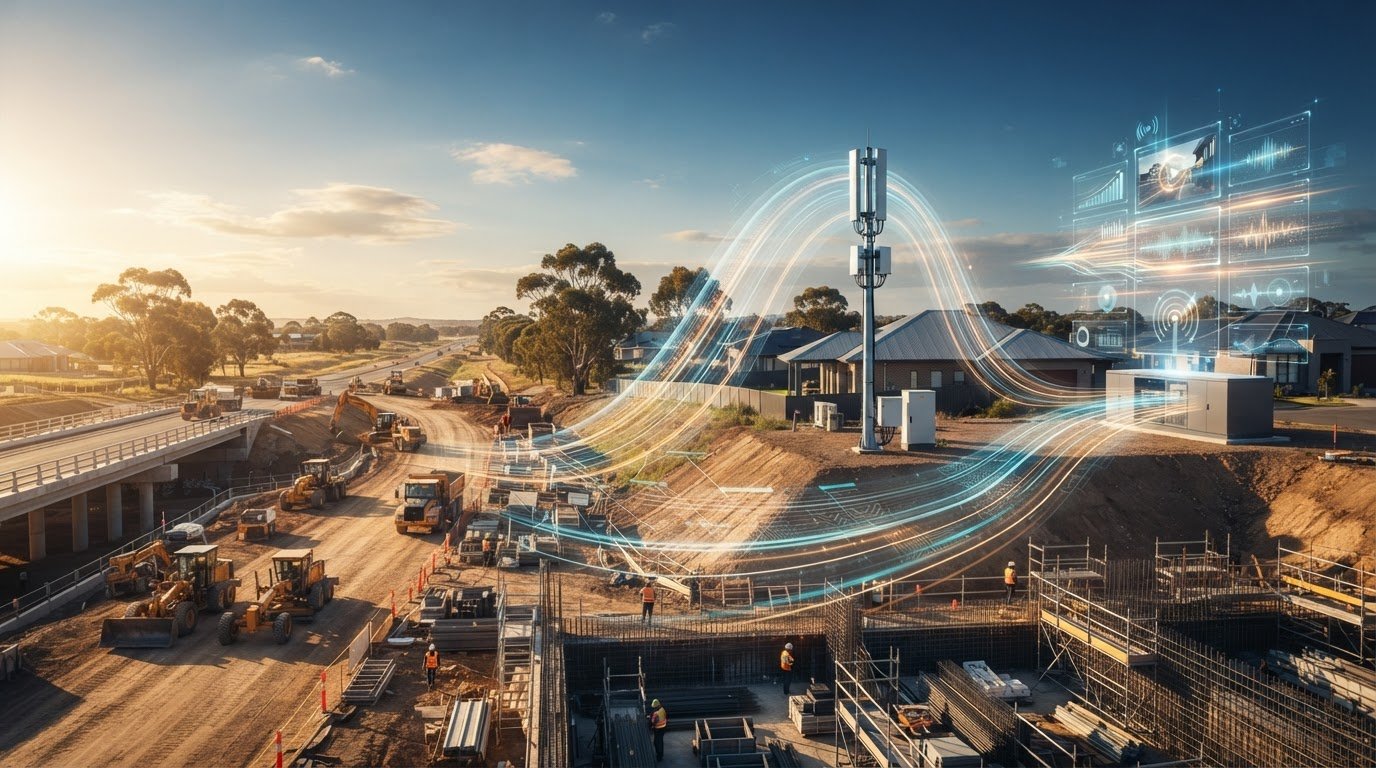
Jobcam stands as the premier choice for site security across Perth, Sydney, and Melbourne. We provide the visibility required to manage complex builds without the stress of constant physical presence. Construction in 2025 demands more than just a fence and a padlock. It requires a proactive, tech-driven approach to site monitoring that works 24/7. Our presence on-site acts as a deterrent to intruders while providing project managers with a digital twin of their progress. We see what you can't, ensuring your project stays on track and under budget.
The 'Hire Advantage' is a core part of our service model. We've removed the need for significant capital outlay. You don't need to drop A$25,000 on hardware that will be obsolete in three years. Instead, our hire model provides access to the latest 4K technology with a predictable weekly fee. This fee covers everything: delivery, installation, and full ongoing maintenance. If a sensor needs adjustment or a lens needs cleaning, we handle it. Your team stays focused on building while we stay focused on watching. It's a seamless solution that protects your cash flow as much as your equipment.
Customization is where Jobcam truly excels. Every site has unique blind spots and high-risk zones. We offer everything from single-camera units for smaller residential builds to massive multi-tower setups for sprawling industrial estates. This flexibility ensures you aren't paying for more than you need, but you're never left vulnerable. It's a strategic partnership that scales with your project phases. As your site grows, your surveillance network grows with it. We adapt to the changing geography of your job site to maintain total coverage.
We provide a dual benefit that traditional security companies can't match. Our systems offer robust security today and high-impact marketing for tomorrow. While the cameras protect your assets, they also capture every minute of progress. This high-definition time-lapse footage becomes a powerful storytelling tool. It allows you to showcase your construction expertise to future clients and stakeholders with professional-grade visual assets. You get a security guard and a marketing agency in a single solar-powered package.
Our Solar-Powered Surveillance Fleet
Our surveillance towers are engineered for the harsh Australian environment. Each unit features 360-degree views and ultra-clear 4K resolution. We utilize AWS cloud integration to ensure your footage is indestructible. Even if a unit is damaged on-site, the data is already safely stored off-site. We know time is money in this industry. That's why we guarantee deployment within 24 to 48 hours across most major metropolitan areas. You can go from an unsecured site to a fully monitored environment in less than two days.
Ready to Secure Your Site?
Jobcam delivers measurable results. During a 2025 infrastructure upgrade in Sydney, our surveillance network helped recover A$45,000 worth of copper piping within six hours of a theft attempt. We've successfully implemented site monitoring strategies on hundreds of sites across Brisbane, Adelaide, and regional hubs. Our team is ready to provide a custom quote tailored to your specific site layout and risk profile. Don't leave your assets to chance. Secure your site today with a Jobcam surveillance hire and experience the peace of mind that comes with total site transparency.
Secure Your Project’s Profitability and Progress
Site security in 2025 requires more than a perimeter fence. Theft and vandalism cost the Australian construction sector over A$650 million each year; a figure that demands a proactive approach. By moving from manual patrols to a tech-first site monitoring strategy, you eliminate blind spots and ensure total accountability. Integrating a structured 5-step plan protects your timeline and your bottom line simultaneously.
Jobcam delivers National Australian coverage across WA, NSW, VIC, QLD, and SA. Our systems utilize Telstra 4GX and AWS Cloud-powered security to keep you connected to your site 24/7. There are no upfront costs with our flexible hire model; it's designed to make professional-grade monitoring accessible for every project stage. You'll gain peace of mind through real-time visibility and high-definition evidence that keeps stakeholders informed and assets safe.
Protect your assets with Jobcam's solar surveillance hire. It's time to build with confidence and see your site from anywhere.
Frequently Asked Questions
What is the primary goal of loss prevention on a construction site?
The primary goal of loss prevention is to protect your project’s bottom line by eliminating unauthorised access and equipment theft. Construction crime costs the Australian industry over A$650 million annually. By implementing proactive monitoring, you reduce project delays and avoid the 15% to 20% markup often seen in emergency equipment replacement. It’s about maintaining momentum and ensuring every asset remains where it belongs.
How do solar-powered security cameras work on remote sites without internet?
Solar-powered security cameras operate on remote sites by using high-capacity lithium batteries and industrial-grade 4G or 5G cellular modems. These systems don't require a fixed line connection. Many Australian construction sites have sufficient cellular coverage for real-time HD streaming. The solar panels recharge the batteries during daylight, providing 24/7 uptime even during five consecutive days of low light or heavy rain.
Is it better to hire or buy security equipment for a short-term project?
Hiring is the more cost-effective choice for projects lasting less than 18 months. When you hire, you avoid the A$5,000 to A$12,000 upfront capital expenditure per unit. You also bypass the ongoing costs of maintenance, storage, and software updates. Our rental model ensures you always have access to latest-spec hardware without the risk of technology obsolescence or the logistical burden of relocating gear between sites.
What happens if a thief steals or damages the security camera itself?
If a thief targets the camera, all footage is already secured in the cloud via real-time uploads. You won't lose evidence if the physical hardware is destroyed. Most professional units include GPS tracking and tamper alerts that notify site managers within 30 seconds of an interference event. This immediate data allows local police to respond to a precise location, increasing the recovery rate of stolen assets by 40%.
Can I monitor multiple construction sites from one mobile application?
You can monitor an unlimited number of construction sites through a single, centralised mobile application. This interface provides a high-level overview of your entire project portfolio across Australia. Managers save an average of 10 hours per week by reducing physical site visits. You can toggle between a 40-storey development in Melbourne and a civil project in Perth with one tap, ensuring total visibility and loss prevention across all active zones.
How does loss prevention technology help with insurance claims?
Loss prevention technology provides timestamped, high-definition visual evidence that validates the exact moment of an incident. This documentation speeds up insurance payouts by up to 50% because it removes the ambiguity of conflicting reports. Many Australian insurers offer premium discounts of 5% to 10% when sites are protected by monitored surveillance. It turns a potential financial disaster into a manageable, evidence-backed claim process that protects your premiums.
What are the legal requirements for using CCTV on Australian building sites?
Australian law requires clear signage at all entry points to notify workers and the public that surveillance is active. Under the Privacy Act 1988, you must ensure cameras don't record private areas outside the site boundary, such as residential windows. Data must be stored securely; access should be limited to authorised personnel. Following these 3 core requirements protects you from litigation and ensures your evidence is admissible in court.
How quickly can a surveillance tower be installed on my site?
We can typically install a fully operational surveillance tower on your site within 24 to 48 hours of your request. These units are self-contained and don't require ground-breaking or complex electrical wiring. A technician arrives, positions the tower, and activates the live feed in under 60 minutes. This rapid deployment is critical for securing sites immediately after a perimeter breach or when high-value materials arrive unexpectedly.