Security Cameras with Solar: The 2025 Professional Guide to Off-Grid Surveillance
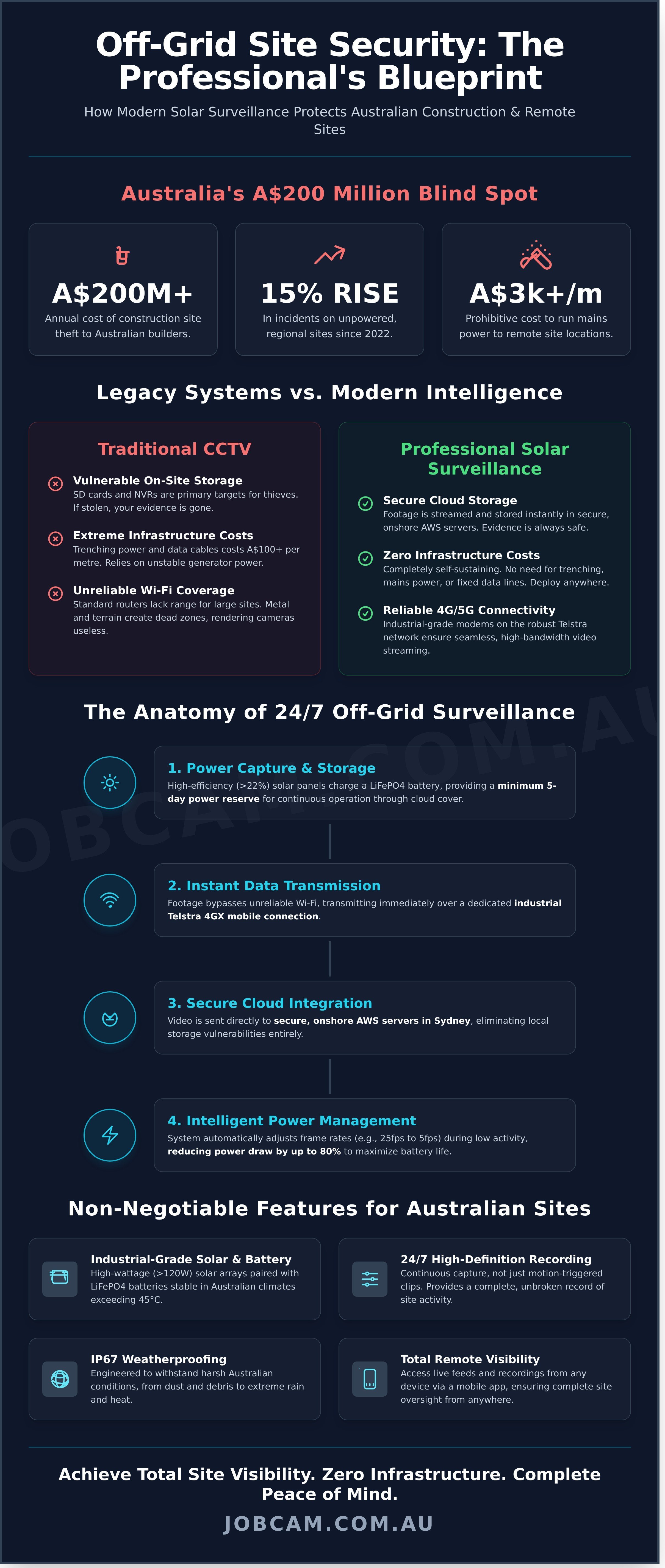
Construction site theft costs Australian builders over A$200 million annually, with a staggering 15% rise in incidents on unpowered, regional sites since 2022. You know the challenge all too well: the prohibitive cost to run mains power, often exceeding A$3,000 per metre, and the unreliability of DIY systems that fail when you need them most. These weak points leave your high-value assets exposed and your project vulnerable to costly delays and vandalism.
This guide is your professional blueprint for deploying high-performance security cameras with solar to achieve total, off-grid surveillance. Discover how to gain complete site visibility from a mobile app, capture legally admissible high-definition footage, and eliminate maintenance burdens entirely. We'll break down the essential technology and secure cloud solutions that separate a reliable asset from a costly liability on any Australian site.
Key Takeaways
- Evaluate the true cost of site security by comparing the high capital outlay of buying against the predictable operational expense of hiring a managed solution.
- Discover the non-negotiable features, from IP67 weatherproofing to 4G data transmission, that separate professional-grade security cameras with solar from unreliable consumer gadgets.
- Understand how modern systems manage power and data to deliver reliable 24/7 surveillance to any remote site, completely independent of fixed power or Wi-Fi.
- Learn how to achieve total site visibility for off-grid projects, ensuring you can clearly identify number plates and faces to enforce security and accountability.
What are Professional Security Cameras with Solar?
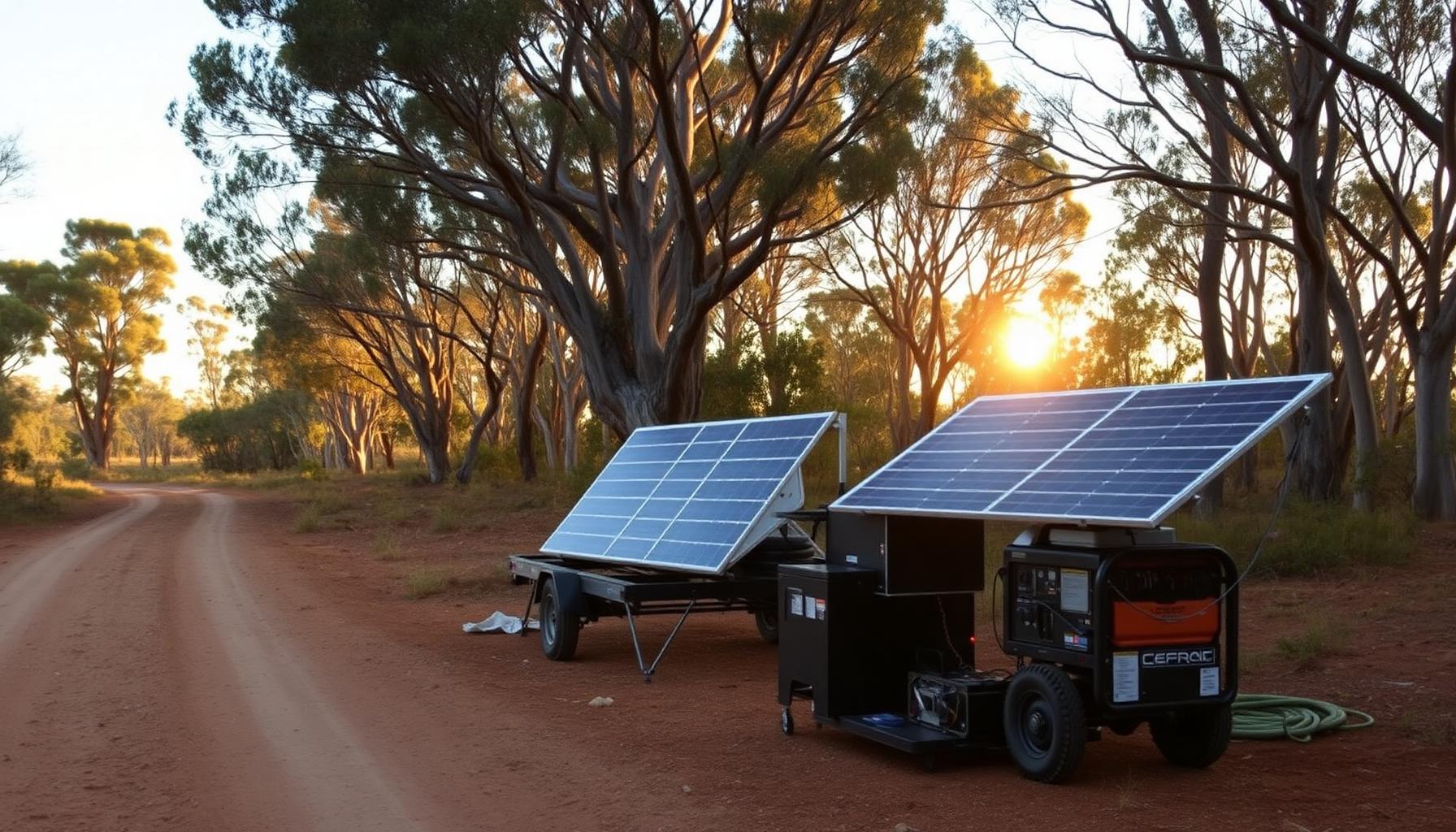
Forget the consumer-grade gadgets you find in retail stores. Professional security cameras with solar are self-sustaining surveillance units engineered for the harsh realities of remote and off-grid sites. They are not accessories; they are mission-critical infrastructure. These systems integrate high-efficiency photovoltaic (PV) panels, industrial-grade batteries, and robust 4G or 5G connectivity into a single, deployable tower. This is the definitive shift from novelty tech to professional mobile surveillance.
For greenfield developments, civil works, and remote Australian mining or agricultural projects, solar power isn't just an option; it's the only viable one. When grid power is hundreds of kilometres or millions of dollars away, these systems provide immediate, reliable oversight. The critical difference lies in their operational design. Unlike consumer cameras that only record a few seconds of footage after a motion trigger, professional systems offer continuous, 24/7 high-definition recording. This provides a complete, unbroken record of site activity, crucial for security, compliance, and project accountability. You see everything, not just the aftermath.
The Core Components of an Industrial Solar Camera
The performance gap between consumer and professional systems is built on industrial-grade hardware. A retail camera might use a small, 5-watt integrated panel. Our systems utilise high-wattage solar arrays, often exceeding 120 watts, to power continuous recording and data transmission. This energy is stored in Lithium Iron Phosphate (LiFePO4) batteries, specifically chosen for their thermal stability and superior performance in Australian climates where site temperatures can exceed 45°C. Data is transmitted via industrial 4G LTE modems designed for the high-bandwidth demands of streaming 4K video, ensuring a seamless, real-time view of your site from anywhere.
Why Traditional CCTV Fails on Remote Sites
Conventional security systems are fundamentally unsuited for the dynamic environment of a large-scale project. While the principles of Closed-circuit television (CCTV) have existed for decades, their reliance on local power and network infrastructure creates critical points of failure on undeveloped sites. These systems break down where it matters most.
- Vulnerable On-Site Storage: Systems that rely on local SD cards or NVRs are a primary target for thieves. If the camera or recorder is stolen, your evidence is gone with it. Professional solar systems stream and store footage securely in the cloud.
- Prohibitive Infrastructure Costs: Trenching armoured power and data cables across a worksite is a significant expense, often costing over A$100 per linear metre. Power surges from temporary generators also pose a constant risk to sensitive equipment.
- Unreliable Wi-Fi Coverage: Standard 'off-the-shelf' Wi-Fi routers lack the range and resilience to cover a sprawling, multi-hectare construction or mining site. Metal structures and terrain create dead zones, rendering cameras useless.
How Solar Powered Video Surveillance Works in 2025
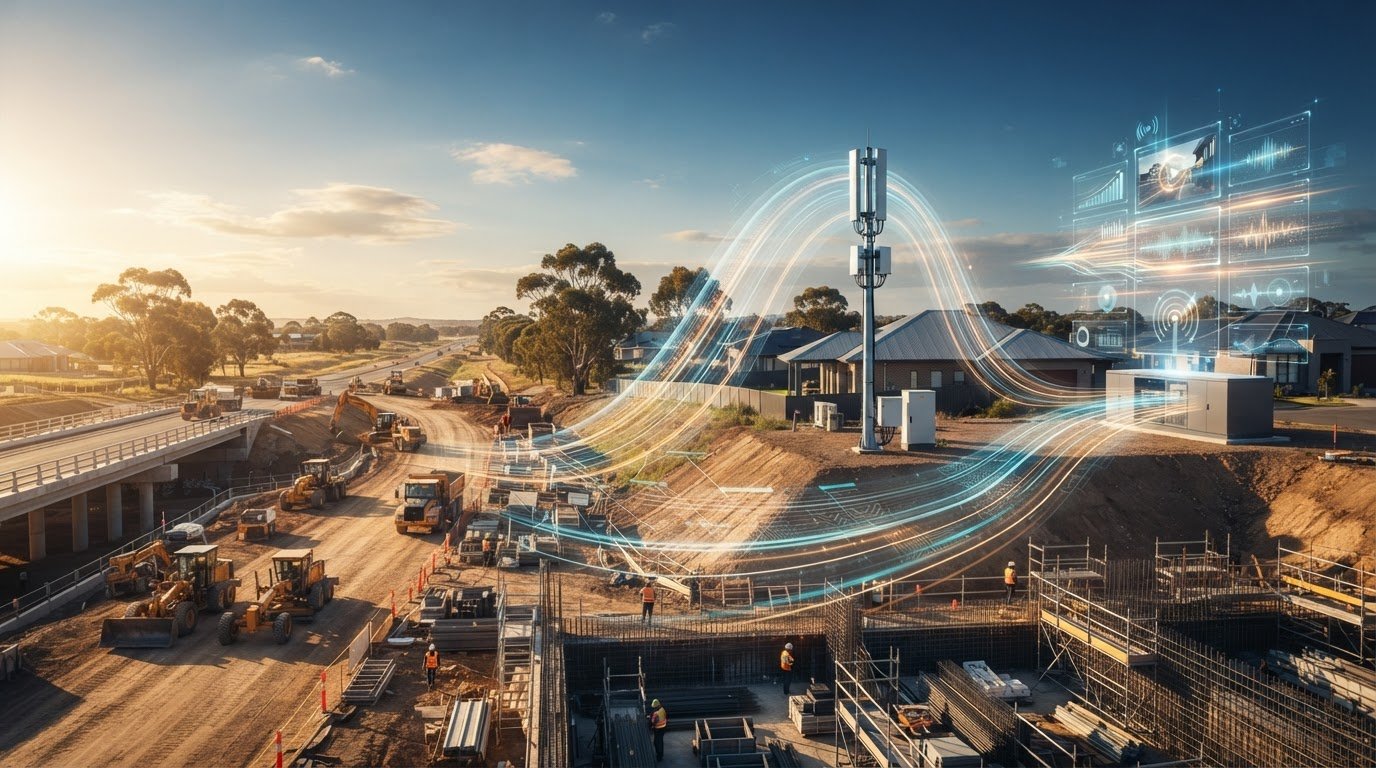
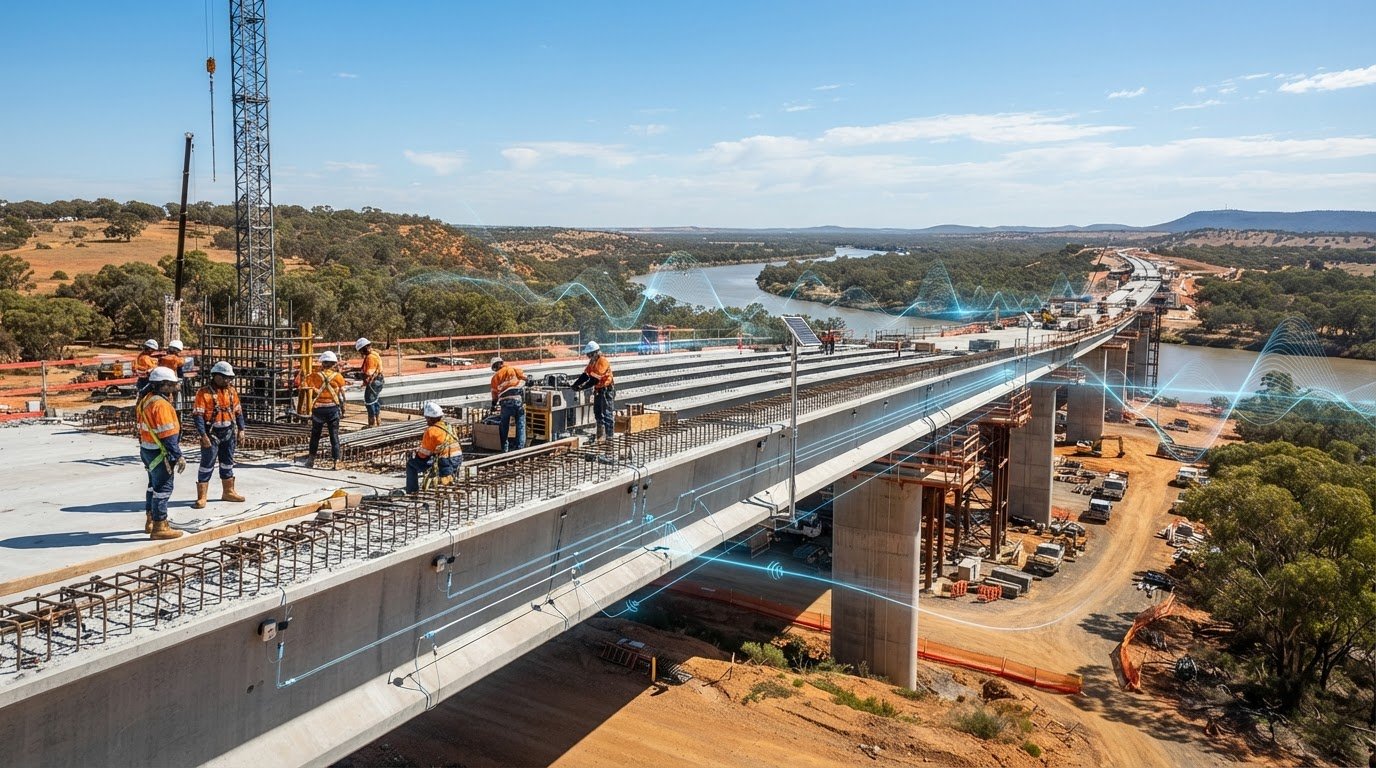
Modern off-grid surveillance is far more than a camera connected to a solar panel. It’s a completely integrated ecosystem designed for 100% operational uptime, even in the most challenging site conditions. The process hinges on a seamless energy and data lifecycle, ensuring what happens on your site is captured, transmitted, and secured in real-time.
The system's operation breaks down into four critical stages:
- Power Capture and Storage: High-efficiency Photovoltaic (PV) systems convert sunlight into electricity with over 22% efficiency, charging an internal Lithium Iron Phosphate (LiFePO4) battery. This industrial-grade power bank provides a minimum 5-day power reserve, guaranteeing continuous operation through extended periods of cloud cover.
- Instant Data Transmission: Once footage is captured, it bypasses unreliable on-site Wi-Fi entirely. The data is immediately transmitted over a dedicated Telstra 4GX mobile data connection, purpose-built for industrial applications.
- Secure Cloud Integration: Within seconds, the high-definition video travels from the camera pole to secure, onshore AWS (Amazon Web Services) servers located in Sydney. This direct-to-cloud pathway eliminates local storage vulnerabilities.
- Intelligent Power Management: The system actively manages its power consumption. During low-activity periods, like overnight, the camera’s frame rate can automatically adjust from 25fps down to 5fps, reducing power draw by up to 80% without ever going offline. This ensures the battery reserve is always maximised for critical events.
Connectivity: The Role of Telstra 4GX and 5G
A consumer-grade SIM card is a guaranteed point of failure on a construction site. The high radio-frequency interference from steel structures and heavy machinery causes constant dropouts. Our security cameras with solar use industrial M2M SIMs on the Telstra 4GX and 5G networks, which have higher network priority and resilience. This delivers the sub-50ms low-latency connection required for a project manager to pan, tilt, and zoom in real-time from their mobile app. It’s the difference between seeing an event and stopping it. With network coverage across 99.5% of the population, your site in remote WA or regional QLD remains securely online.
Storage Architecture: Local vs. AWS Cloud
The biggest security loophole in traditional cameras is the 'Hardware Theft' problem. If a thief can reach the camera and steal its local SD card, they steal all the evidence along with it. This single vulnerability makes on-site storage obsolete for professional security. Our architecture solves this by making local storage redundant. Footage is streamed directly to the AWS cloud, creating an immediate, tamper-proof audit trail for any incident. This time-stamped evidence is critical for successful insurance claims and dispute resolution. All data is protected with AES-256 bit end-to-end encryption, ensuring your site's privacy and data integrity are never compromised. This complete ecosystem ensures you're not just buying a camera; you're investing in total site visibility. See how our integrated systems provide accountability on projects across Australia.
Hiring vs. Buying: The Real Cost of Solar Security
On the surface, the choice seems simple. A one-time capital expenditure (CAPEX) to purchase a camera system versus an ongoing operational expenditure (OPEX) to hire one. For projects with tight budgets, the allure of a single, upfront cost is strong. But this view overlooks the total cost of ownership, a figure that dramatically changes the equation for professional job sites. The real cost isn't what you pay for the box; it's the accumulated expense of keeping it operational, secure, and effective for the entire project lifecycle.
A managed hire model transforms an unpredictable capital asset into a predictable weekly expense. This aligns surveillance costs with project cash flow and eliminates the hidden expenses that plague purchased hardware. These ongoing costs include data plans, maintenance call-outs, and the inevitable hardware replacement. When you buy, you own the technology and all its associated problems. When you hire, you secure a guaranteed outcome: constant, reliable site visibility.
The Retail Trap: Why A$300 Cameras Cost More in the Long Run
That off-the-shelf camera from a big-box retailer looks like a bargain, but it’s a liability on a professional construction site. Consumer-grade plastics are not engineered for the relentless Australian sun. In 40°C+ heat common in Western Sydney or inland Queensland, the surface temperature of a dark-coloured camera can exceed 70°C, causing casings to warp and internal components to fail within a single summer. Suddenly, your asset is worthless.
Worse yet is the time cost. A project manager's time is worth over A$75 an hour. When a DIY camera drops its connection, that manager becomes amateur IT support. Just three hours a month spent troubleshooting connectivity, reviewing false alerts, or repositioning a poorly mounted unit adds up to over A$2,700 a year in lost productivity. That's a recurring cost far exceeding the initial purchase price.
The Hidden Costs of Ownership
Beyond the initial purchase, owning security cameras with solar involves a checklist of recurring and unexpected costs that are completely absorbed by a professional hire service.
- Maintenance & Support Logistics: When a crane knocks your camera out of alignment at 6 AM, who fixes it? With a purchased unit, the responsibility is yours. This means finding a technician, scheduling a site visit, and absorbing the call-out fee, which can easily exceed A$250. A managed service includes 24/7 support and on-site remediation as part of the weekly rate.
- Data & Connectivity: High-definition video streaming requires a robust 4G or 5G data plan. A single camera can use over 100GB of data per month, requiring a commercial-grade SIM plan costing upwards of A$80 monthly. This is a significant operational cost that is often overlooked at the point of purchase.
- Technology Obsolescence: The pace of surveillance technology is rapid. A 4K camera purchased in 2024 will be functionally obsolete by 2025 as 8K and advanced AI analytics become standard. Hiring ensures your site is always equipped with current-generation hardware, without the need for a complete capital reinvestment every two years.
Benefits of the Managed Hire Model
Choosing a managed hire solution eliminates these variables. The model is built for the dynamic environment of a construction site. Professional installation and commissioning are included, ensuring every camera is perfectly positioned and calibrated from day one. The reliability of the unit depends entirely on its power source; properly designing reliable off-grid power systems requires engineering expertise to balance solar panel output with battery storage for continuous operation, a standard feature in professional systems but an afterthought in retail products.
Scalability is seamless. As your project footprint expands from groundwork to the top floor, you can add or relocate cameras with a single phone call. This ensures your surveillance coverage adapts to your needs, aligning costs directly with the project phase. It provides what every project manager truly needs: peace of mind, backed by a 24/7 technical support team and a guarantee of immediate hardware replacement if a unit ever fails.
Critical Features for Australian Construction Sites
An Australian construction site isn't a friendly environment for technology. Between the fine red dust, torrential downpours, and relentless UV exposure, standard equipment fails. Selecting the right features for your security cameras with solar isn't about adding bells and whistles; it's about ensuring operational reliability and capturing evidence that holds up. Your surveillance system must be purpose-built to survive and perform in these demanding conditions.
The non-negotiable starting point is weatherproofing. Look for a minimum Ingress Protection rating of IP66. This certifies the hardware is completely dust-tight and can withstand powerful jets of water from any direction, essential for surviving a Brisbane summer storm or a high-pressure site clean. An IP67 rating goes further, allowing for temporary submersion, offering an extra layer of security in flood-prone areas. Without this baseline, your investment is at risk from the first major weather event.
Clarity is accountability. Vague, pixelated footage is useless for identifying trespassers or capturing number plates. A standard 1080p camera might capture a number plate at 10 metres, but a 4K (8MP) high-definition camera can provide a clear, readable image from over 25 metres away. This is the difference between having a general record of an incident and possessing actionable evidence for police reports or insurance claims. For large sites, high-definition is not a luxury; it's a core requirement for effective security.
Site activity doesn't stop when the sun goes down, and neither should your surveillance. You have two primary choices for night vision:
- Infrared (IR): Uses IR LEDs to illuminate the scene, producing clear black-and-white footage. Professional systems offer a range of 30 metres or more, ideal for perimeter monitoring.
- Starlight Technology: Employs highly sensitive sensors to capture low-light scenes in full colour. This technology is superior for identifying crucial details like the colour of a vehicle or a person's clothing.
Finally, smart alerts powered by AI are crucial for eliminating "alert fatigue." A basic motion sensor will notify you about every wandering kangaroo or piece of windblown debris, rendering the system ineffective. Modern AI detection can distinguish between people, vehicles, and irrelevant movement with over 95% accuracy. This ensures you are only alerted to genuine security events, allowing your team to respond instantly when it matters most.
Ruggedized Hardware for Harsh Environments
Your camera's physical build must match the environment. For coastal developments in Sydney and Perth, 316-grade stainless steel mounts are essential to resist salt-spray corrosion. Vandal-resistant housings with an IK10 impact rating protect against tampering and direct attacks. For expansive sites, a dedicated, stable surveillance tower provides a superior vantage point and greater stability than a simple pole-mounted unit, ensuring consistent coverage without vibration or misalignment.
Software & App Functionality
The 'See Your Site From Anywhere' promise is delivered through powerful, intuitive software. A professional system provides real-time mobile app access, not just for one user, but with multi-user permissions. This allows you to grant tailored access to project managers, stakeholders, and contractors. Beyond security, high-resolution footage can be automatically compiled into compelling time-lapse videos, turning a necessary security asset into a powerful marketing tool to showcase project milestones.
A professional-grade system is a complete solution. It's the seamless integration of resilient hardware and intelligent software that delivers true site visibility and control. Don't leave your A$50 million project protected by a system that can't handle the elements. Explore our purpose-built solar security solutions designed for Australia's toughest construction sites.
Implementing Jobcam: Your Managed Surveillance Partner
Choosing the right hardware is only the first step. True site security comes from a managed solution that combines robust technology with expert oversight. Jobcam isn't just a supplier; we are your dedicated surveillance partner, delivering peace of mind through a comprehensive service designed for Australia's most demanding project environments. We handle everything from deployment to daily monitoring, so you can focus on your project's critical path.
Our solar surveillance towers provide a commanding 360-degree 'eye in the sky' over your entire site. Engineered for complete off-grid autonomy, these units capture high-definition video day and night, powered entirely by industrial-grade solar panels and battery storage. This isn't a standard retail camera. It's a rugged, all-in-one security asset that eliminates blind spots and provides undeniable visual evidence, accessible from anywhere in the world.
The transition from an unsecured site to a fully monitored one is seamless and swift. Once our team installs the tower, you gain immediate access to a 24/7 live feed and secure cloud storage. There are no complex configurations or IT hurdles. You get a direct, real-time view of your assets, progress, and personnel, ensuring total accountability and immediate incident response.
The results are not theoretical. On the WestConnex M8 project in Sydney, the deployment of Jobcam solar security towers was directly correlated with a significant reduction in material theft and unauthorised after-hours entry within the first six months of operation. Similarly, a major commercial development in Perth's CBD saw vandalism incidents drop to zero after our systems were activated, saving the project an estimated A$75,000 in potential repair and replacement costs.
Our National Coverage and Support
Jobcam delivers local expertise on a national scale. Our teams are on the ground and ready to deploy, providing a consistent, high-quality service across the country.
- Local Teams, National Strength: We have dedicated installation and support crews in Perth, Sydney, Melbourne, Brisbane, and Adelaide, ensuring we understand the unique logistical and environmental challenges of your region.
- Rapid Deployment Protocol: Your site can be secured in as little as 48 hours from your initial consultation. We eliminate delays to protect your assets from day one.
- Dynamic Relocation Service: Construction sites are not static. As your project evolves and site boundaries change, we strategically relocate our security cameras with solar to maintain optimal coverage without interrupting your operations.
Getting Started with Jobcam
Securing your project begins with a simple, practical conversation. Our initial consultation process involves a thorough assessment of your site layout to identify vulnerabilities, map critical zones, and define your specific monitoring requirements. We then propose a tailored solution with flexible hire terms designed to align perfectly with your project timeline and budget, whether it’s a three-month civil works project or a multi-year high-rise construction.
Don't leave your site's security to chance. Secure your site today with a Jobcam Solar Security solution.
Secure Your 2025 Project with Today's Leading Surveillance
Your project's security is too important for guesswork. By 2025, the standard for off-grid surveillance has been set, and it's powered by the sun. The right professional-grade security cameras with solar are no longer a compromise; they are a strategic asset for any Australian construction site. Hiring a managed solution bypasses significant upfront capital and ongoing maintenance costs, giving you access to the latest IP66-rated technology without the long-term risk.
Don't settle for an off-the-shelf system. Jobcam provides a fully managed surveillance solution engineered for Australian conditions. We deliver seamless, real-time monitoring with Telstra 4GX connectivity, secure AWS cloud storage for all your critical footage, and expert Australia-wide installation and support. You can see your site from anywhere, 24/7.
Ready to implement a zero-hassle surveillance solution that works? Get a Quote for Solar Camera Hire Today and build with total confidence.
Frequently Asked Questions
Can solar security cameras work in winter or during cloudy weeks?
Yes, our site monitoring equipment is engineered for continuous operation in all Australian weather conditions. Each unit includes a high-capacity battery bank that stores enough power for 5-7 days of autonomous function without direct sunlight. This ensures reliable, uninterrupted surveillance through a week of rain in Brisbane or the overcast winter days common in Melbourne, keeping your site secure year-round.
Do I need to provide a SIM card or internet connection for the camera?
No, you don't need to arrange any connectivity. Every JobCam unit is a fully self-contained solution, equipped with a pre-configured 4G/5G SIM card that connects to Australia's most reliable networks like Telstra and Optus. We manage all data and connectivity as part of our service. This provides you with seamless, real-time access to your site from anywhere, without the hassle of organising on-site internet or dealing with third-party providers.
What happens if someone steals the solar security camera itself?
Your footage remains completely secure and we manage the hardware replacement. All video is instantly transmitted to the cloud, meaning no data is ever lost if a camera is stolen or damaged. Our units feature GPS tracking and anti-tamper alerts that notify our 24/7 support team. We coordinate with authorities and typically deploy a replacement unit to your site within 48 hours to eliminate security gaps.
Is there a limit to how many people can view the live feed?
No, there are no limits on authorised viewers for your project. You can grant secure access to an unlimited number of team members, stakeholders, and clients via our intuitive mobile app and web portal. We provide granular user permissions, allowing you to control who can simply view the feed versus who can download footage or adjust settings. This ensures total project visibility and accountability for everyone involved.
How high are the solar surveillance towers, and are they stable in wind?
Our standard mobile surveillance towers extend to a height of 6.5 metres for an optimal vantage point. They are engineered to withstand the challenging conditions of Australian work sites, remaining fully stable in wind gusts of up to 110 km/h. The weighted, non-penetrating base ensures stability on any surface without requiring permanent foundations, making them ideal for both short-term and long-term deployments on construction and development projects.
Can these cameras be used for time-lapse video production as well?
Yes, professional time-lapse production is a core feature of our service. Beyond security, our systems are equipped with 4K cameras that capture high-definition images at set intervals to create a stunning time-lapse video of your project's entire lifecycle. This content serves as a powerful marketing and stakeholder communication tool, showcasing your progress from groundbreaking to completion. We handle all post-production to deliver a polished final video.
What is the typical lead time for installation on a new site?
Our standard installation lead time is just 3 to 5 business days Australia-wide. We maintain a ready-to-deploy fleet of camera systems in major hubs like Sydney, Perth, and Brisbane to ensure rapid response. Once your service is confirmed, our technicians will deliver, install, and commission the system on your site. For urgent requirements in metropolitan areas, an expedited 24-hour deployment service is also available.
Are there ongoing fees for cloud storage and mobile app access?
No, there are no separate or hidden fees. All costs are consolidated into a single, transparent monthly hire fee, which starts from A$499 per month. This all-inclusive price covers unlimited cloud storage, all 4G/5G data usage, full access to the mobile app for your entire team, and our 24/7 technical support. This fixed-cost model allows for simple, predictable budgeting for your project's security and monitoring needs.