Temporary Fencing: Why It’s Not Enough for Construction Site Security in 2026
By 2026, relying solely on temporary fencing to protect a multi-million dollar project is like locking a screen door and calling it high security. With tool and plant theft costing Australian builders billions of dollars annually, a physical mesh barrier is no longer a sufficient deterrent for sophisticated criminals. You've likely felt the frustration of managing multiple sites remotely, only to find that your perimeter was breached despite being fully fenced. It's an all too common pain point when insurance claims are denied because site security was deemed insufficient under current Australian safety standards.
This article shows you why physical barriers are only half the battle and how to harden your site against theft and liability. We'll explain how to move beyond basic perimeters to achieve zero incidents of unauthorised access through real-time accountability. You'll learn how to integrate high-definition monitoring that provides 24/7 visibility, ensuring your site remains compliant and your assets stay exactly where they belong. We'll examine the technical shift from passive fencing to active, intelligent site oversight that gives you total control from any location in Australia.
Key Takeaways
- Understand why temporary fencing acts as a baseline for safety compliance but falls short as a standalone security solution against determined intruders.
- Debunk common myths regarding insurance risks and learn why physical barriers alone cannot fully protect your Australian site from liability.
- Identify the "visibility gap" in your perimeter and why real-time alerts are the only way to combat both external breaches and internal theft.
- Master the strategy of site hardening by integrating Australian Standard-compliant barriers with solar-powered, high-definition surveillance.
- Explore how Jobcam’s 4GX-connected technology provides constant visibility for remote projects, turning site security into a powerful project management tool.
What is Temporary Fencing? The Compliance Baseline for 2026
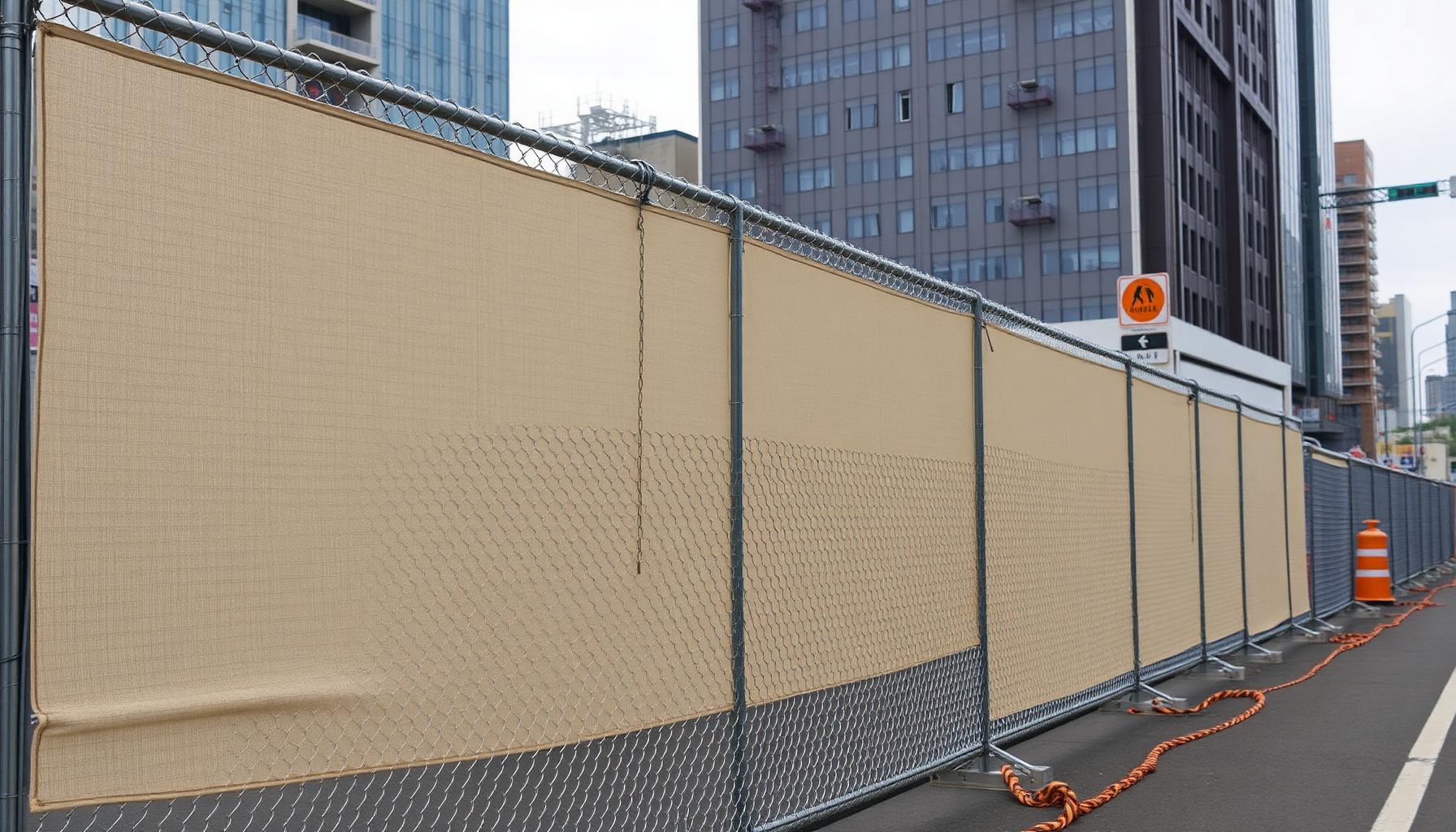
Temporary fencing is a modular physical barrier system designed to secure boundaries and prevent public injury. In the Australian construction landscape, it's the bare minimum requirement for site establishment. While it effectively defines where a project starts, it's primarily a tool for safety compliance and legal demarcation rather than high-level security. Project managers often confuse a 'demarcated site' with a 'secure site'. This mistake leaves millions of dollars in plant and equipment vulnerable to theft. A fence tells people where not to walk; it doesn't stop those determined to get inside.
Meeting Australian Standards for Site Safety
Compliance drives the installation of most perimeter barriers. Site supervisors must account for wind loading and stability to prevent panels from becoming hazards during storms. In Region A, panels must often withstand wind speeds of 45 metres per second. AS 4687:2022 serves as the mandatory benchmark for temporary fencing stability, wind loading capacity, and overall site safety across Australia. This standard ensures that hoarding and mesh systems remain upright, protecting the builder from public liability claims. If a fence fails, the legal and financial fallout can exceed A$100,000 in fines and legal fees. While these standards ensure the fence stays up, they don't guarantee the site stays secure.
Boundary Management vs. Asset Protection
Fencing defines the project perimeter for subcontractors, delivery drivers, and visitors. It creates a clear physical and psychological barrier. Data from site audits suggests that a standard fence deters many casual trespassers who might otherwise wander into a hazardous zone. However, a 2.1-metre mesh panel is a minor obstacle for a professional thief. It's a baseline for boundary management, not a comprehensive shield for high-value assets. Consider these points:
- Fencing establishes the legal "No Trespassing" zone.
- It prevents accidental entry by pedestrians or local wildlife.
- Mesh panels provide a visual screen for privacy and dust control.
- It's the first layer of a security stack, but it lacks active monitoring.
Relying solely on temporary fencing for asset protection is a tactical error. It provides the illusion of safety while leaving the interior of the site invisible to stakeholders. Real security requires a shift from passive barriers to active visibility. You can't manage what you can't see, and a fence offers no data on what happens after the gates lock at 4:00 PM.
Debunking the Top 3 Myths About Temporary Fencing and Security
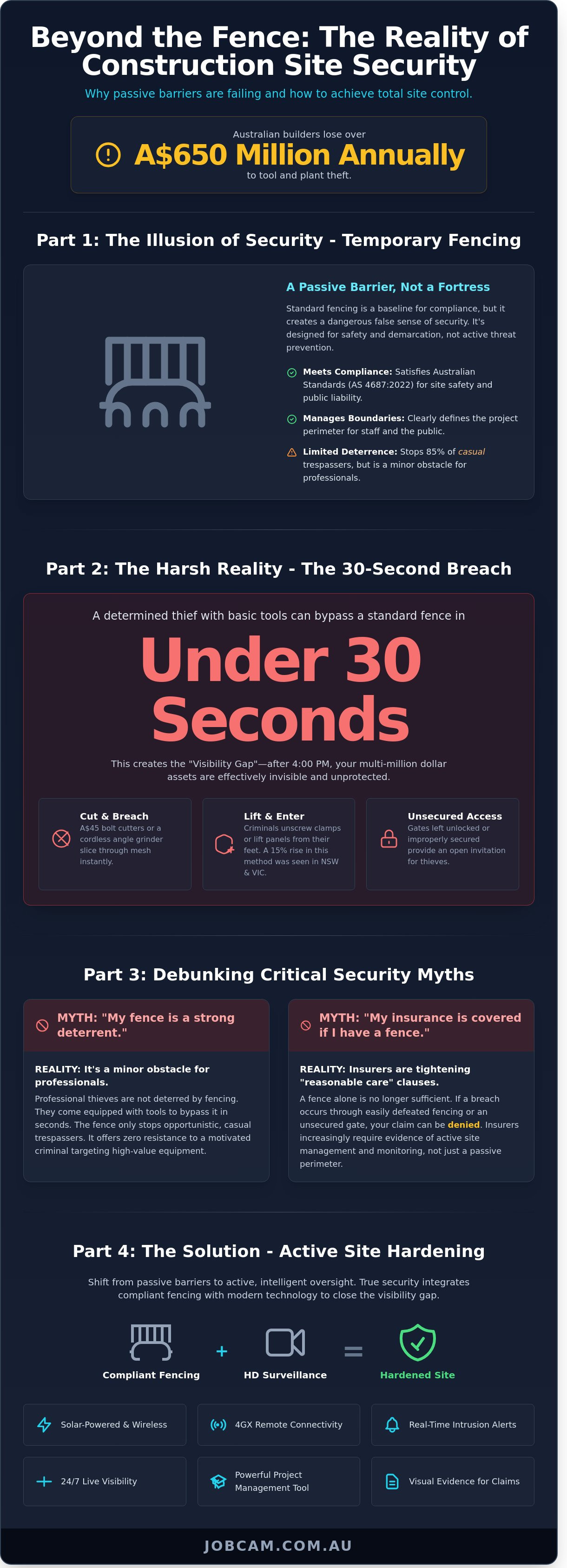
Temporary fencing is the industry standard for site boundaries. It's also a false sense of security. Most project managers treat it as a set and forget solution. This is a mistake. Professional thieves view these panels as minor obstacles rather than genuine barriers. In the fast-paced Australian construction sector, relying solely on a physical perimeter leaves your assets exposed to the 30-second breach.
Myth: Fencing is a Deterrent for Professional Thieves
Thieves don't wait for permission. They don't always climb, either. A pair of A$45 bolt cutters or a cordless angle grinder can slice through standard wire mesh in less than 30 seconds. This is the reality of the 30-second breach. In 2023, crime data from New South Wales and Victoria indicated a rise in site thefts where panel-lifting was the primary entry method. Criminals simply unscrew the clamps or lift the panels directly out of their concrete feet. Standard site monitoring equipment lacks the structural integrity to stop a motivated intruder equipped with basic hardware store tools.
Myth: Insurance Companies Only Require a Fence
Don't assume your policy is bulletproof. By 2026, major Australian insurers are expected to tighten reasonable care clauses significantly. Simply having a fence isn't enough to guarantee a payout after a major equipment loss. If an intruder enters through an unsecured gate or a panel that was easily lifted, your claim might be denied. Insurers now look for evidence of active site management. You need more than a physical barrier; you need a way to monitor site activity remotely to provide the time-stamped visual evidence required for modern claims. Without a digital paper trail, you're left arguing against a policy exclusion.
Myth: Fencing Provides Site Accountability
A fence is silent. It doesn't tell you if a sub-contractor returned at 8:00 PM to finish a job or if a trespasser is scouting your copper supply. It offers zero visibility into who is on-site after hours. Accountability requires data, not just wire. High-definition oversight turns these blind spots into documented records. Reliance on the physical barrier alone means you're managing your site by guesswork once the gates are locked. Real-time visibility ensures that every person who enters your perimeter is accounted for, protecting your timeline and your bottom line.
The Visibility Gap: Why Physical Barriers Fail Without Surveillance
A standard 2.1-metre mesh panel provides a physical boundary, but it lacks intelligence. It can't speak, it can't see, and it certainly won't call you when a bolt cutter snaps a padlock at 2:00 AM. Relying solely on temporary fencing creates a dangerous information vacuum. While the fence might delay an intruder by 30 seconds, the lack of real-time alerts means they have the rest of the night to operate undisturbed. In Australia, construction equipment theft costs the industry approximately A$650 million every year. Most of these losses are only discovered on Monday morning, long after the assets have been moved off-site.
- Real-time intervention: Immediate alerts allow for police or security dispatch while the crime is in progress.
- Post-incident discovery: Finding a breach 48 hours later results in a recovery rate of less than 15% for stolen tools.
- The Inside Job: Many site losses involve individuals with authorised gate codes or keys.
The Danger of False Security
Site managers often fall into a trap of complacency once the perimeter is closed. This leads to expensive plant equipment being left out rather than locked in secure containers. The "Hoarding Paradox" is a documented phenomenon where solid fencing or shade cloth actually assists criminals. By blocking the line of sight from police patrols or passing traffic, you provide a private workspace for thieves to dismantle machinery. Physical barriers without monitoring are merely privacy screens for intruders. High-definition visibility ensures that what happens behind the hoarding is never hidden from the project stakeholders.
Accountability and After-Hours Activity
Managing a site involves more than just keeping people out; it's about knowing who is actually inside the perimeter. Relying on a paper gate log is ineffective for tracking the many subcontractors who may arrive late or leave early. Visual monitoring identifies unauthorised weekend "moonlighting" where site power and equipment are used for private jobs. When a delivery arrives at 4:30 PM on a Friday and the invoice doesn't match the drop-off, real-time footage provides the evidence needed to resolve the dispute instantly. You gain a seamless record of every movement, ensuring total site accountability 24/7.
Building a 'Hardened' Site: Integrating Fencing with Remote Surveillance
A perimeter is only as strong as its visibility. While temporary fencing provides a necessary physical boundary, it's a passive defense that intruders can often bypass in under 60 seconds. Hardening a site requires a strategic four-step integration that transforms a static fence into an active security network.
- Step 1: Install AS 4687-2007 compliant fencing to meet Australian safety and boundary requirements.
- Step 2: Deploy solar-powered cameras at 4-meter heights to cover primary entry points and high-value asset zones.
- Step 3: Enable AI-driven motion alerts to filter out environmental noise and detect after-hours breaches instantly.
- Step 4: Route all data to cloud-based storage, ensuring evidence remains accessible even if site hardware is attacked or stolen.
The financial logic is undeniable. A single tool-vault breach often results in losses exceeding A$20,000 when you factor in replacement costs, insurance premiums, and project downtime. Preventing just one incident through early intervention pays for the entire surveillance setup for the project's duration.
Layered Security: The Modern Construction Standard
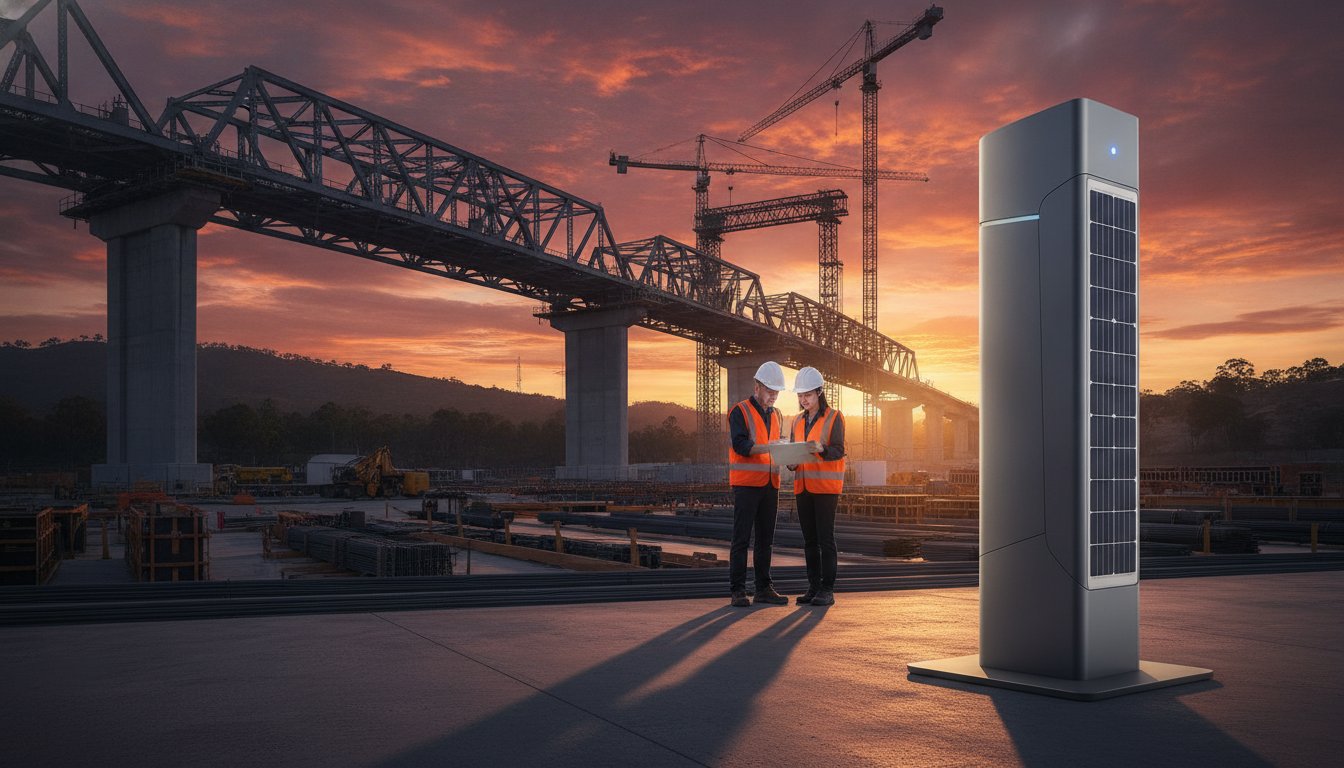
Surveillance towers provide a psychological deterrent that mesh fencing can't replicate. When intruders see a high-definition lens, the risk profile changes immediately. In major hubs like Sydney, Melbourne, and Perth, we utilize 4G and 5G connectivity to maintain 24/7 uptime without relying on local power grids. This digital oversight works in tandem with physical gates to create a logged history of every site movement, ensuring total accountability.
Remote Monitoring: Peace of Mind for Project Managers
Project managers can't be on site at 2:00 AM. The Jobcam mobile app allows you to see your site from anywhere, providing instant visual verification of site status. This technology effectively replaces the need for physical night patrols, which can cost upwards of A$85 per hour in some Australian regions. Instead, real-time AI alerts notify you of genuine threats, allowing for immediate police dispatch based on live visual evidence rather than a blind alarm trigger.
Protect your project from costly delays. Secure your site with Jobcam's remote monitoring solutions today.
Beyond the Mesh: How Jobcam Completes Your Site Security
While temporary fencing establishes a physical perimeter, it can't stop a determined intruder or document a site incident in real time. Jobcam’s solar-powered surveillance towers fill this critical gap. These units operate independently of site power, using high-efficiency panels to maintain 24/7 uptime. We leverage Telstra’s 4GX network, which currently covers over 2.6 million square kilometres of the Australian landmass. This ensures your remote projects stay connected where standard Wi-Fi or local networks fail. Every frame captured is instantly encrypted and uploaded to AWS cloud storage located in Sydney. Even if a vandal destroys the hardware, your evidence remains untouchable and ready for police reports or insurance claims.
The value extends beyond theft prevention. Our systems provide a high-definition record of every project milestone. You get a dual-purpose tool: a 24-hour security guard that never sleeps and a high-end marketing engine. You can showcase 4K time-lapse footage to stakeholders or use it for social media updates, turning a standard security cost into a powerful brand asset. It's about complete transparency from the ground up.
Authoritative Protection for Australian Sites
Jobcam operates a national service network with dedicated support teams in every major capital city, including Sydney, Melbourne, Brisbane, Perth, and Adelaide. Our hardware is engineered for the grit of local industry, built to withstand 50-degree Celsius heat and the abrasive dust of active civil works. We align our service with your specific project timeline. If your fencing hire is scheduled for 18 months, our surveillance packages match that duration exactly. This streamlined procurement keeps your overheads predictable and your site fully compliant from the first day of mobilization.
Next Steps for a Secure Site
Don't leave your assets to chance. You can request a comprehensive site security assessment when finalising your site layout. Our technicians handle the heavy lifting, providing professional installation and rapid relocation as your site boundaries shift during different build phases. It's a plug-and-play solution for complex logistics. Secure your site today with Jobcam solar surveillance to gain total visibility and a high-definition record of your project’s progress.
Hardening Your Perimeter for the 2026 Construction Landscape
Relying solely on temporary fencing in 2026 is a risk that modern project managers can't afford. While a physical barrier meets the minimum compliance baseline, it leaves a 100% visibility gap once your team leaves for the day. True site security requires a shift from passive mesh to active surveillance. Jobcam fills this void by integrating high-definition monitoring with your existing perimeter, ensuring every movement is tracked, recorded, and accessible from any device.
Our solar-powered units deliver 24/7 reliability through Telstra 4GX connectivity and secure AWS Cloud Storage, providing a seamless stream of data even on remote builds. We support projects nationwide with dedicated technical teams in Perth, Sydney, Melbourne, Brisbane, and Adelaide. You'll gain total site transparency while protecting your A$5 million plus assets from theft, vandalism, and costly liability claims. It's time to upgrade your site oversight with technology that works as hard as your crew does. We're ready to help you secure your next project with precision and local expertise.
Request a quote for solar site security cameras
Build with confidence knowing your site is always within sight.
Frequently Asked Questions
Does temporary fencing satisfy my insurance requirements for site security?
Most Australian insurers don't consider temporary fencing alone as adequate site security for high-value projects. Policies often mandate additional measures like monitored alarms or CCTV to cover theft of materials exceeding A$10,000. You should check your specific Product Disclosure Statement for "reasonable precautions" clauses that might void claims if 24/7 surveillance isn't present to support the physical barrier.
How easy is it for someone to bypass standard temporary fencing?
Standard temporary fencing is a visual deterrent rather than a physical barrier. A determined intruder can unbolt a coupler or lift a panel from its concrete base in under 30 seconds using basic hand tools. This vulnerability makes it easy for thieves to access site assets without triggering any immediate alarms or physical resistance, which is why visual verification is critical.
Can I attach security cameras directly to temporary fencing panels?
You shouldn't attach security cameras directly to temporary fencing panels due to vibration and stability issues. Wind loads on fence mesh cause constant movement, which triggers false motion alerts and blurs high-definition footage. Professional installations use independent 3-meter or 6-meter mounting poles to ensure clear, stable site visibility and reliable AI detection throughout the project duration.
What is the Australian Standard for temporary fencing (AS 4687:2022)?
AS 4687:2022 specifies the minimum requirements for the design, manufacture, and performance of temporary fencing in Australia. It covers critical safety factors including wind loading, impact strength, and climbing resistance for panels. Compliance ensures your perimeter can withstand 100km/h gusts without collapsing, but it doesn't mandate the electronic surveillance needed for total site accountability and theft prevention.
Is a security guard more effective than a combination of fencing and cameras?
A combination of fencing and smart cameras is generally more effective and significantly cheaper than hiring a night-shift security guard. While a guard can only be in one place at a time, a multi-camera system provides 100% site coverage simultaneously. Systems like JobCam offer real-time alerts and high-definition evidence that human patrols often miss during their scheduled rounds.
How do I prevent 'panel lifting' or intruders climbing over my site fence?
Prevent panel lifting by using tamper-proof couplers and anti-climb mesh with apertures smaller than 150mm x 60mm. For maximum protection, install solar-powered surveillance with active deterrence features like sirens and strobe lights. These systems detect movement at the perimeter and stop intruders before they actually scale the physical barrier or breach the site boundary.
What are the most common blind spots created by site hoarding?
Site hoarding creates total visual blackouts at 90-degree corners and behind stacked shipping containers or site sheds. These 5-meter to 10-meter blind spots provide perfect cover for intruders to work undisturbed by passing traffic or police patrols. Mapping your site with wide-angle 4K cameras ensures these hidden pockets are monitored, eliminating the "out of sight" advantage that solid hoarding provides to thieves.
How much does it cost to add solar surveillance to a fenced site?
Professional solar surveillance for an Australian construction site typically starts from A$150 to A$350 per week depending on the camera count and AI features. This investment is a fraction of the average cost associated with a single copper theft incident. Monthly rental models provide a scalable solution that fits within the project's operational budget without requiring large upfront capital outlays.