Commercial CCTV Camera Systems: The 2026 Guide to Mobile vs. Fixed Security
The most expensive security system isn't the one with the highest invoice; it's the one that goes dark during a midnight breach because the site lost power. You've likely felt the frustration of managing unpowered perimeters where traditional commercial cctv camera systems require thousands in cabling just to function. It's a common industry headache that often results in billions of dollars in losses annually in preventable equipment loss before a project even reaches the lock-up stage.
We're here to ensure your project remains a zero-theft zone. This guide clarifies the shift from high-cost hardware ownership to agile, solar-powered surveillance that keeps you connected without the infrastructure lag. You'll discover how to achieve seamless remote monitoring from your mobile device while maintaining predictable monthly costs. We'll compare fixed and mobile solutions to help you deploy a strategy that captures every detail and protects your bottom line until the final handover.
Key Takeaways
- Learn why modern commercial cctv camera systems are shifting from traditional fixed-wire infrastructure to high-efficiency mobile solar solutions for total site visibility.
- Discover how to maintain 24/7 connectivity in remote locations by leveraging industrial-grade solar arrays and resilient Telstra 4GX data transmission.
- Compare the financial impact of hiring versus purchasing surveillance hardware to avoid hidden costs associated with maintenance, firmware updates, and data plans.
- Identify the critical hardware specifications, including IK10 and IP66 ratings, required to ensure your equipment survives harsh construction environments.
- Unlock the dual value of your security footage by transforming real-time monitoring into high-definition time-lapse assets for stakeholder reporting and project marketing.
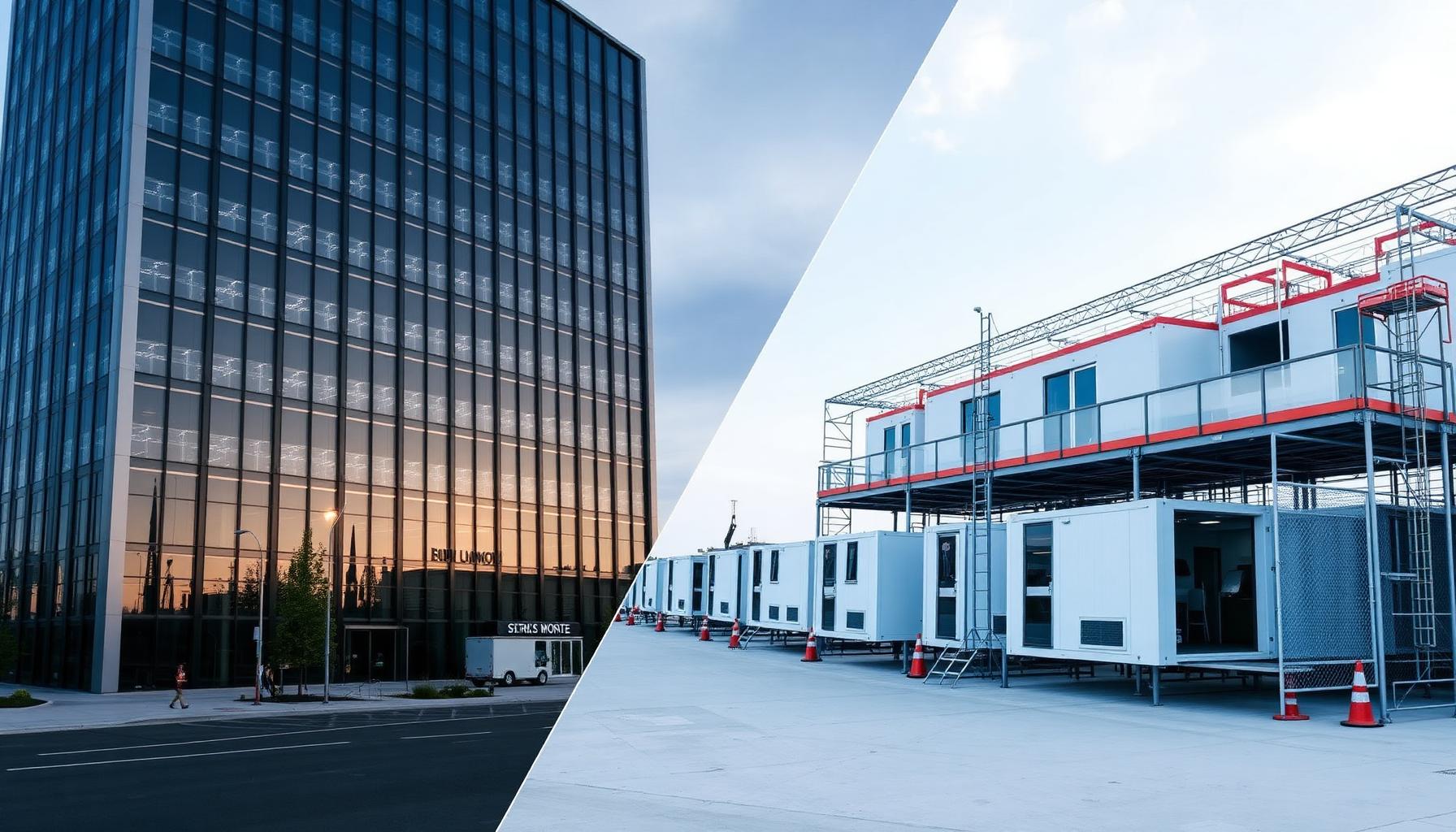
Fixed Infrastructure vs. Mobile Surveillance: Choosing Your Commercial CCTV Strategy
Modern commercial cctv camera systems in 2026 operate as intelligent data hubs rather than simple recording loops. While the foundational technology of Closed-circuit television (CCTV) has existed for decades, the current landscape demands agility over static hardware. Project managers on 50-hectare sites can't wait for infrastructure that tethers them to a single spot. They need visibility that moves with the machinery. The site evolves. Your security must too.
Traditional fixed-wire systems present significant bottlenecks during active construction phases. Digging trenches for power and data cables can cost upwards of $120 per linear meter. This expense is often wasted as site boundaries shift or new structures block original sightlines. Mobile surveillance towers have emerged as the 2026 standard for commercial development. They provide 4K clarity without the 14-day lead time required for groundworks and electrical permits. You get immediate eyes on your assets.
Evaluating your specific site needs requires a look at three factors: power availability, project duration, and perimeter size. If a site lacks a grid connection for the first 180 days of a project, solar-powered mobile units are the only viable choice for continuous accountability. They bridge the gap between a raw site and a finished structure.
The Rise of Rapid-Deployment Security
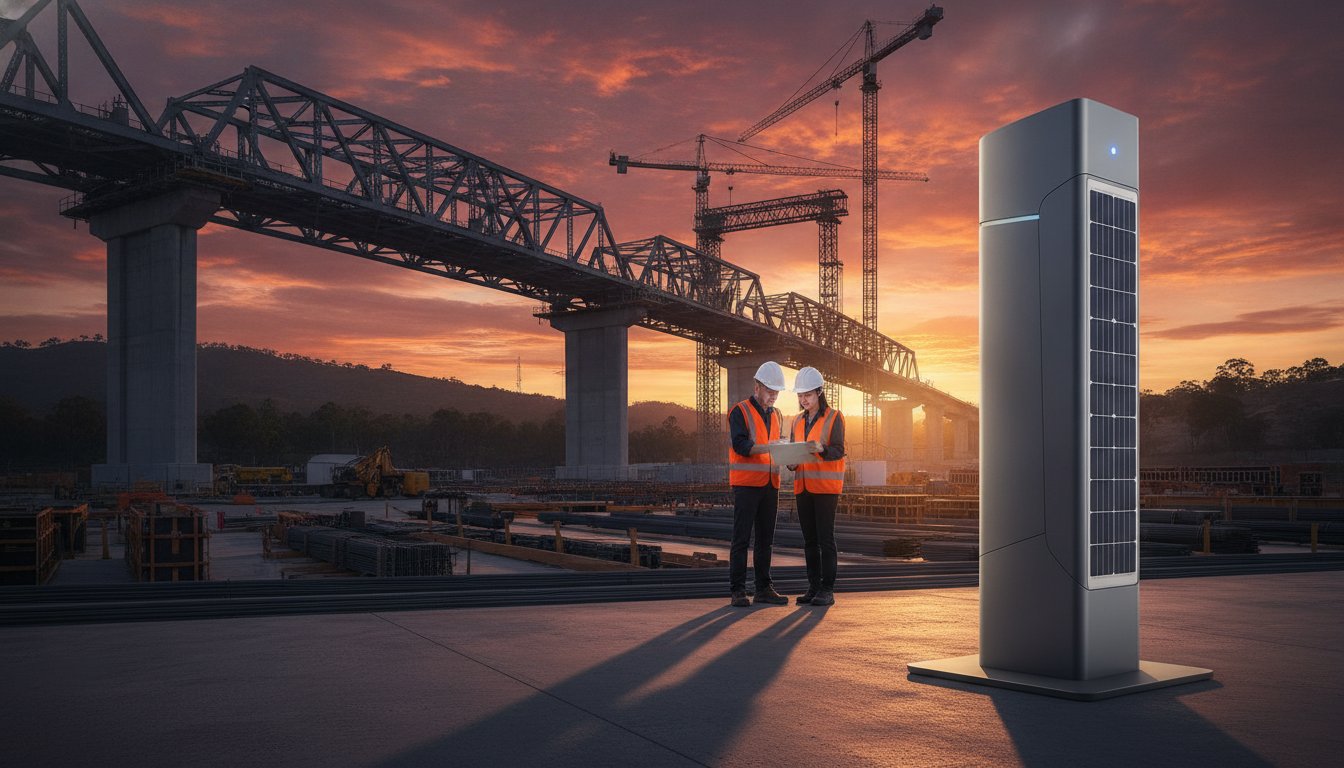
Mobile units eliminate the logistical nightmare of trenching. You don't need a crew of four to lay conduit for a week. A single technician can deploy a solar-powered tower in under 120 minutes. This flexibility is vital when site footprints change every 30 days. You can relocate cameras to eliminate blind spots as the building rises. This ensures 100% perimeter coverage at every stage of the build without additional civil costs.
Fixed CCTV: When It Still Makes Sense
Permanent site monitoring equipment remain the gold standard for completed 10-story office blocks or established retail hubs. These installations integrate directly into existing building management systems (BMS) for centralized control. Maintenance for fixed assets is predictable; it usually requires a technician only once every 12 months. They offer a stable, long-term security foundation once the dust of construction has settled and the site's power grid is permanent.
The Technical Architecture of High-Performance Commercial Security Systems
A reliable security perimeter relies on more than just high-definition lenses. Modern site monitoring equipment require a sophisticated technical backbone to ensure 24/7 uptime in harsh Australian environments. High-efficiency solar arrays, typically 100W or greater, drive the energy needs of these units. These systems utilize industrial-grade MPPT solar controllers to maximize energy harvest, even during overcast conditions. By optimizing power conversion, these controllers ensure batteries stay charged to maintain constant surveillance without interruption. It's the difference between a system that works and one that fails when the clouds roll in.
Power Independence on Remote Sites
Remote site security fails without sufficient energy reserves. We calculate battery autonomy based on 4-5 days of zero sunlight to guarantee performance during prolonged storm events. Solar autonomy is the capacity of a security system to remain fully functional using only stored battery power when solar charging is unavailable. High-performance hardware uses deep-cycle lithium iron phosphate (LiFePO4) batteries. These units provide 2,000+ charge cycles, ensuring long-term reliability for multi-year construction projects. If you need to monitor site progress with zero downtime, power engineering is the starting point.
Secure Cloud Integration and Data Sovereignty
Connectivity resilience defines the modern security standard. Leveraging the Telstra 4GX network allows for high-speed data transmission across 2.5 million square kilometers of Australia. This mobile connectivity bypasses the need for vulnerable on-site NVRs. If a camera is vandalized, the footage is already secure in the cloud. We utilize encrypted AWS server hosting to ensure enterprise-grade security for sensitive project data. This architecture aligns with CISA physical security standards by removing single points of failure. Edge processing handles immediate motion detection, while the cloud stores high-resolution backups. This hybrid approach ensures 99.9% data availability and keeps your footage accessible from any device. Keeping data stored on Australian-based AWS servers ensures your site monitoring equipment comply with local data sovereignty requirements. It doesn't just protect the site; it protects the data that proves what happened there.
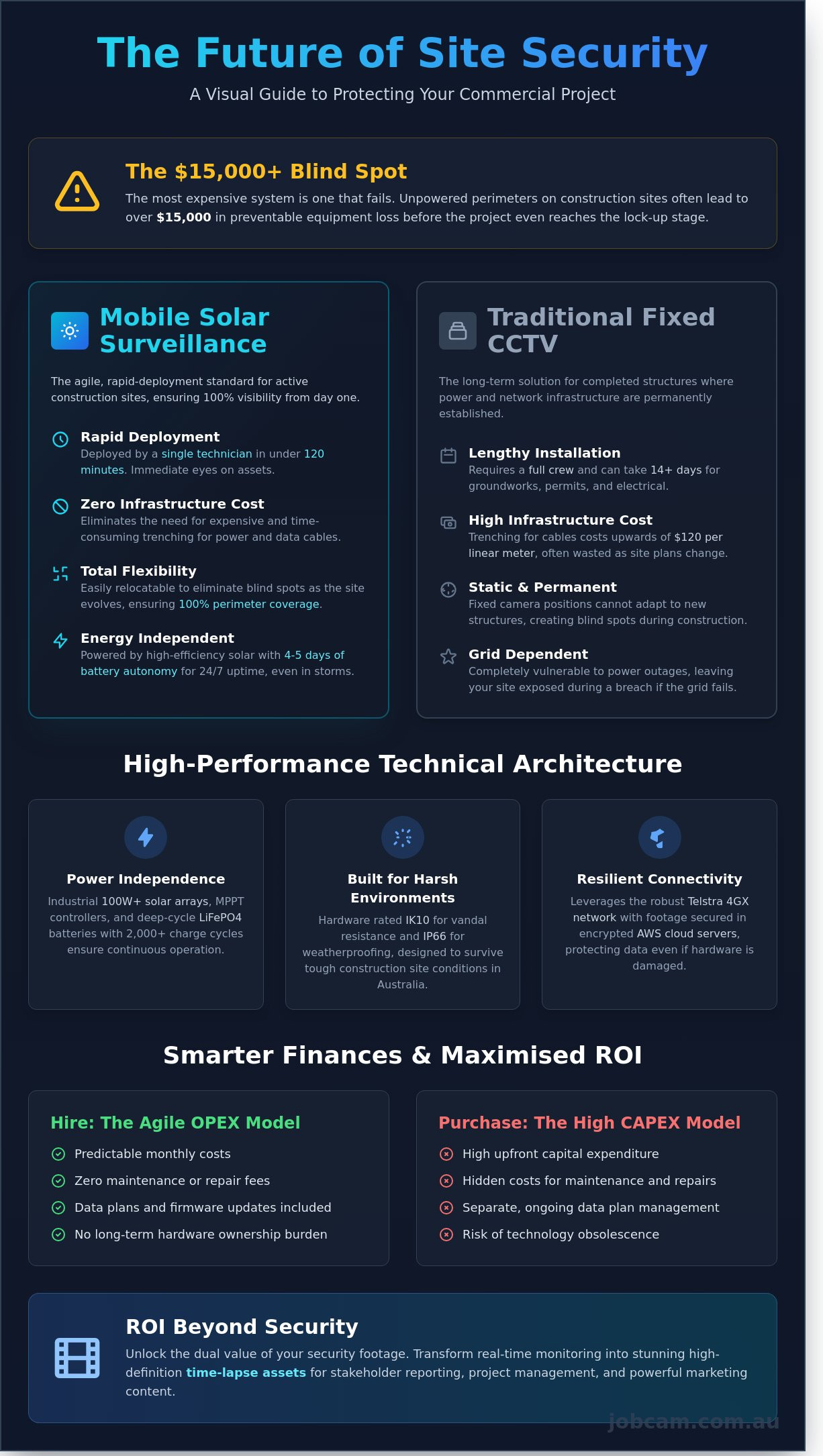
Hire vs. Purchase: A Financial and Operational Comparison for Commercial CCTV
Purchasing high-end site monitoring equipment involves a heavy upfront capital expenditure (CAPEX). A single mobile solar tower equipped with AI analytics often carries a price tag between $12,000 and $18,000. This doesn't include the ongoing hidden costs of ownership. Maintenance, firmware updates, and high-bandwidth data plans can add $2,500 annually to your overhead. By choosing a hire model, you convert these unpredictable costs into a fixed operating expense (OPEX). This keeps your cash flow predictable and your balance sheet lean. You can see your site from anywhere without worrying about the underlying hardware costs.
Total Cost of Ownership Breakdown
When you compare a 12-month hire agreement to a 5-year ownership cycle, the hire model often wins on value. Owners must manage asset depreciation schedules, which typically span 5 to 7 years in the construction sector. In contrast, hire fees are generally 100% tax-deductible as an immediate business expense. You also bypass the cost of technical support. If a sensor fails or a lens requires cleaning, the hire provider handles the onsite maintenance. This ensures 99.9% uptime without pulling your internal team away from their core tasks. Key financial benefits include:
- Zero Maintenance Liability: Repairs and hardware swaps are included in the monthly fee.
- Data Management: High-bandwidth 4K streaming costs are bundled into the service.
- Capital Preservation: Reinvest your $18,000 into materials or labor rather than depreciating hardware.
Operational Agility and Scalability
Construction projects are fluid. A site might require eight cameras during the high-risk excavation phase but only two during the final fit-out. Owning equipment creates a logistical burden. You have to store, secure, and transport bulky hardware between projects. Rental models allow you to scale your security footprint up or down within 48 hours. This flexibility ensures you aren't paying for idle gear. It also protects you from technology obsolescence. With the rapid pace of DHS security technology research and AI development, a camera bought today is often outdated within 24 months. Managed hire ensures your site monitoring equipment always utilize the latest 2026-standard sensors and low-light optics. You get the benefit of innovation without the risk of owning a legacy system.
Overcoming Environmental Barriers in Remote Commercial Site Surveillance
Construction sites are hostile environments for electronics. Dust levels often exceed 50 micrograms per cubic meter during excavation phases. High-performance site monitoring equipment must survive these conditions without constant maintenance. Heat is the primary killer. In regions like Western Australia or Northern Queensland, site temperatures hit 45°C regularly. Without specialized heat-dissipating housing, standard sensors degrade within 12 months. We prioritize hardware that handles the grit and the glare of the Australian landscape.
Ruggedized Hardware for Australian Conditions
We deploy hardware rated at IP66 and IK10. IP66 ensures zero dust ingress and protection against high-pressure water jets. IK10 ratings mean the housing survives a 20-joule impact. This is equivalent to a 5kg weight dropped from 40cm. It protects against both accidental site debris and deliberate vandalism. Stainless steel mounts prevent corrosion in coastal projects. Polycarbonate domes offer UV stabilization. This prevents the yellowing effect that obscures lenses after 2,000 hours of direct sun exposure. Your visibility remains crystal clear regardless of the season.
Intelligent Monitoring and Incident Response
Effective security isn't about watching hours of empty footage. Modern site monitoring equipment use thermal sensors to detect heat signatures in total darkness. AI algorithms analyze these signatures to differentiate between a 40kg stray animal and an 80kg human intruder. This reduces false alarms by up to 90% compared to traditional motion detection. It ensures your team only responds to genuine threats.
- Detection: Thermal sensors pick up heat signatures through smoke, dust, or fog.
- Analysis: AI filters out environmental noise like swaying trees or wind-blown debris.
- Notification: A real-time alert hits the site manager's mobile app within 2.5 seconds.
- Verification: The user views the high-definition live stream to confirm the incident.
Strategic placement is the final piece of the puzzle. We position cameras at high-vantage points to eliminate blind spots across the perimeter. This creates a psychological deterrent that stops crime before it starts. When an intruder knows they're being tracked by an intelligent system, they're more likely to abandon the attempt.
Maximising ROI: CCTV as a Project Management and Marketing Asset
Modern commercial cctv camera systems offer value far beyond simple theft prevention. In 2026, savvy developers treat their security infrastructure as a dual-purpose tool for operational intelligence and brand growth. High-definition footage provides a definitive record of every structural milestone, ensuring project managers maintain total site accountability. This visual data serves as a single source of truth for safety audits and compliance reporting, reducing the risk of costly delays or regulatory fines.
The Power of Construction Time-Lapse
High-definition time-lapse footage transforms months of manual labour into high-impact marketing assets. Use these professional sequences to secure future tenders by proving your team's efficiency and technical capability. Beyond promotion, historical archives are vital for risk management. If a subcontractor dispute or insurance claim arises, you have frame-by-frame evidence to settle the matter within 24 hours. High-definition time-lapse acts as a chronological narrative that transforms raw construction data into a compelling visual story for investors and future clients.
Real-Time Visibility from Anywhere
The Jobcam mobile app puts your entire portfolio in your pocket. Many project managers using this technology report a significant reduction in travel time by conducting virtual site visits instead of driving between locations. It's a seamless way to monitor progress across multiple postcodes from a single dashboard. Sharing live feeds with offshore investors or local stakeholders builds immediate transparency and trust. You can see your site from anywhere, ensuring that daily logs match the physical reality on the ground.
Integrating advanced site monitoring equipment into your workflow delivers measurable returns through:
- Reduced Travel Costs: Direct savings on fuel and vehicle maintenance for site supervisors.
- Streamlined Reporting: Instant visual updates for weekly stakeholder meetings.
- Enhanced Safety: Real-time monitoring of PPE compliance and high-risk activities.
- Dispute Resolution: Clear evidence to verify delivery times and site incidents.
Your security hardware shouldn't sit idle. By leveraging the Jobcam app and high-definition time-lapse, you turn a standard security expense into a high-performance management tool. It's about working smarter, not harder, on the job site.
Future-Proof Your Site Security for 2026
Selecting the right strategy for 2026 means moving beyond basic surveillance. Effective site monitoring equipment now function as active project management tools that offer 24/7 visibility from any location. By choosing a hire model, your project avoids the 35% depreciation hit typically seen with owned hardware within the first 18 months. Mobile solar units eliminate the need for trenching and electrical contractors, which can save a site up to $5,000 in initial setup costs. This shift toward agile, high-performance tech ensures your site remains protected without the burden of aging infrastructure.
Our systems leverage the Telstra 4GX network and AWS Cloud integration to ensure your data is secure and accessible. With national Australian service and support, you get no-nonsense solar-powered reliability that works as hard as your crew. You can monitor progress, manage compliance, and showcase your project's legacy through high-definition time-lapse. It's about total site control without the technical headache. Secure your site with Jobcam’s professional hire solutions and take the lead on your next development. Your project deserves the clarity of professional oversight.
Frequently Asked Questions
Is it better to hire or buy commercial CCTV camera systems?
Hiring is generally more cost-effective for projects lasting under 24 months because it eliminates upfront capital expenditure and ongoing maintenance costs. For long-term 10-year facility management, buying makes sense. Most JobCam clients opt for hire models to ensure they always have access to the latest 2026-spec 4K hardware without depreciation risks. You get full support and 24/7 technical monitoring included in a fixed weekly rate.
How do solar-powered security cameras work during long periods of rain?
Solar-powered units rely on high-capacity lithium-ion battery banks that provide 5 to 7 days of continuous operation without direct sunlight. Even during heavy rain, panels still harvest ambient light at roughly 10% to 25% efficiency. Our systems are engineered to survive a full week of overcast conditions in regions like Victoria or Queensland. This ensures your site stays visible and secure regardless of the weather forecast.
Can I view my commercial CCTV footage on my phone in real-time?
Yes, you can view your site monitoring equipment in real-time through a dedicated mobile application or web dashboard. Our platform delivers high-definition streams with less than 2 seconds of latency over 4G or 5G networks. This allows project managers to verify site progress or respond to security alerts instantly from any location. You can also trigger sirens or speak through two-way audio directly from your smartphone.
What happens to the footage if the camera is stolen from the site?
Your footage remains secure because it's uploaded to encrypted cloud servers in real-time rather than storing it solely on the physical device. If a thief removes a camera, the recorded evidence of the act is already safely stored off-site. Our systems utilize 256-bit encryption and redundant storage protocols. This ensures that 100% of the activity leading up to the theft is available for police reporting and insurance claims.
Do commercial CCTV systems require a special permit for installation?
You don't usually need a special permit to install site monitoring equipment on private property in Australia, provided you follow the Privacy Act 1988. However, if cameras overlook public footpaths or council land, local regulations apply. Signs stating that 24-hour surveillance is active are mandatory at all site entry points. We recommend checking with your local council if your site perimeter borders high-traffic public zones.
How much does it cost to hire a mobile surveillance tower in Australia?
Hiring a mobile surveillance tower in Australia typically costs between $250 and $600 per week, depending on the sensor package and duration. High-end units featuring AI-driven thermal detection and 360-degree PTZ cameras sit at the upper end of that range. These costs are often significantly cheaper than hiring a physical security guard for a single 12-hour shift. It's a scalable solution that fits most Tier 1 and Tier 2 construction budgets.
What is the range of a typical commercial-grade security camera at night?
A typical commercial-grade security camera has an infrared night vision range of 30 to 50 meters in total darkness. Advanced thermal imaging sensors can detect human heat signatures at distances exceeding 150 meters. This allows for early detection of intruders long before they reach your high-value assets. Clear identification of faces or license plates usually requires the subject to be within 15 meters of the lens under IR illumination.
How quickly can a mobile CCTV system be deployed to a new site?
We can deploy a mobile CCTV system to a new site in under 24 hours from the initial request. The physical setup takes approximately 30 to 60 minutes once the unit arrives on-site. Because these systems are self-contained and solar-powered, they don't require electrical contractors or groundworks. You'll have a live feed and active site monitoring running before the end of the first business day.