How to Justify Security Camera Costs to Management: A 2026 ROI Framework
Treating site surveillance as a line-item expense is a strategic mistake that directly threatens your project's bottom line. Most project leads struggle with how to justify security camera costs to management because they're pitching a grudge purchase instead of a risk mitigation tool. In 2026, where a single equipment theft incident or safety breach can trigger weeks of project delays, the conversation needs to shift from what these systems cost to what they protect.
You likely agree that it's difficult to quantify the value of remote visibility when stakeholders are focused solely on immediate overhead. You need a way to prove that hiring solar surveillance towers is an investment in continuity, not just a box to tick for the insurance company. This article will show you exactly how to reframe professional surveillance as a critical project management asset. We will explore how to use total visibility to reduce excess claims, streamline oversight, and protect your project’s long-term legacy.
Key Takeaways
- Shift the internal conversation from security hardware to "Project Insurance" to protect your site against expensive delays and liability.
- Learn exactly how to justify security camera costs to management by quantifying the "Soft ROI" of remote visibility and operational oversight.
- Discover why the rental model (OPEX) eliminates the hidden costs of equipment ownership, such as maintenance, storage, and firmware updates.
- Leverage time-lapse documentation and AI-driven PPE detection to turn surveillance towers into powerful assets for marketing and safety compliance.
- Access a structured checklist of data points designed to secure fast budget approval from corporate stakeholders.
Reframing Security: From Line-Item Expense to Project Insurance
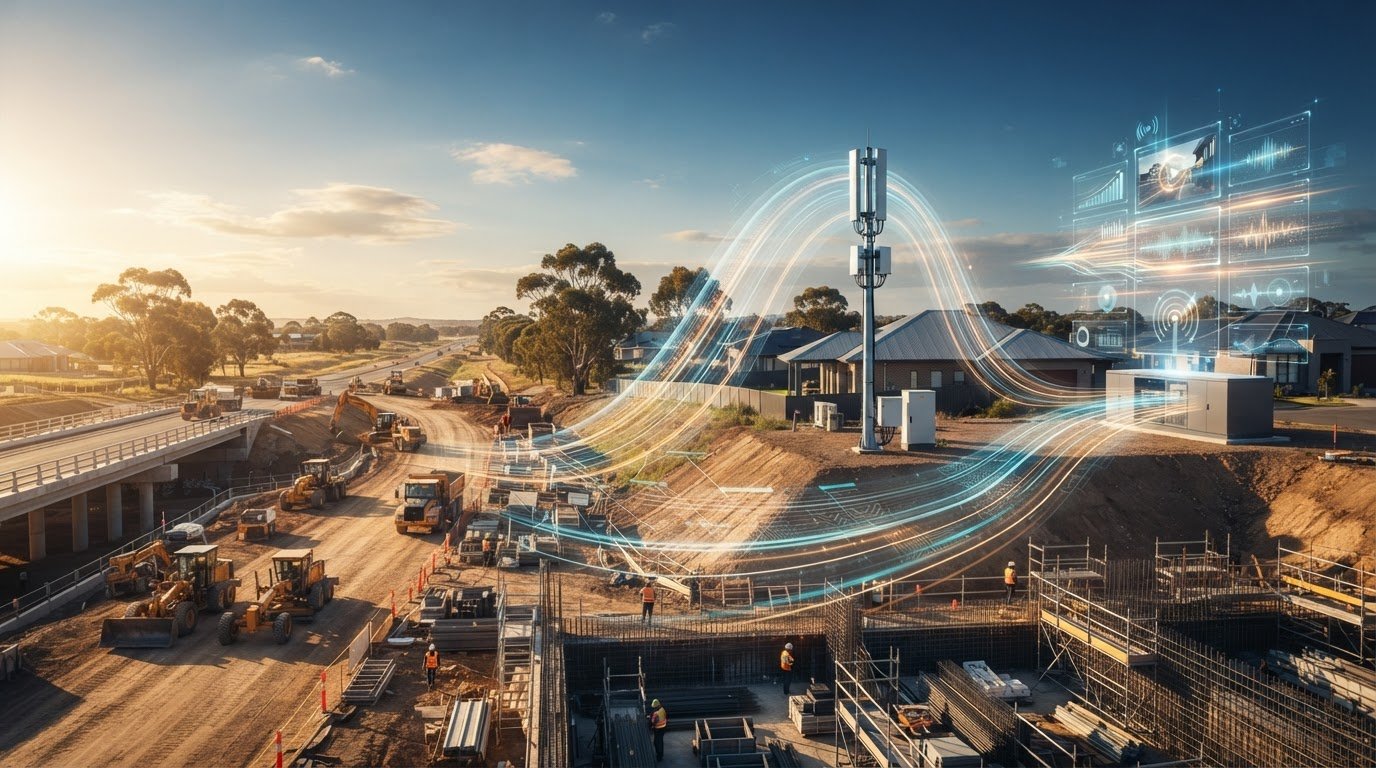
Security isn't just about catching a thief after the fact. In high-stakes development, it's actually "Project Insurance." While traditional insurance policies pay out after a disaster, autonomous surveillance towers prevent the disaster from derailing your schedule in the first place. Traditional methods like basic fencing or static guards often fail in complex environments because they are static and prone to human error. Unlike basic Closed-circuit television (CCTV) setups that require hardwired power, solar-powered towers operate independently. They provide a self-sustaining solution for off-grid requirements, ensuring total visibility even before the first power pole is installed on-site.
The Psychology of Budget Approval
Management often defaults to "minimum viable security" because they view it as a sunk cost. To change this mindset, you must connect surveillance to the project’s core KPI: staying on schedule. Transparency is your greatest selling point. When directors see that solar site cameras provide real-time documentation for stakeholders, the conversation shifts. It's no longer about a camera; it's about protecting the timeline. Understanding how to justify security camera costs to management requires showing them that visibility is a management tool, not just a lock on a gate. You're pitching a way to oversee progress without increasing site visits.
The Cost of "Doing Nothing"
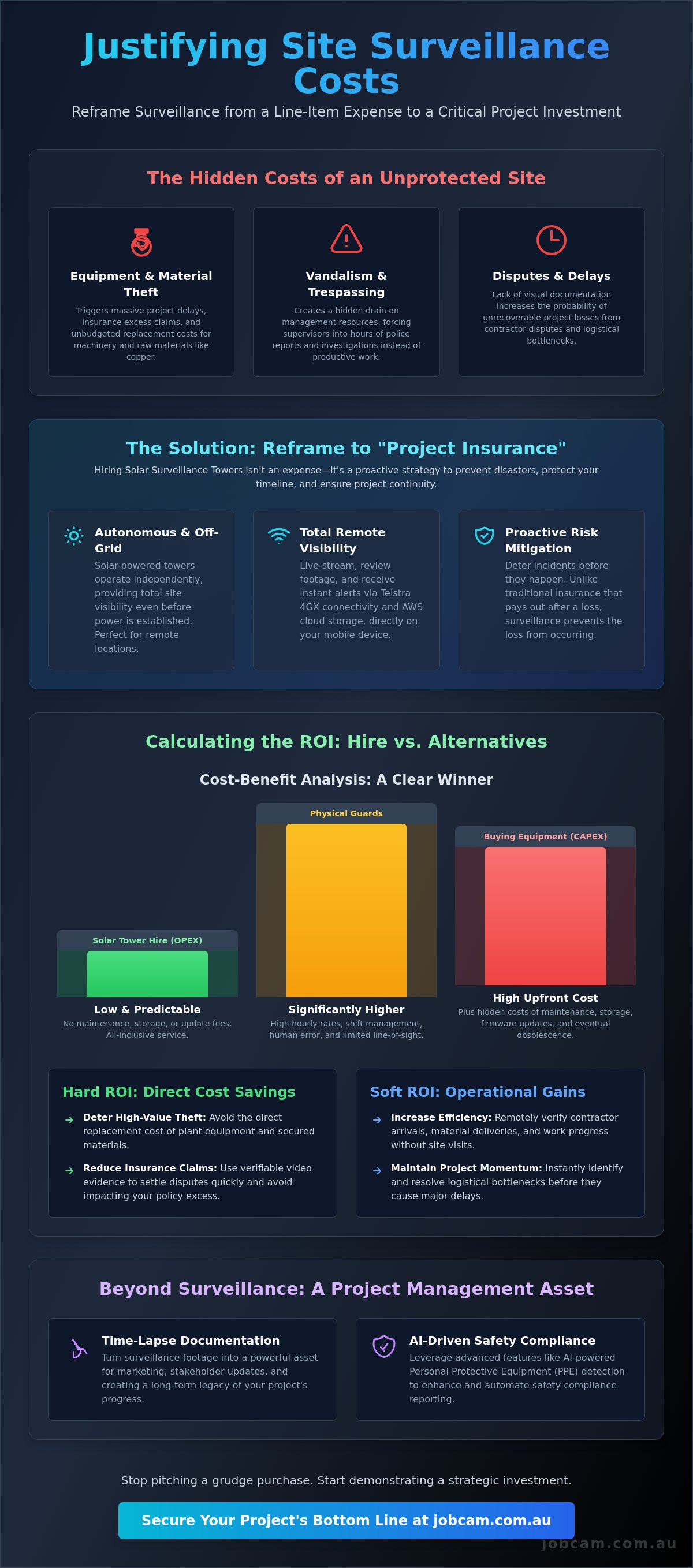
The real expense isn't the rental fee; it's the fallout of an unprotected site. A single theft of copper or heavy machinery doesn't just cost the replacement value. It triggers insurance excess claims and weeks of project delays while you wait for new equipment. Vandalism and trespassing also create a hidden drain on management resources, forcing supervisors to spend hours on police reports and internal investigations instead of production. We define site vulnerability as a quantifiable financial risk where the lack of documentation directly increases the probability of unrecoverable project losses. Hiring temporary site security cameras mitigates this risk by providing the evidence needed to settle disputes and keep the site moving. It's a proactive choice that protects the bottom line from the unpredictability of the physical work environment.
Calculating the ROI of Autonomous Site Surveillance
Proving value requires looking beyond the rental fee. To understand how to justify security camera costs to management, you must separate hard savings from operational gains. Hard ROI is the immediate cost avoided when a solar tower deters the theft of high-value plant equipment or raw materials. Soft ROI is the increased efficiency gained from total visibility. By deploying construction site cameras, project leads can verify contractor arrivals and material deliveries through Telstra 4GX connectivity. This eliminates the need for manual check-ins and reduces the friction of remote management.
The cost-benefit ratio of autonomous towers compared to physical security guards is stark. Physical guards are often the default choice, but they carry significant logistical baggage. Beyond the high hourly rates, you're managing shift handovers, potential absences, and limited visibility. An autonomous tower provides a consistent, high-definition vantage point that doesn't experience fatigue. When you analyze the numbers, hiring a solar tower delivers superior coverage for a fraction of the cost of a multi-guard rotation. It's a force multiplier for your existing team.
Mitigating the Cost of Site Delays
Small incidents often snowball into project-stopping events. Immediate alerts sent to your mobile device allow for instant intervention before a minor trespass becomes a major vandalism claim. Utilizing AWS cloud storage ensures that every second of footage is protected and admissible as evidence. This remote oversight allows you to confirm that specialized subcontractors are on-site and working to schedule. Maintaining momentum on tight deadlines is significantly easier when you can resolve logistical bottlenecks from your desk. When you're presenting the budget, knowing how to justify security camera costs to management through these time-saving efficiencies is a powerful lever.
Insurance and Liability Reduction
High-definition footage is your best defense against fraudulent public liability claims. If an accident occurs, historical data provides an objective record of the event. A formal Surveillance Impact Report framework often highlights how documented oversight reduces fiscal risk. While you should check with your specific provider, many industry professionals report that professional surveillance documentation can help lower project insurance premiums or reduce the likelihood of contested claims. Resolving subcontracting disputes becomes much simpler when you have clear, timestamped visual proof of work completed. If you're ready to improve your site's oversight, consider how remote monitoring cameras can streamline your daily operations and protect your bottom line.
Hire vs. Buy: The Management Case for OPEX
Directors often prefer assets they can see on the balance sheet. However, when you're looking at how to justify security camera costs to management, the case for Operating Expenditure (OPEX) is far stronger than Capital Expenditure (CAPEX). Buying solar surveillance towers ties up significant capital in rapidly aging hardware. Technology moves fast. A tower purchased today will likely be obsolete in three years. By choosing a rental model, you keep your capital fluid and ensure your site is always protected by the latest innovations in visual clarity and AI detection. You're paying for a result, not a piece of equipment that will eventually devalue.
Ownership comes with a heavy tail of hidden expenses. You aren't just buying a camera; you're buying a long-term maintenance schedule. This includes battery health checks, solar panel cleaning, and constant firmware updates to patch security vulnerabilities. Storage is another factor. When a project ends, where does the equipment go? You'll pay for secure storage and eventually mobilization to the next site. Hiring eliminates these logistical headaches. You only pay for the surveillance you need, exactly when you need it. This keeps your project budgets lean and predictable.
Why CAPEX is Often the Wrong Move
The logistical burden of owning heavy solar towers is a major drain on project resources. Moving these units between distant sites requires specialized transport and labor. If a unit breaks down mid-project, your team is responsible for the repair, leading to gaps in coverage. A solar powered security camera rental framework allows you to scale up during high-risk phases, like fit-outs, and scale down once the project is locked up. You avoid the risk of owning expensive, underutilized assets that sit in a yard collecting dust. Flexibility is a key component in how to justify security camera costs to management, as it allows for precise budget allocation.
The Managed Service Advantage
A hire fee isn't just for the hardware. It's for the 100% uptime provided by professional support. Managed services include professional installation, cellular data plans, and proactive technical maintenance. This removes the burden from your internal IT department. They won't have to troubleshoot connectivity issues or manage data limits. Additionally, professional providers ensure your site remains compliant with Australian privacy and surveillance regulations. This legal peace of mind is built into the service, protecting you from the complications of improper data handling. You get a dedicated partner who is incentivized to keep your site visible and secure at all times.
Beyond Surveillance: Data as a Project Management Tool
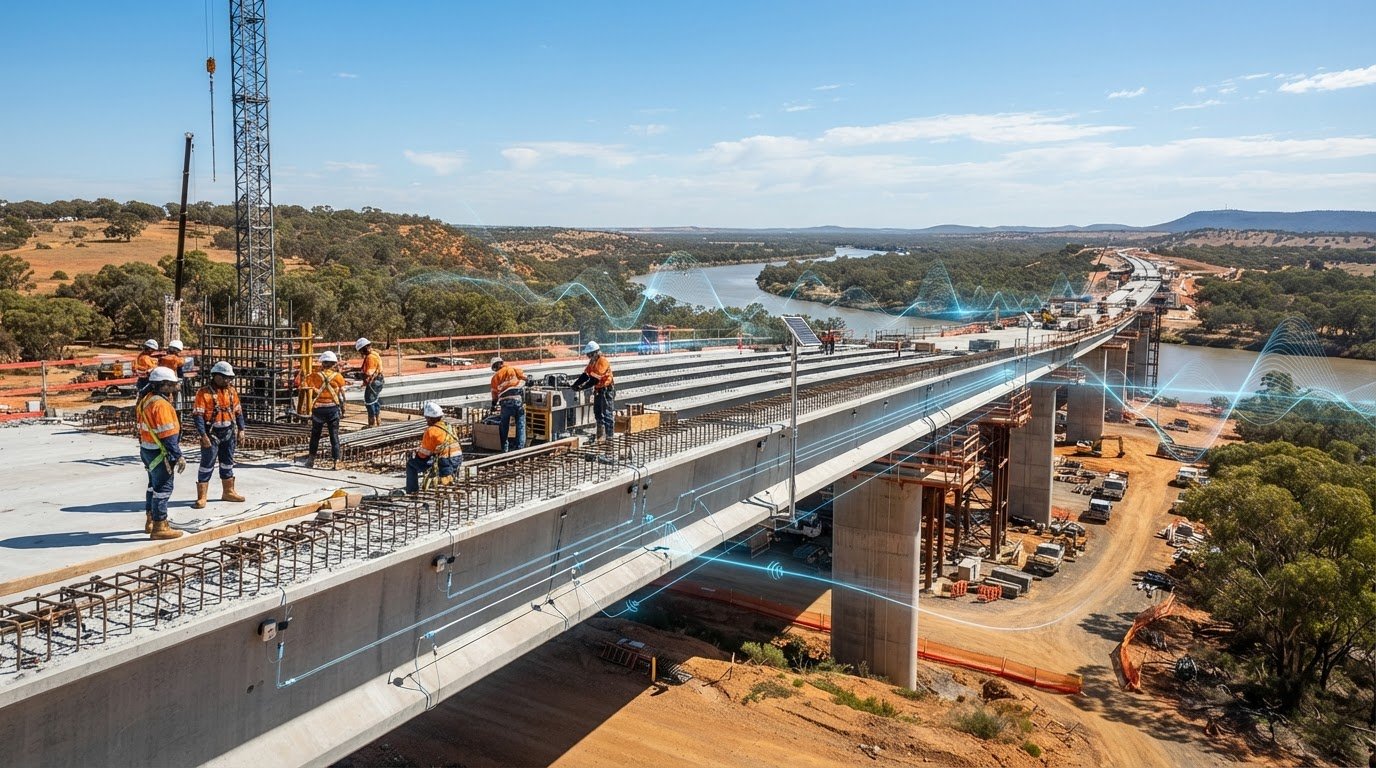
Modern site oversight transcends simple theft prevention. It generates a continuous stream of operational data that transforms a solar tower from a perimeter guard into a central project management hub. By integrating visual data into daily workflows, you reduce the need for physical site visits. This saves significant time and travel expenses while providing directors with total visibility into progress. When you are determining how to justify security camera costs to management, these operational efficiencies are often more persuasive than security claims alone. You aren't just hiring a camera; you're hiring a remote office that allows you to manage multiple sites from a single location.
Time-Lapse as a Marketing Asset
Marketing value is a high-impact byproduct of professional surveillance. High-quality construction time-lapse cameras document every major milestone from groundbreaking to completion. This footage serves as a powerful asset for stakeholder reporting and investor updates. It builds a developer’s reputation through visual transparency and professional storytelling. Showing a project’s evolution in a 60-second video is far more impactful than a static progress report. These assets are also invaluable for future tender submissions, proving your team’s ability to deliver complex projects on schedule. This documentation celebrates the long-term legacy of the build, providing value long after the towers are removed.
Automating Site Safety and Compliance
Safety compliance is a major operational risk that traditionally requires constant human monitoring. Modern solar towers utilize AI analytics to automate this oversight. PPE detection cameras identify workers without helmets or high-vis vests instantly. This proactive approach reduces the risk of expensive WorkSafe audits by providing a documented history of compliance. Total visibility improves site culture and accountability, as the team knows the environment is being professionally documented. This creates a safer work environment and reduces the administrative burden on site supervisors who would otherwise spend hours manually checking for breaches.
Integrating these data streams into your project management software streamlines communication between the field and the office. It allows for immediate verification of site conditions during weather events or delivery disputes. This level of remote accessibility ensures that project leads stay informed without the logistical drain of constant travel. If you want to see how these tools can transform your site operations, you can view our range of project management cameras here.
The Final Pitch: Presenting Your Surveillance Proposal
A successful proposal connects technical features to the financial health of the project. To master how to justify security camera costs to management, you must synthesize the arguments for risk mitigation, operational efficiency, and high-value documentation. Directors don't want to hear about megapixels or frame rates. They want to hear how a hired solar tower prevents a $50,000 equipment theft or how it saves ten hours of travel time per week for senior staff. You are presenting a solution that makes the project more predictable and transparent.
Before you enter the boardroom, gather the following data points to build a bulletproof request:
- Historical Loss Data: Total cost of previous thefts, vandalism, or insurance excess payments on similar projects.
- Management Travel Costs: Estimated savings in fuel and labor by replacing physical site visits with remote oversight.
- Marketing Requirements: The value of high-definition time-lapse footage for future tender submissions and stakeholder reports.
- Subcontractor Accountability: How visual documentation will resolve disputes regarding delivery times and work completion.
Invite your stakeholders to a live demo of the system. Seeing the visual clarity and the ease of use firsthand often removes the final hurdles to approval. When management sees the "total visibility" anchor in action, the hire fee becomes a secondary concern to the project’s security and progress.
Drafting the Business Case
Focus your business case on the "Total Cost of Risk" rather than the "Weekly Hire Fee." A weekly rental is a manageable operational expense that scales with the project’s needs. Highlight the national reliability and professional support that comes with a managed service. You aren't asking for a budget to buy hardware that will sit in a warehouse; you're asking for a service that ensures 100% uptime. For a deeper look at how these systems operate in the field, refer to our remote site surveillance towers guide. This helps frame the decision as a strategic partnership with an expert provider rather than a simple equipment hire.
The Low-Friction Implementation
Management often fears that new technology will create more work for their teams. Address this by emphasizing the low-friction nature of the rollout. Professional installation requires zero site power and no complex cabling. It's a completely autonomous setup that begins working the moment the tower is deployed. The Jobcam mobile app provides a "plug-and-play" experience for directors, allowing them to check site progress in seconds from their own devices. This ease of use ensures that the technology is actually utilized, maximizing the return on investment. If you're ready to secure your site with a professional, solar-powered solution, get a tailored quote for your next project today.
Secure Your Project’s Future with Total Visibility
Transitioning from a reactive security mindset to a proactive project management strategy is the most effective way to protect your timeline. By reframing surveillance as "Project Insurance," you shift the focus from a weekly fee to the thousands of dollars saved in potential theft and site delays. You've learned that the flexibility of a hire model avoids the hidden costs of ownership while providing high-value assets like time-lapse footage for stakeholder reporting.
Mastering how to justify security camera costs to management is ultimately about demonstrating how total visibility protects the bottom line. Our managed service simplifies this process by handling everything from installation to technical maintenance, backed by Telstra 4GX connectivity for national reliability and secure AWS cloud storage for all recorded footage. It's time to move beyond guesswork and start documenting your project’s success with precision. Secure your site with professional solar surveillance hire and give your stakeholders the peace of mind they deserve.
Frequently Asked Questions
Is hiring security towers more cost-effective than hiring a night guard?
Hiring solar surveillance towers is typically much more cost-effective than employing physical guards. Towers provide 24/7 visibility without the high hourly rates, shift handovers, or human fatigue associated with labor-intensive security. A single tower offers a high-definition vantage point that covers large areas more consistently than a person on foot. This efficiency is a primary factor in how to justify security camera costs to management when comparing modern technology to traditional labor.
How does remote monitoring reduce project management costs?
Remote monitoring eliminates the need for frequent, expensive site visits by senior staff. Directors can verify project progress, contractor arrivals, and material deliveries via a mobile app from any location. This reduces fuel expenses and allows project leads to oversee multiple developments simultaneously. It streamlines daily oversight and keeps projects on schedule without increasing administrative overhead.
Can I use the same camera system for security and marketing time-lapse?
Yes, professional solar surveillance towers often serve a dual purpose. High-definition sensors record security footage while simultaneously capturing high-quality images for professional time-lapse videos. This allows you to document project milestones for stakeholder reports and marketing assets without hiring separate equipment. It maximizes the utility of the rental and provides a superior return on investment for the project.
What happens to the footage if the camera tower is damaged or stolen?
All recorded footage is securely backed up to AWS cloud storage in real-time via the cellular network. Even if the physical tower is compromised, your historical data remains accessible and protected. This ensures that vital evidence for insurance claims or police reports is never lost. Professional hire services prioritize this data redundancy to provide project leads with total peace of mind regarding their documentation.
Do solar security cameras work during extended periods of low light or rain?
Autonomous towers are engineered with high-capacity battery reserves to ensure continuity during poor weather. The solar panels efficiently charge the system even in overcast conditions, maintaining 100% uptime. This self-sustaining power model operates independently of the grid. It's a reliable solution for off-grid industrial environments where site power is often unavailable or unreliable during early project phases.
Is there a minimum hire period for solar surveillance towers?
Minimum hire periods vary depending on the project scope and mobilization requirements. Most commercial hire agreements are flexible, allowing you to scale surveillance to match specific project phases like groundworks or fit-outs. You should check with the provider to determine the most cost-effective duration for your site's specific risk profile and timeline.
How do custom motion alerts save management time?
Custom motion alerts use AI analytics to filter out false alarms and notify you only of genuine security breaches. Instead of reviewing hours of empty footage, you receive instant alerts on your mobile device when unauthorized activity is detected. This allows for immediate intervention and significantly reduces the administrative burden on site supervisors. It's an essential efficiency gain when explaining how to justify security camera costs to management.
What data is required to calculate the ROI of site security?
Calculating ROI requires data on historical theft losses, insurance excess payments, and the cost of project delays caused by vandalism. Compare these figures against the predictable weekly hire fee of a solar tower. You should also include "soft" savings like reduced travel time for project leads and the marketing value of time-lapse documentation. This comprehensive data set creates a clear, evidence-based financial case for budget approval.