How to Secure a Remote Property: The Professional Guide to Autonomous Surveillance in 2026
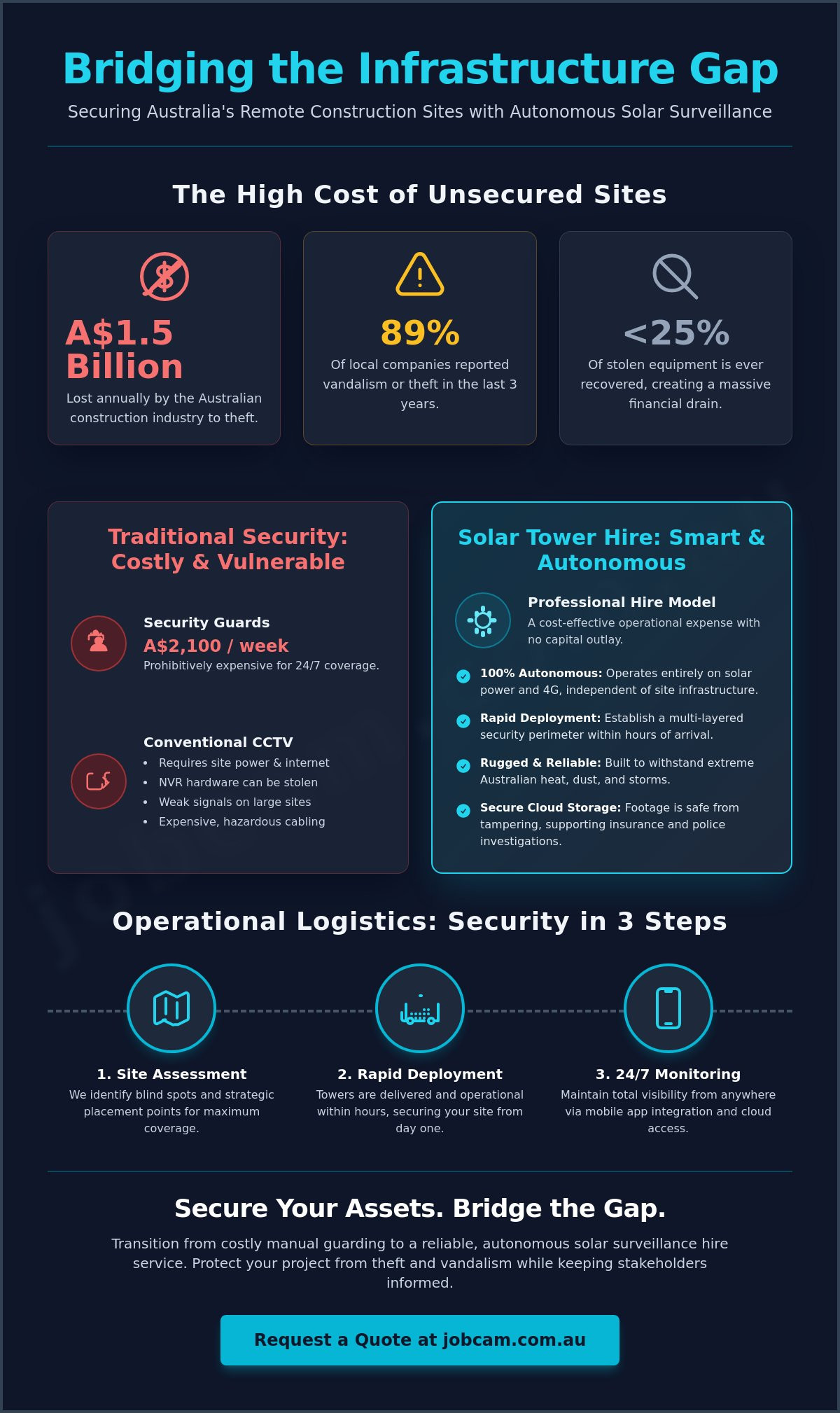
Did you know that the Australian construction industry loses an estimated A$1.5 billion annually to theft, yet less than 25% of stolen equipment is ever recovered? With 89% of local companies reporting vandalism or theft in the last three years, the "infrastructure gap" at your site boundary is no longer just a logistical hurdle; it's a massive financial drain. You're likely aware that traditional security guards are becoming prohibitively expensive, with after-hours coverage now costing approximately A$2,100 per five-night week. It's a heavy price to pay when your project lacks the fixed power or cabling required for standard remote site security solutions.
We understand the pressure to maintain total visibility without blowing the budget on permanent infrastructure. This guide will show you how to implement high-level, autonomous surveillance using solar technology that requires zero site power or existing internet. You'll learn how a professional rental model provides reliable, 24/7 oversight while ensuring your project remains compliant with the 2026 WHS Amendment (Digital Work Systems) Act. We'll break down the transition from costly manual guarding to technical, solar-powered towers that keep your site secure and your stakeholders informed from any location.
Key Takeaways
- Identify how to bridge the infrastructure gap using solar-powered towers that operate entirely independent of grid power and fixed-line internet.
- Discover why professional hire models for remote site security solutions offer a more cost-effective alternative to traditional security guards and permanent hardware installations.
- Learn the logistics of rapid deployment, allowing you to establish a multi-layered security perimeter within hours of arriving at a remote project site.
- Understand how to transition security costs from capital expenditure to operational expenditure while maintaining total visibility through mobile app integration.
- Explore the benefits of autonomous surveillance in harsh Australian environments, ensuring reliability against dust, heat, and extreme weather conditions.
The Infrastructure Gap: Challenges of Securing Remote Australian Sites
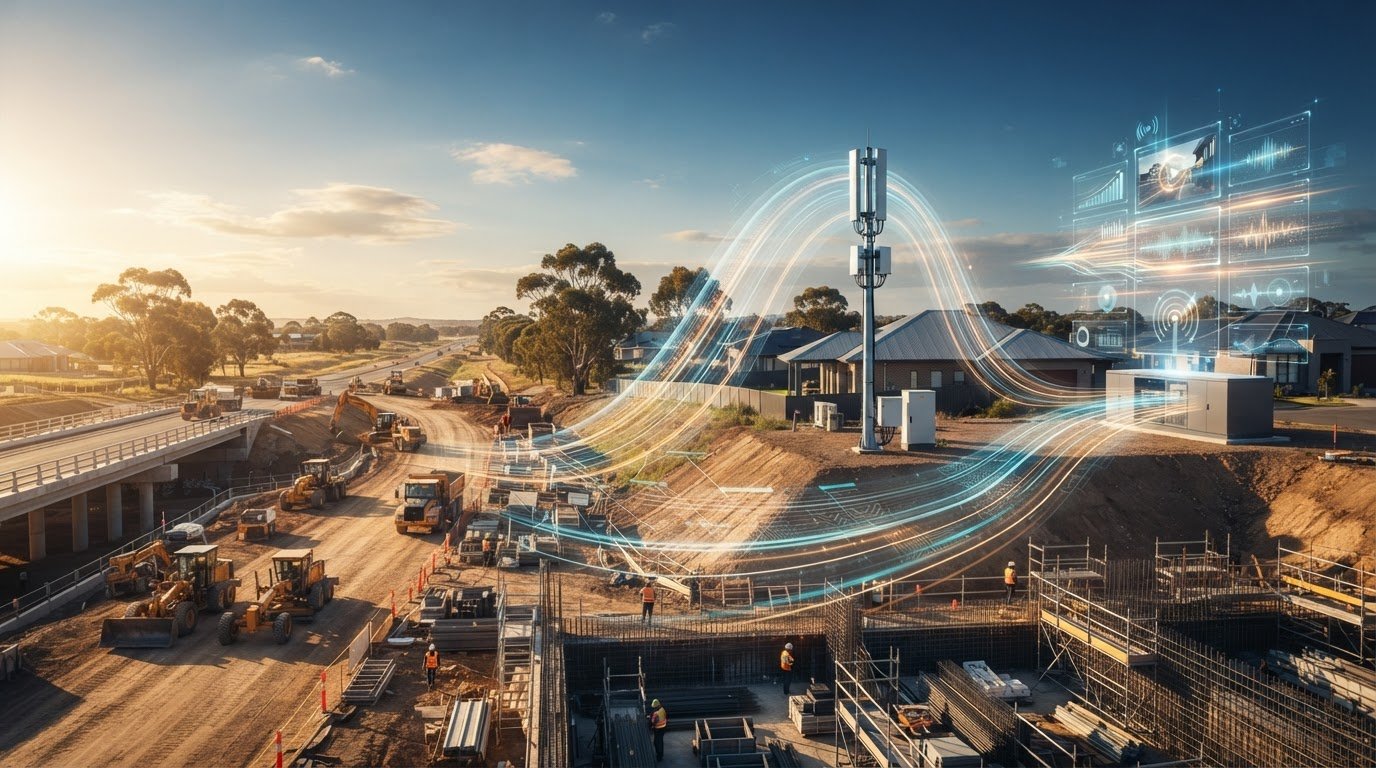
The "Infrastructure Gap" is the single greatest obstacle for project managers in regional Australia. It's the technical void where grid power ends and fixed-line internet doesn't exist. For a civil works project or an outback development, this gap makes standard security measures almost impossible to maintain. You can't plug in a camera if there's no socket within five kilometres. Relying on diesel generators is noisy, expensive, and requires constant refuelling. This lack of utility access is why specialized remote site security solutions are essential rather than optional.
Environmental conditions add another layer of complexity. Australian sites face extreme heat that can exceed 45 degrees, fine red dust that penetrates standard seals, and sudden tropical storms. Most commercial hardware isn't built for these variables. When equipment fails due to environmental stress, your site becomes a blind spot. Professional theft rings target these unmonitored areas because they know foot traffic is non-existent after hours. While fencing and signage are foundational physical security principles, they're easily bypassed by determined intruders who have the luxury of time in isolated locations.
The Limitations of Conventional CCTV
Standard CCTV relies on a Network Video Recorder (NVR) to store footage. In a remote setting, these units are often housed in site offices or temporary sheds. If an intruder breaks in, they simply take the NVR, removing all evidence of the crime. Consumer-grade wireless cameras also fail here. They lack the signal strength to push high-definition video over long distances or through heavy machinery. Attempting to bridge this gap by running temporary power lines across a site can cost thousands in cabling and labour, only to create a trip hazard and a maintenance headache.
Risk Assessment for Remote Site Boundaries
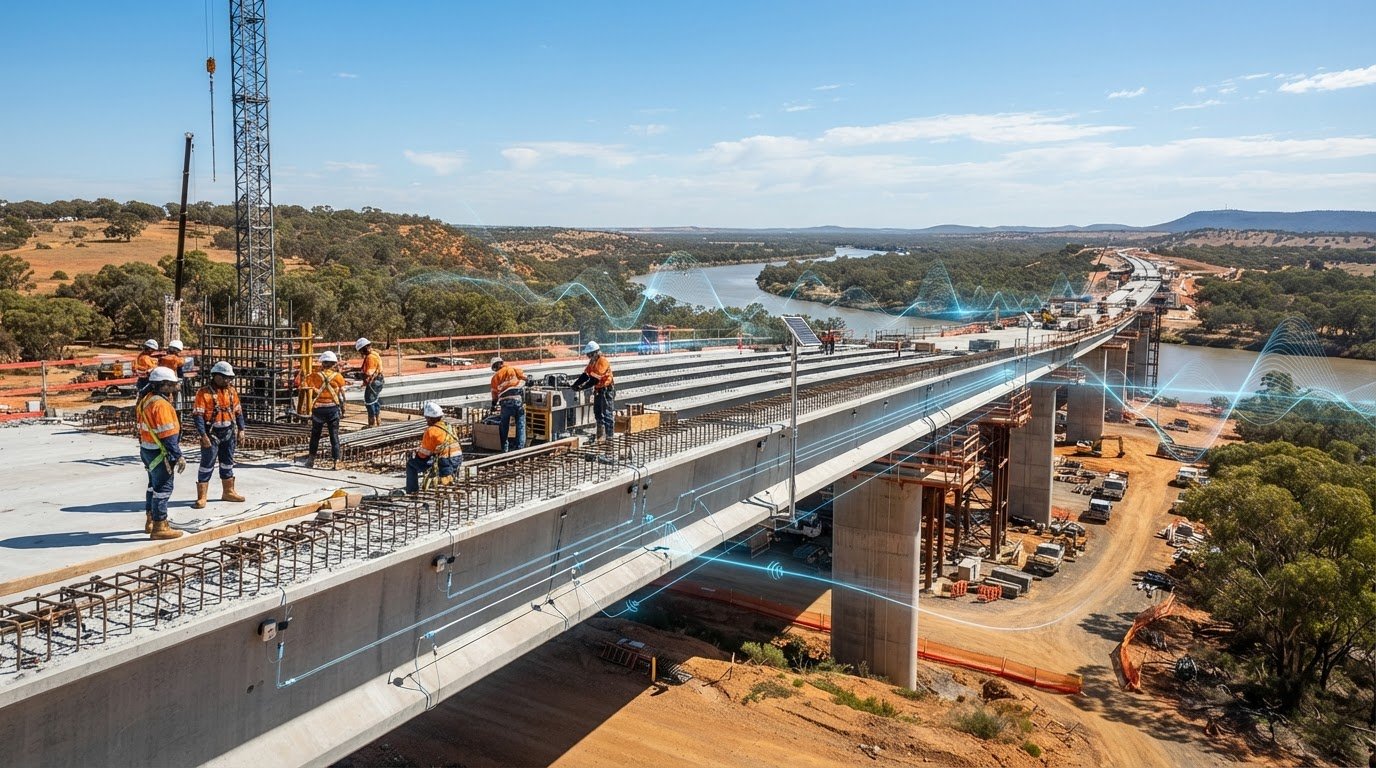
Effective oversight starts with identifying blind spots. Large-scale civil works often have vast perimeters that change daily as the project progresses. Insurance providers now frequently require 24/7 visibility as a condition of coverage, especially for high-value equipment yards. You must prioritise zones based on asset value. A site office contains data, but the equipment yard holds millions of dollars in plant and machinery. Securing these boundaries requires a modular approach using solar site cameras that can move as the project evolves, ensuring no corner of the site is left unmonitored.
Essential Strategies for Securing Remote Sites Effectively
Effective security is built in layers. It starts with the physical perimeter but depends on digital oversight to be truly effective. For remote Australian projects, the first layer is always the entry point. You need to combine physical barriers with digital tripwires that trigger before an intruder reaches your high-value assets. This approach aligns with global standards for critical infrastructure security, ensuring that even the most isolated sites remain resilient and monitored.
Deploying autonomous surveillance units is the next critical step. These towers operate on independent solar power, removing the single point of failure found in grid-connected systems. By choosing a hire model, you ensure your equipment is always current and technically sound. Your provider should handle the heavy lifting, including regular health checks and remote firmware updates. This keeps the system operational without requiring your team to become technical experts. If you're planning a new project, integrating temporary site security cameras early in the mobilization phase prevents early-stage losses.
Footage integrity is a major concern for remote project leads. If an intruder targets the recording hardware, your evidence vanishes. This is why cloud-based storage is a non-negotiable feature for modern remote site security solutions. By pushing encrypted data to the cloud in real-time, you ensure that even if the hardware is damaged, the record of the event remains secure. This creates a fail-safe environment that supports insurance claims and police investigations while providing peace of mind for stakeholders.
Layered Perimeter Protection
Digital tripwires act as an invisible fence. When these are integrated with remote monitoring cameras, you gain an early warning system that passive recording simply can't provide. Signage also plays a vital role. It serves as a legal deterrent and helps manage liability, but its real power comes when it's backed by visible, high-impact surveillance towers. Strategic placement is key; units should be positioned to cover primary access roads and equipment laydown areas simultaneously to eliminate blind spots.
Real-Time Visibility and Reporting
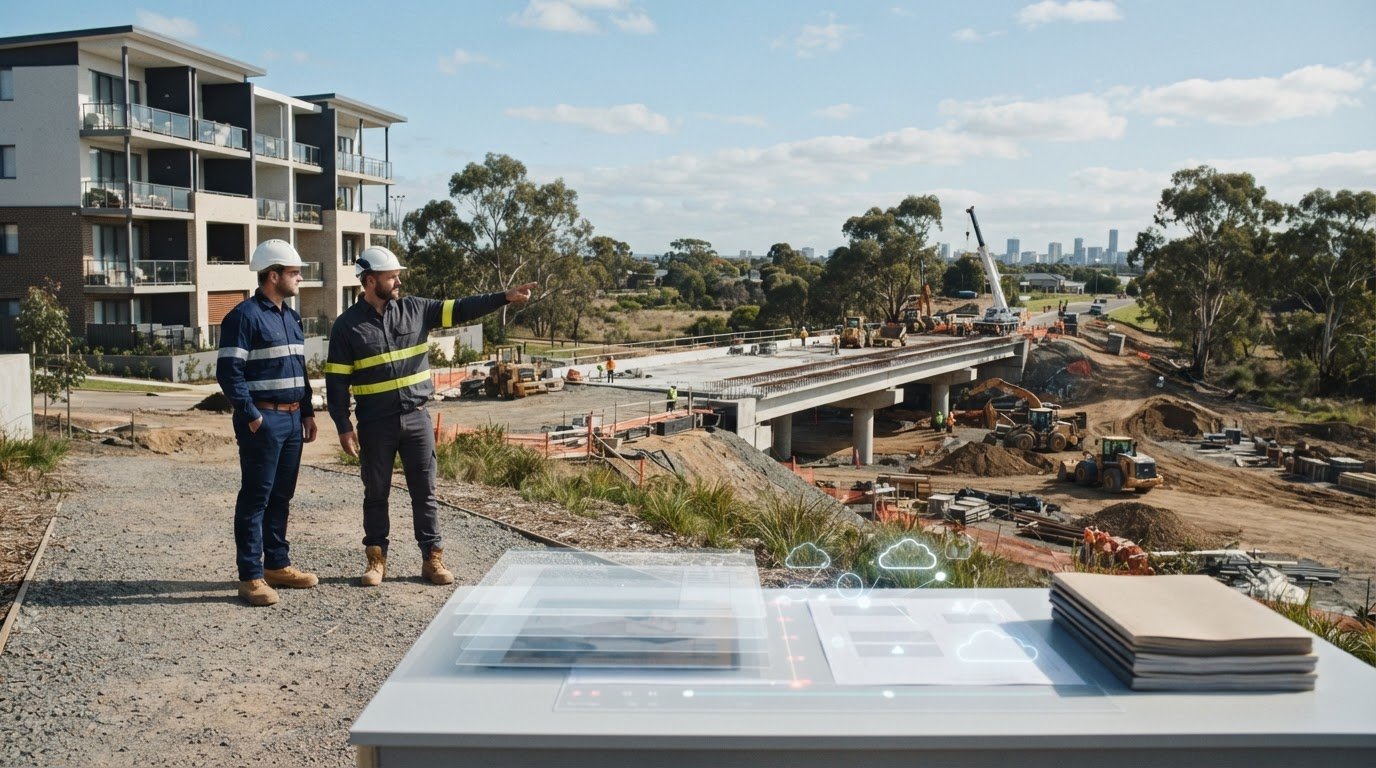
Modern site management doesn't happen from a desk. Mobile apps now allow supervisors to monitor site progress and security alerts from their phone, providing total visibility regardless of their physical location. Motion detection technology is a game-changer here. Instead of scrolling through hours of empty footage, the system filters for activity, sending real-time alerts only when something moves. This documentation isn't just for security; it's a powerful tool for stakeholder updates and project milestone tracking, turning your security asset into a project management win.
Why Solar-Powered Surveillance Towers are the Superior Choice
Autonomy is the defining feature of professional remote site security solutions. While traditional systems tether you to the nearest power pole, solar-powered towers operate with total independence. They don't require a grid connection or a local Wi-Fi network to function. This self-sufficiency eliminates the most common failure points in remote environments. If the site loses power, your security stays live. It's a "set and forget" asset that provides continuous protection without the logistical burden of fuel deliveries or cable maintenance.
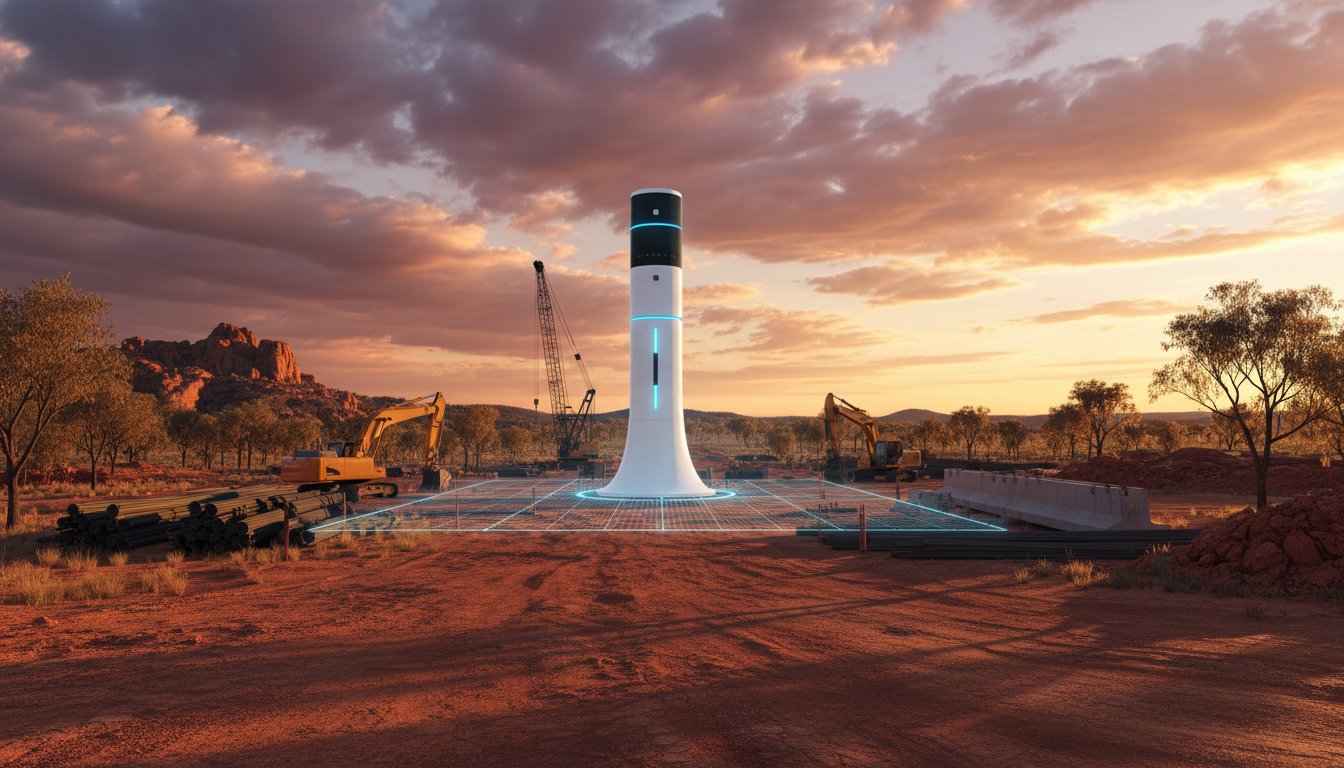
Rapid deployment is another critical advantage for fast-moving projects. Unlike fixed installations that require trenching and electrical certification, solar towers are operational within hours of arriving on-site. This speed allows you to secure assets the moment they land. The telescoping mast provides a significant height advantage, offering a superior vantage point that a standard fence-mounted camera can't match. As your project footprint expands or shifts, these units are easily relocated, providing a scalable security model that grows with your site requirements.
Connectivity and Cloud Security
Reliable data transmission is the backbone of remote oversight. In regional Australia, standard Wi-Fi is often non-existent or too weak for high-definition video. Utilizing Telstra 4GX connectivity ensures high-speed data transfer even in challenging locations. This robust connection allows for seamless integration with advanced surveillance technology, including real-time analytics and AI-driven alerts. To ensure footage integrity, data is hosted on AWS servers, the industry standard for secure cloud storage. This means your evidence is accessible and protected even if the physical tower is tampered with or damaged.
Comparison: Solar Towers vs. Traditional Guarding
The cost-efficiency of a hire model becomes clear when compared to manual patrols. Hiring on-site security guards in Brisbane for after-hours coverage can cost approximately A$2,100 for a five-night week. This is a significant recurring expense that doesn't provide 24/7 coverage. Cameras don't suffer from fatigue, they don't have limited visibility at night, and they provide a permanent record of every event. Integrating solar site cameras into your existing protocols provides a more consistent, tech-driven solution that delivers total visibility at a fraction of the cost of human guarding. This transition from manual to autonomous oversight represents a logical progression for modern project management.
Operational Logistics: Implementing Remote Security Hire
Implementing remote site security solutions should not be a secondary project for your team. The goal is to integrate professional oversight into your operational flow without adding to the technical workload. A key part of this is the financial transition from capital expenditure (CAPEX) to operational expenditure (OPEX). Buying hardware means you're stuck with a depreciating asset that requires storage, maintenance, and eventual disposal. Hiring allows you to allocate security costs as a direct project expense, simplifying budget management and improving cash flow across the development lifecycle.
Logistics in remote Australia are notoriously difficult. Professional hire providers bridge this gap by managing the delivery, setup, and commissioning of solar towers in even the most isolated outback locations. This isn't just about dropping off equipment. It involves precise technical calibration, including optimal solar positioning to ensure maximum battery performance during winter months or periods of heavy cloud cover. When your project moves into the next phase of civil works, the equipment can be relocated to follow the progress of the build, ensuring that your high-value plant and equipment remain under constant surveillance.
The Benefits of the Hire Model
Ownership is often a liability in the fast-paced security sector. Hardware becomes obsolete quickly, and the cost of maintaining a fleet of cameras can eat into project margins. The hire model provides ultimate flexibility. You can scale your security footprint up or down based on the current risk levels of the site. If a project expands unexpectedly, adding more units is a simple phone call away. This "as-a-service" approach ensures you always have the right amount of coverage without the long-term burden of asset management. It also guarantees that you're using 2026-standard technology rather than aging gear from a previous decade.
Managed Services and Technical Continuity
A professional hire agreement is more than a hardware rental; it's a commitment to technical continuity. This includes active remote health monitoring where the provider tracks system uptime, battery levels, and connectivity status 24/7. If a unit experiences a fault, it's identified and addressed remotely, often before the site manager is even aware of an issue. This level of managed service ensures that your site is never left vulnerable due to technical failure. For a detailed breakdown of how these systems operate in the field, refer to our Remote Site Surveillance Towers guide. To see how we can support your specific project needs, view our full range of solar hire options here.
Securing Your Assets with Jobcam Professional Hire Services
Jobcam provides more than just hardware. We deliver a complete ecosystem for remote site security solutions. Our solar surveillance towers are engineered for the specific rigours of the Australian outback. From extreme dust in the Pilbara to the humidity of Far North Queensland, our units maintain operational continuity where consumer-grade systems fail. This reliability has made us a trusted partner for councils and lead contractors on major industrial developments across the country. We don't just provide cameras; we provide the peace of mind that comes from total, uninterrupted visibility.
Our comprehensive hire packages are designed to integrate seamlessly into your project timeline. We handle the heavy lifting of installation and ongoing technical support, ensuring your team stays focused on the build rather than the tech. This managed service approach guarantees that your security is always active, monitored, and effective. By choosing a professional hire model, you gain access to industrial-grade technology without the long-term burden of asset maintenance or storage between projects.
The Jobcam Advantage
The Jobcam mobile app is the central hub for your site visibility. It provides high-definition playback and real-time motion alerts, ensuring you're never out of the loop. This technology is particularly effective for building site CCTV and vast remote land parcels. Beyond security, our systems serve as a powerful project storytelling tool. The same high-quality footage used for oversight can be repurposed for stakeholder updates and marketing. This allows you to document your project's legacy from ground-break to completion with professional-grade clarity.
Getting Started with Your Remote Security Plan
Protecting your assets shouldn't be a slow process. We prioritize rapid site protection with streamlined deployment timelines. Once you request a site-specific quote, our team works to commission your towers so they're live before your first delivery of plant arrives. Every project is unique, so we tailor our deployment to cover your specific blind spots and high-value zones. For a deeper dive into the logistics of your setup, check out our Solar Powered Security Camera Rental Guide. Secure your perimeter with a partner that understands the physical and technical reality of your work environment.
Optimise Your Remote Site Oversight
Securing an isolated property no longer requires permanent infrastructure or grid power. Autonomous solar technology bridges the infrastructure gap, providing total visibility where traditional systems fail. By transitioning to a managed hire model, you replace high-cost manual guarding with reliable, technical oversight that moves with your project. This approach ensures your security remains a flexible operational expense rather than a depreciating capital burden.
Jobcam specialises in Australian industrial and civil site security, delivering remote site security solutions that stand up to the harshest environments. We utilize Telstra 4GX and AWS Cloud hosting to ensure 99.9% uptime and data integrity for every project. Our comprehensive service includes professional installation and relocation as your site boundaries evolve. You don't need to worry about technical maintenance; we ensure your towers are online and recording 24/7. Secure your remote project today with Jobcam solar surveillance hire and gain the peace of mind that comes from professional, autonomous protection.
Frequently Asked Questions
How do solar security cameras work in remote areas without internet?
Solar surveillance towers operate using high-gain 4G or 4GX cellular modems to transmit data across the mobile network. They don't need a local Wi-Fi network or fixed-line connection to function. These units connect directly to encrypted cloud servers to upload footage in real-time. This makes them the ideal choice for remote site security solutions where traditional infrastructure is unavailable. The system is entirely self-sufficient, combining independent power generation and data transmission in one mobile unit.
Can I monitor my remote property from my smartphone in real-time?
You can access live video feeds and recorded events instantly through the Jobcam mobile app. The system provides real-time motion alerts directly to your smartphone, allowing you to respond to incidents as they happen. This cloud-based accessibility ensures you have total site visibility from any location with a mobile signal. It's a professional-grade tool that empowers project managers to maintain oversight and document site progress without being physically present on the site.
What happens to the security footage if the camera tower is stolen?
Your footage remains secure because the system uploads data to encrypted AWS cloud servers in real-time. Even if the physical tower is tampered with or removed, the recorded evidence is already stored off-site and remains accessible through your secure portal. This fail-safe architecture prevents intruders from destroying evidence by targeting the recording hardware. It's a critical advantage over traditional systems that store data locally on a site recorder which can be stolen or damaged.
Is hiring a surveillance tower more cost-effective than buying equipment?
Hiring is generally more cost-effective for project-based work as it shifts the expense to an operational budget. You avoid the high upfront costs of capital expenditure and the ongoing burden of maintenance, storage, and depreciation. A hire model also ensures you always have access to the latest 2026-standard technology for every new project. Professional providers handle all technical health checks and remote monitoring, ensuring the system remains operational without requiring your team's time or resources.
Do solar security cameras work during long periods of cloudy weather?
Professional solar towers are equipped with high-capacity battery arrays designed to sustain operations through extended periods of low sunlight. These systems are calibrated to manage power consumption efficiently, ensuring 24/7 monitoring even during heavy cloud cover or winter months. The batteries charge during daylight hours and provide a reliable buffer for nighttime and overcast conditions. This redundancy is essential for maintaining consistent remote site security solutions in variable Australian climates where weather can be unpredictable.
How quickly can a solar surveillance tower be deployed to my site?
Deployment is rapid because the units are mobile and require no ground preparation, trenching, or electrical work. Most towers can be delivered and fully operational within hours of arriving on your site. This speed allows you to secure a perimeter immediately as project mobilization begins. Unlike fixed systems that require weeks of planning and trade coordination, solar towers offer a plug-and-play solution that fits tight industrial project timelines and urgent security needs.
Are these cameras suitable for harsh Australian outback conditions?
Our towers are engineered specifically for the rigours of the Australian environment. The hardware features industrial-grade seals to prevent dust ingress and advanced cooling systems to manage extreme heat. Whether your project is in a high-wind coastal zone or a dusty inland mining site, the equipment is built to maintain performance. This durability ensures that your surveillance remains active despite the environmental stresses that typically cause consumer-grade electronics to fail in regional areas.
Can I use these cameras for project time-lapse as well as security?
Many of our solar surveillance units serve a dual purpose by providing both high-level security and professional time-lapse documentation. You can capture high-resolution images at scheduled intervals to create a visual record of your project's progress over months or years. This data is an excellent asset for stakeholder reporting and marketing presentations. It allows you to document the construction lifecycle and celebrate project milestones while simultaneously maintaining a secure, monitored perimeter against unauthorized access.