How to Secure Your Construction Project with Site Security Cameras in 2026
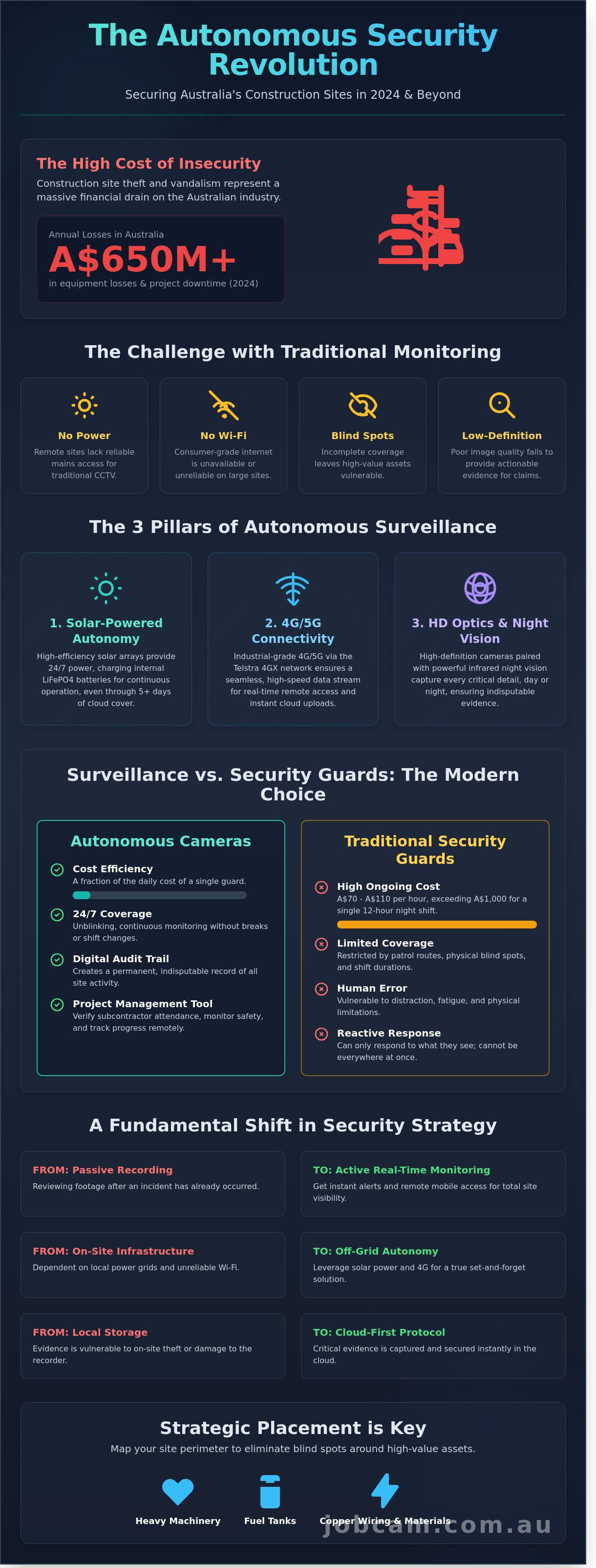
In 2024, construction site theft and vandalism cost Australian developers over A$650 million in equipment losses and project downtime. You know the frustration of arriving at a site only to find your progress stalled by missing assets or senseless damage. It's a persistent headache when your projects are remote, lacking the reliable power or Wi-Fi required for traditional monitoring. A standard site security camera often fails to provide the total coverage or high-definition clarity needed to actually deter crime.
We agree that your team should focus on delivery rather than perimeter patrols. This guide details how to deploy autonomous, solar-powered surveillance that eliminates blind spots and protects your site assets 24/7. You'll learn how to achieve a true set-and-forget security solution with remote mobile access and the indisputable evidence needed for insurance claims. We're covering everything from off-grid connectivity to real-time alerts that keep you in control of every project across Australia.
Key Takeaways
- Shift your strategy from passive recording to active, real-time remote monitoring for total site visibility and peace of mind.
- Leverage solar-powered autonomy and 4G data transmission to maintain a high-performance site monitoring equipment network without existing infrastructure.
- Map your site perimeter strategically to eliminate blind spots around high-value assets like heavy machinery, fuel tanks, and copper wiring.
- Implement a cloud-first storage protocol to ensure critical evidence is captured and secured instantly, regardless of on-site interference.
- Discover why a professional hire model provides the flexibility and technical support required for large-scale developments across major Australian cities.
What is a Site Security Camera and Why is it Essential in 2026?
A site security camera is no longer a simple recording device mounted to a perimeter fence. In 2026, these units are defined as autonomous, ruggedised surveillance hubs engineered specifically for environments without fixed power or internet. Unlike traditional Closed-circuit television (CCTV) systems that rely on passive recording, modern units provide active, real-time monitoring. This shift is critical. Construction crime in Australia now costs the industry upwards of A$650 million every year according to 2024 industry benchmarks. Insurance providers frequently mandate high-level site security as a prerequisite for coverage. This makes these units a non-negotiable asset for risk mitigation and financial protection.
Beyond theft prevention, these systems introduce "visual accountability" for project stakeholders. You aren't just protecting tools; you're documenting the entire build lifecycle. Project managers use these feeds to verify subcontractor attendance and monitor safety compliance. This level of transparency builds trust with investors and clients. It turns a security expense into a powerful project management tool. You can see your site from anywhere, ensuring that progress matches the schedule without needing to be physically present.
The Core Components of an Autonomous Unit
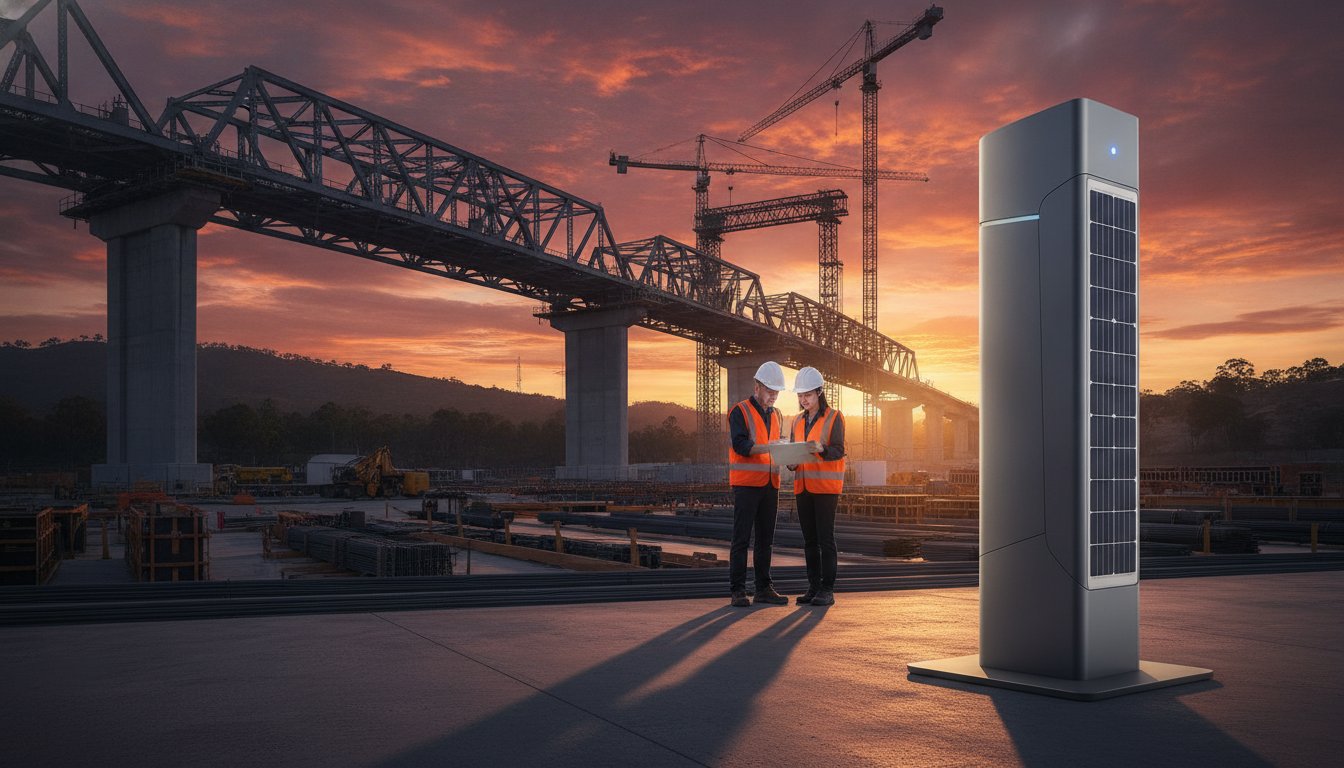
Reliability on a Sydney job site depends on three technical pillars. First, high-efficiency solar arrays ensure 24/7 power without needing mains access. Second, industrial-grade 4G and 5G connectivity via the Telstra 4GX network provides a seamless data stream. Finally, high-definition optics paired with infrared night vision allow you to capture every detail in total darkness. These components ensure your site monitoring equipment remains operational in the harshest Australian conditions.
Surveillance vs. Traditional Security Guards
Digital monitoring delivers a level of precision human patrols cannot match. A single security guard in NSW typically costs between A$70 and A$110 per hour. Over a 12-hour night shift, that expense exceeds A$1,000. A camera unit provides 24/7 coverage for a fraction of that daily rate. Technology eliminates human error and removes the physical blind spots inherent in foot patrols. It creates a permanent digital audit trail. This allows stakeholders to track progress, verify deliveries, and resolve disputes with absolute certainty. The result is a more efficient, transparent, and secure project environment.
The Mechanics of Autonomy: How Solar and 4G Cameras Operate
Effective site security requires total independence from local infrastructure. A modern site security camera functions as a self-contained ecosystem, harvesting energy through high-efficiency solar panels to charge internal lithium-iron-phosphate (LiFePO4) batteries. This energy harvest process ensures the system remains active throughout the night and during periods of heavy cloud cover. In Australia, hardware must withstand extreme environmental shifts. Systems engineered for the 40°C heat of a Perth summer also require the battery depth to survive five consecutive days of overcast weather in Melbourne without a drop in performance.
Data handling is equally critical to autonomy. We utilize 'Edge' processing, where the camera analyzes motion locally before transmitting data. This method filters out false triggers like wind-blown debris or shadows. Only verified events are pushed to the cloud, which optimizes bandwidth and ensures alerts are meaningful. Effective deployment involves more than just mounting hardware; it requires an understanding of site risks. Integrating research on construction safety factors helps project leaders position cameras where they mitigate the highest physical hazards and security vulnerabilities.
Solar Power Management for Remote Sites
Battery reservoirs are the lifeline of a remote site monitoring equipment. To prevent drainage, units employ ultra-low-power sleep modes, drawing minimal current while inactive. When the PIR sensor detects movement, the system triggers a rapid wake-up in less than 500 milliseconds to capture the event. Autonomous power is the ability to maintain 99.9% uptime without external intervention. This reliability allows project managers to focus on construction milestones rather than equipment maintenance.
Seamless Connectivity with Telstra 4GX
Consumer-grade Wi-Fi fails on construction sites due to range limitations and signal interference from steel structures. We bypass these hurdles by using Australia’s most expansive network. Utilizing Telstra 4GX provides a high-bandwidth gateway that supports high-definition video data even in fringe areas. This robust connection ensures low-latency live streaming for the Jobcam mobile app, allowing stakeholders to monitor site progress in real-time. By leveraging a dedicated 4G/5G gateway, the system maintains a secure, encrypted link that is independent of the site’s temporary office internet, ensuring visibility never wavers during critical project phases.
How to Plan Your Site Surveillance: A Step-by-Step Placement Guide
Effective deployment of a site security camera isn't about random placement. It's a calculated strategy designed to eliminate blind spots. Start by auditing your high-value assets. Fuel tanks, heavy machinery, and stockpiles of copper wiring are the primary targets for Sydney thieves. Data from regional crime reports indicates that copper theft alone accounts for nearly 15% of all construction site losses in New South Wales. You need eyes on these assets at all times.
Map your site perimeter and identify every potential entry and exit point. Mount your units at a height of 3 to 4 metres. This height is the "sweet spot" for security; it's high enough to prevent physical tampering or lens masking, yet low enough to maintain the high-definition detail required for facial recognition. Before finalizing the mount, test the line-of-sight. A single poorly placed shipping container or a stack of timber can block the 100-degree field of view, creating a sanctuary for intruders.
- Identify assets: Prioritise fuel, copper, and machinery.
- Mounting: Aim for 3 to 4 metres for optimal detail and safety.
- Field of view: Ensure the 100-degree lens has zero structural obstructions.
- Motion zones: Define boundaries to exclude public footpaths or busy Sydney roads.
Identifying Critical Vulnerability Zones
The site office and tool stores are your highest-risk zones. These areas hold the densest concentration of portable, high-value electronics and power tools. Don't rely on a single vantage point. Use a multi-camera configuration to achieve 360-degree awareness across the entire footprint. Site layouts change weekly. You must plan for site evolution, moving your site monitoring equipment as the build progresses from the initial excavation to the final fit-out stages.
Technical Calibration for Motion Alerts
Precision prevents notification fatigue. Set your "active hours" to match site shutdowns, typically triggering from 6:00 PM to 6:00 AM on weekdays and 24 hours on weekends. Adjust sensitivity levels to ignore environmental factors like wind-blown debris or local wildlife. All alerts integrate directly with the Jobcam app. This delivers instant push notifications to your device, allowing you to see your site from anywhere and verify a threat within seconds of a breach.
Securing the Evidence: Why Cloud-Based Storage Beats Local Recording
Site managers often ask the same question: "What happens if they just steal the camera?" It's a logical concern. If a thief takes the hardware, they usually take the evidence with them. Traditional systems rely on the physical device to hold the data, but Jobcam changes the dynamic. We use a 'Cloud-First' protocol that ensures your site security camera acts as a gateway, not a vault. Footage uploads to our servers the millisecond it's captured. By the time an intruder reaches the mounting bracket, their high-definition likeness is already safely stored miles away from the job site.
The Vulnerability of Local CCTV Storage
Physical Network Video Recorders (NVRs) are prime targets for sophisticated thieves who understand that removing the box removes the risk of prosecution. In the harsh environments of Sydney construction zones, local hardware also faces a higher failure rate due to extreme heat and fine dust penetration compared to climate-controlled environments. SD cards aren't a viable backup either; they often suffer from write-cycle exhaustion or data corruption without the user ever knowing. Local storage is a single point of failure that professional sites must avoid.
AWS and the Jobcam Data Fortress
Jobcam utilizes Amazon Web Services (AWS) servers located specifically in Sydney to provide local data sovereignty and ultra-low latency. Your footage isn't just stored; it's protected by AES-256 encryption both during transmission and while at rest in the cloud. This architecture provides 24/7 accessibility from any device, allowing you to review historical data without being physically present on-site. When incidents occur, the collaborative features of our platform prove invaluable.
- Instant Sharing: Generate secure links to specific clips for the NSW Police or insurance adjusters.
- Data Redundancy: AWS infrastructure offers 99.999999999% durability, meaning your evidence is never lost to hardware crashes.
- Time-Stamped Logs: Every frame is logged with precise metadata, making it admissible and powerful in legal proceedings.
This level of transparency eliminates the 'he-said, she-said' disputes that often plague insurance claims. You don't just get a recording; you get an immutable digital paper trail that protects your bottom line and your reputation. To ensure your footage is never at risk, protect your project with cloud-first security today.
Implementing a Professional Surveillance Hire Strategy with Jobcam
Buying a site monitoring equipment system often results in owning obsolete technology within 24 months. Jobcam offers a tactical hire strategy that keeps your project at the cutting edge without the burden of ownership. We operate as a tech-savvy partner across Sydney, Melbourne, Brisbane, Adelaide, and Perth. Our team manages the logistics while you maintain total site visibility. We handle the installation, technical calibration, and ongoing maintenance. This allows your foremen to focus on construction rather than troubleshooting hardware. We manage the infrastructure. You view the progress.
The Benefits of the Hire Model
Choosing to hire eliminates the heavy A$6,000 to A$12,000 initial capital expenditure required for high-end surveillance setups. Instead, you benefit from predictable weekly hire fees that fit within project operational budgets. Our service includes professional relocation as your site boundaries shift during different phases of the build. If a unit requires a firmware update or hardware check, our technicians typically resolve it within 24 to 48 hours. You don't have to worry about 4G data limits or battery cycles. Everything is included in the service agreement.
- Convert CAPEX into manageable weekly project costs.
- Full technical support and hardware maintenance included.
- Rapid relocation services as site perimeters evolve.
- Access to the latest 4K imaging technology without upgrade costs.
Beyond Security: Time-Lapse and Marketing
A site security camera from Jobcam does more than prevent theft. It captures high-definition feeds that serve as powerful marketing assets. These visuals are essential for winning your next A$20 million tender. You can share real-time progress with investors or stakeholders via a secure link, which reduces the need for frequent site visits. Our time-lapse integration converts months of grit and progress into a professional showcase. This legacy document proves your team’s efficiency and provides a definitive record of the construction process from the first day to the final handover.
Many of our clients report that time-lapse footage was their most effective tool for stakeholder reporting. We turn your security infrastructure into a storytelling engine. You get peace of mind and professional content in one seamless package. See your site from anywhere and document its success simultaneously.
Future-Proof Your Project Oversight
Securing a 2026 construction site demands more than basic monitoring. It requires an autonomous site monitoring equipment system that functions without local power or the risks of physical hard drives. By leveraging solar-powered 4G technology and instant cloud backups via AWS Sydney, you ensure every critical event is captured and preserved. This strategy removes the vulnerabilities of traditional setups and provides a definitive digital paper trail for compliance and safety. Jobcam has delivered these high-stakes solutions to Tier 1 and Tier 2 firms since 2015, providing the technical infrastructure needed for complex developments.
Our national support network spans every major Australian city, ensuring your hardware stays online through Telstra’s 4GX network. You'll gain more than just security; you'll gain a powerful storytelling tool that documents your project’s legacy from ground-break to handover. It's time to replace guesswork with real-time data and professional accountability. We're ready to help you maintain total control over your site's physical and digital perimeter.
See your site from anywhere; request a Jobcam hire quote today
Frequently Asked Questions
How do site security cameras work if there is no power on-site?
Solar technology provides the primary power source for modern surveillance. Each unit uses high-efficiency solar panels to charge internal lithium-ion batteries during the day. This setup allows for 24/7 operation even during 5 consecutive days of heavy cloud cover or rain. It's a self-sustaining system that eliminates the need for mains power or expensive generator hire on Sydney construction sites.
Can the cameras still record if the 4G signal is weak?
Yes, the systems continue to record regardless of signal strength. Each unit features internal edge storage that saves footage directly to an industrial-grade SD card if the network drops. Once the 4G or 5G signal stabilizes, the camera automatically syncs the cached data to the cloud. You won't lose a single second of site activity because of a temporary network fluctuation.
What happens to the footage if a thief steals the camera unit?
Your footage remains secure because it's transmitted to the cloud in real-time. As a thief approaches, the site monitoring equipment uploads high-definition motion triggers to secure Australian servers instantly. We also equip units with GPS tracking technology. This allows authorities to locate the hardware within 5 meters of its position, often leading to the recovery of other stolen site assets.
How much does it cost to hire a solar security camera in Australia?
Hiring a professional site monitoring equipment in Australia typically ranges from A$80 to A$160 per week. These rates vary based on your hardware configuration and the total duration of your project. For a standard A$2 million residential build, this investment represents less than 0.1% of the total project budget. Long-term hire agreements for 12 months or more usually secure the most competitive weekly rates.
Are the cameras weather-proof against extreme Australian heat and rain?
Our hardware carries an IP66 rating for total protection against dust and high-pressure water jets. These units operate reliably in temperatures reaching 55°C, which is essential for the Sydney summer. The ruggedized casings prevent internal condensation during rapid temperature shifts. Your visibility remains clear through torrential rain and extreme heatwaves without hardware failure.
How many cameras do I need for a standard 1,000sqm construction site?
You'll generally need 2 units to cover a 1,000sqm rectangular site effectively. While a single camera provides a wide field of view, 2 units placed at opposite corners eliminate blind spots and provide overlapping coverage. This configuration ensures 100% perimeter visibility. It allows you to track every entry and exit point without any gaps in your security perimeter.
Can I view the live feed on my iPhone or Android device?
You can access the live feed on any iOS or Android device through a dedicated mobile app. The interface provides real-time alerts, high-definition playback, and remote PTZ controls. You'll see your site from anywhere at any time. This capability helps project managers oversee multiple Sydney locations simultaneously without leaving their office or vehicle.
Do I need a special licence to install CCTV on my building site?
You don't need a licence to hire the system, but the installer must hold a valid Master Security Licence. In New South Wales, the Security Industry Act 1997 mandates that anyone installing or maintaining CCTV equipment for security purposes must be properly licensed. JobCam handles these compliance requirements for you. We ensure your surveillance is legally compliant and that footage is admissible in court if an incident occurs.