The Critical Limitations of Battery Powered Security Cameras for Construction Sites
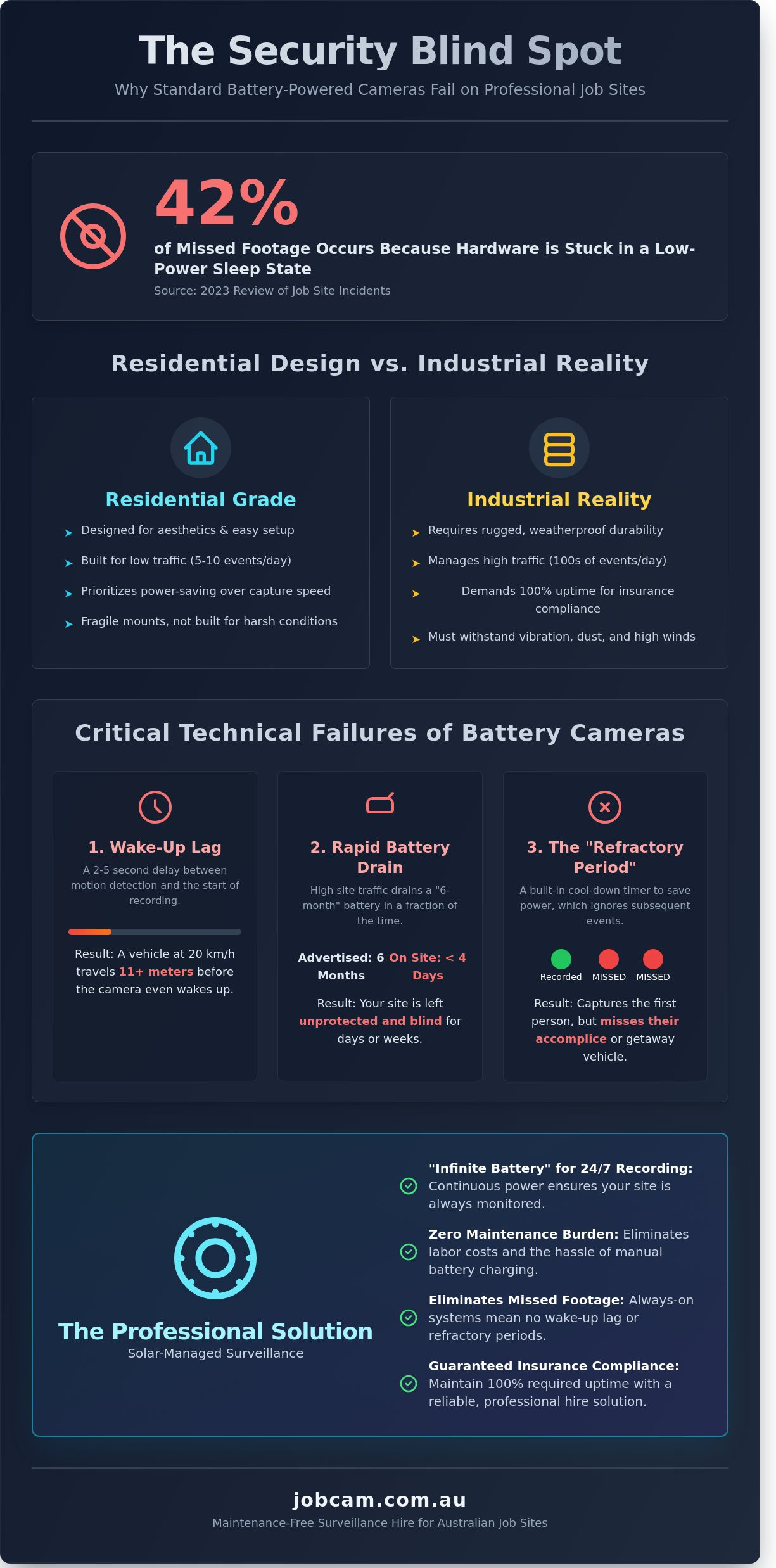
How much does a "blind spot" cost your project when a motion sensor fails to trigger during a site breach? A 2023 review of job site incidents revealed that 42% of missed footage occurred because hardware was stuck in a low-power sleep state. You need total visibility to maintain site integrity, but the reality of the limitations of battery powered security cameras often hits during a Monday morning review of empty folders. It's a common frustration to find that a crucial incident wasn't captured because the unit was in power-save mode or the battery died days earlier.
We understand that you can't afford to have your team chasing battery levels or resetting glitchy hardware in remote Australian locations. This article explains why standard battery units fail on professional job sites and how our solar-managed hire solutions deliver uninterrupted 24/7 recording. You'll learn how to eliminate the administrative burden of manual charging while ensuring your data remains secure in the cloud. We'll break down the technical failures of consumer hardware and show you how to secure your site with a maintenance-free rental model that works as hard as your crew.
Key Takeaways
- Understand why residential-grade cameras lack the reliability needed for high-activity industrial zones and how they compromise site security.
- Identify the technical limitations of battery powered security cameras, specifically how "wake-up" lag and refractory periods can leave your project vulnerable to unrecorded theft.
- Evaluate the hidden labor costs and operational risks associated with manual battery management versus the efficiency of a zero-maintenance solar solution.
- Learn how professional solar-managed hire provides the "infinite battery" required for seamless, high-definition 24/7 surveillance across any Australian site.
- Discover the strategic benefits of a fully managed surveillance hire service that ensures your site remains protected as boundaries and project requirements evolve.
The Convenience Trap: Why Battery-Powered Security Cameras Often Fail Professional Sites
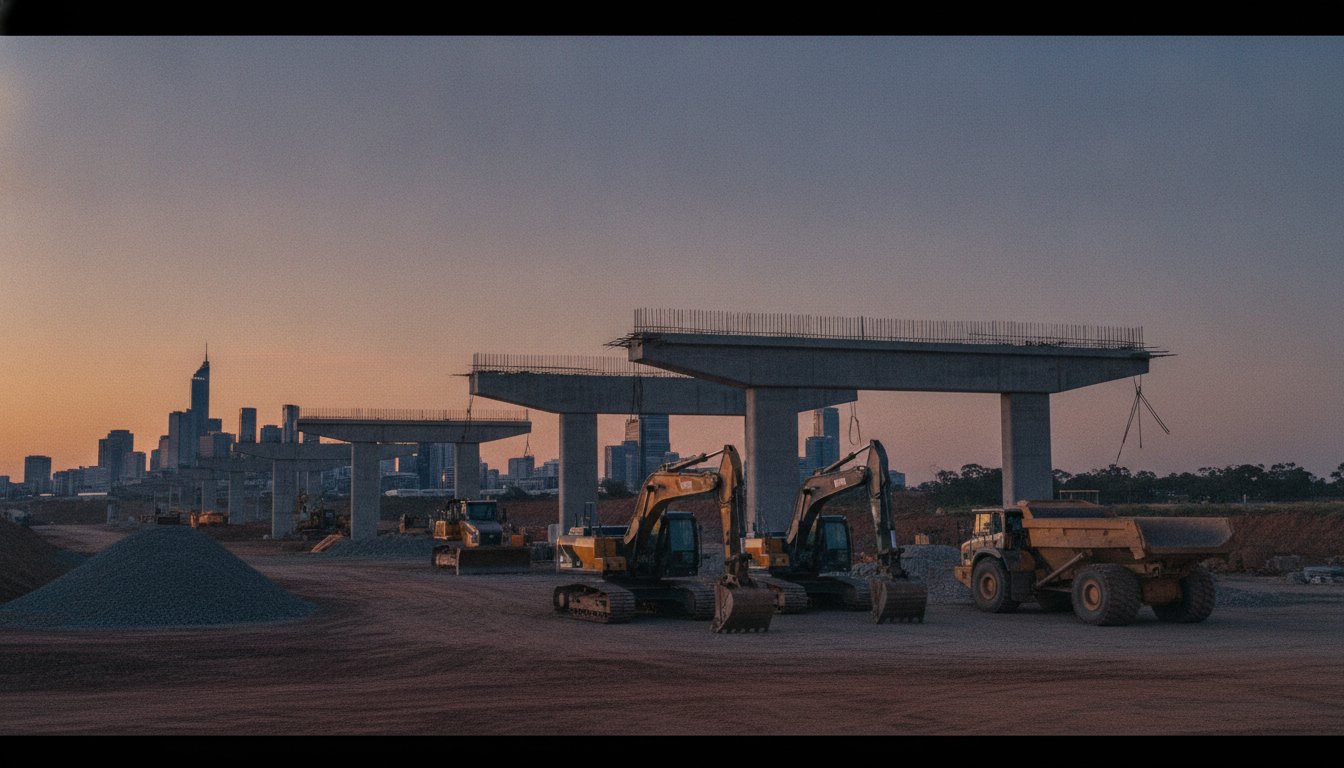
Choosing a security solution based on the lack of wires is a common mistake for project managers. While "wire-free" consumer units offer easy installation, they introduce significant compromises in reliability and uptime. These devices are built for low-traffic residential use, not the high-activity environment of a commercial development. Understanding the limitations of battery powered security cameras is the first step in avoiding a total surveillance failure when your site is most vulnerable.
Professional site security requires constant visibility. Most battery units operate in a "standby mode" to preserve power, only waking up when a PIR sensor detects motion. This creates a dangerous lag. By the time the camera captures an image, the event is often over. Our hire-based solar site cameras solve this by providing a continuous power source. This ensures surveillance-grade performance that event-based hardware cannot match.
Site managers often find themselves stuck in a cycle of maintenance with DIY hardware. When a camera goes offline because of a dead battery, your site is blind. This isn't just a technical glitch; it's a liability gap. Professional projects need systems that stay active regardless of how many workers pass the lens.
Residential Design vs. Industrial Reality
Consumer cameras are designed for aesthetics; industrial sites require rugged durability. A standard battery unit often relies on a simple magnetic or plastic mount. On a busy site, this leads to the unit itself being stolen or knocked out of alignment within the first 72 hours. These units aren't built for the 60km/h winds or the fine silica dust common on Australian Tier 1 projects. Vibration from heavy machinery frequently triggers false alerts, which further degrades the system's effectiveness and battery life.
The Impact of Traffic Volume on Battery Health
A typical home porch sees 5 to 10 motion events every 24 hours. A standard construction site sees hundreds of movements from workers, deliveries, and plant equipment. This high traffic volume is one of the primary limitations of battery powered security cameras. Constant triggers force the camera to stay active, draining a "six-month" battery in less than 4 days. Relying on professional hire equipment that utilizes dedicated solar arrays ensures your project remains compliant with insurance mandates. These policies often require 100% uptime that consumer batteries simply cannot provide.
- Residential units prioritize power saving over capture speed.
- Industrial sites require hardware that withstands constant vibration and grit.
- Insurance compliance often hinges on reliable, non-stop recording.
- Hire models remove the burden of asset maintenance from your team.
Technical Failures: The "Refractory Period" and Missed Critical Footage
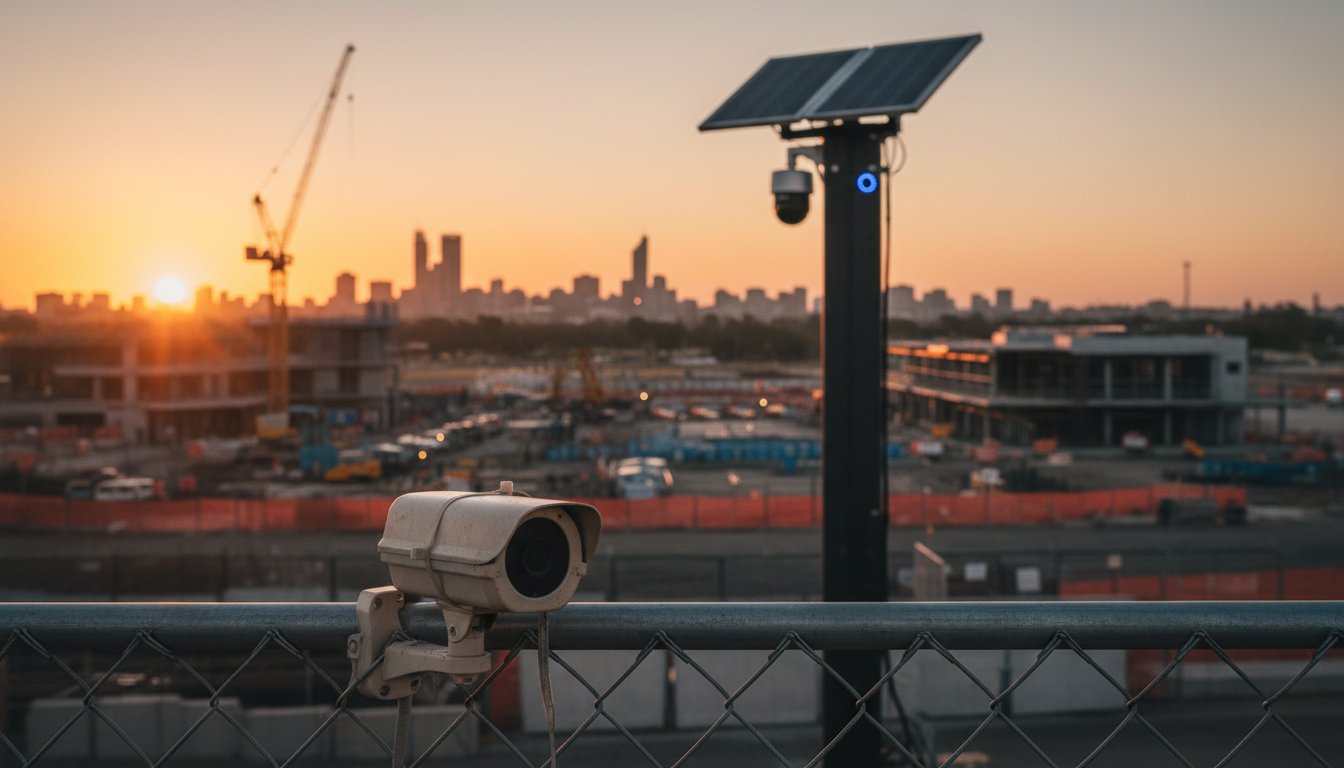
Battery powered units are designed for low-traffic residential porches, not active 10-hectare construction zones. The most significant limitations of battery powered security cameras stem from their aggressive power-management protocols. To survive more than a few days, these units remain in a deep-sleep state until a sensor triggers them. This creates a functional gap that professional projects can't afford.
The Problem with Motion-Triggered Latency
Consumer-grade battery cameras rely on Passive Infrared (PIR) sensors to detect movement. When the sensor identifies a heat signature, it must send a signal to wake the processor and start the recording. This process typically takes between 2 and 5 seconds. A thief can walk past a battery camera in the time it takes to "wake up".
While high-end solar site cameras maintain a continuous stream and a pre-trigger buffer, battery units are purely reactive. If a vehicle moves at 20 kilometers per hour, it will travel more than 11 meters before the camera even initiates the recording. You're left with footage of a departing tailgate rather than a clear shot of the driver or the license plate.
The "Refractory Period" and Field of View
The refractory period is a hidden cool-down timer programmed into battery units to prevent the cell from draining during high-activity periods. Once a clip finishes recording, the camera may wait 30 to 60 seconds before it's capable of triggering again. Professional intruders understand this technical ceiling. They often trip the sensor intentionally, wait for the recording light to extinguish, and then move freely during the blackout period.
- Tunnel Vision: Many battery units restrict their field of view to 110 degrees or less to minimize the area the PIR sensor must monitor.
- Processing Limits: Lower frame rates, often dropping to 15 frames per second, result in motion blur that renders facial recognition impossible.
- Connectivity Drops: Standard Wi-Fi units struggle with the interference caused by steel reinforcement and heavy machinery, leading to a 40% increase in signal dropouts compared to industrial 4G/5G solar towers.
Environmental Degradation in Australian Conditions
Australian job sites present a brutal environment for lithium-ion technology. When ambient temperatures hit 38 degrees Celsius, the internal temperature of a plastic camera housing can exceed 55 degrees. Data from 2023 site audits shows that sustained heat over 35 degrees reduces lithium-ion capacity by 20% within a single season. This degradation leads to "dead zones" where cameras shut down days before a scheduled maintenance check.
Relying on these units turns security into a full-time administrative job. Site managers often report spending 4 hours a week managing battery rotations across a large project. Hiring a managed solar tower eliminates this logistical burden, ensuring 24/7 uptime without requiring staff to climb ladders for routine charging cycles.
The Hidden Operational Burden of Managing Battery Units
Managing a fleet of consumer-grade battery cameras isn't a "set and forget" solution. It's a recurring labor expense that eats into project margins. If a site foreman spends 30 minutes per unit each week climbing ladders to swap and charge batteries, a four-camera setup consumes 104 labor hours annually. This calculation doesn't include the time spent monitoring charge levels via an app or managing charging stations in the site office. These operational inefficiencies represent significant limitations of battery powered security cameras when compared to autonomous solar site cameras that run 24/7 without human intervention.
Hardware ownership is a depreciating trap. In the current tech climate, consumer electronics typically see a hardware refresh cycle every 12 months. Buying units today means you're locked into outdated resolution and processing power by the time your project hits the halfway mark. Hiring equipment ensures you always have access to the latest 4K sensors and AI-driven detection without the capital expenditure or disposal costs. Furthermore, the financial risk of a dead battery is absolute. If a unit fails during a weekend shift, the cost of unrecorded theft or site damage can reach tens of thousands of dollars, far exceeding any perceived savings from cheap hardware.
- Labor Costs: Weekly manual intervention costs thousands in lost productivity over a 12-month project.
- Hardware Obsolescence: Owned assets become technologically inferior within a single calendar year.
- Compliance Gaps: Gaps in footage due to battery failure can void insurance claims or safety audits.
Maintenance Logistics on Active Sites
Safety is the primary concern on any Tier 1 or Tier 2 site. Sending staff up a ladder weekly to retrieve cameras creates unnecessary workplace hazards and requires additional SWMS documentation. When security becomes a daily chore, it eventually falls to the bottom of the priority list. A dead battery equals a blind spot. Professional hire services remove this headache by providing industrial towers that stay powered. Your team focuses on construction, not charging cycles.
Data Integrity and Footage Risks
Local storage is a liability. If a thief steals the camera, they steal the evidence. Most consumer units rely on local SD cards, which are easily compromised or corrupted. Consumer apps also struggle when 10 different stakeholders need simultaneous access. Reliability requires 4GX connectivity. Relying on site Wi-Fi, which often lacks range, causes frequent signal drops. Opting for temporary site security cameras with dedicated cellular backhaul ensures footage is off-site and secure instantly.
The Professional Evolution: Solar-Powered Surveillance for 24/7 Reliability
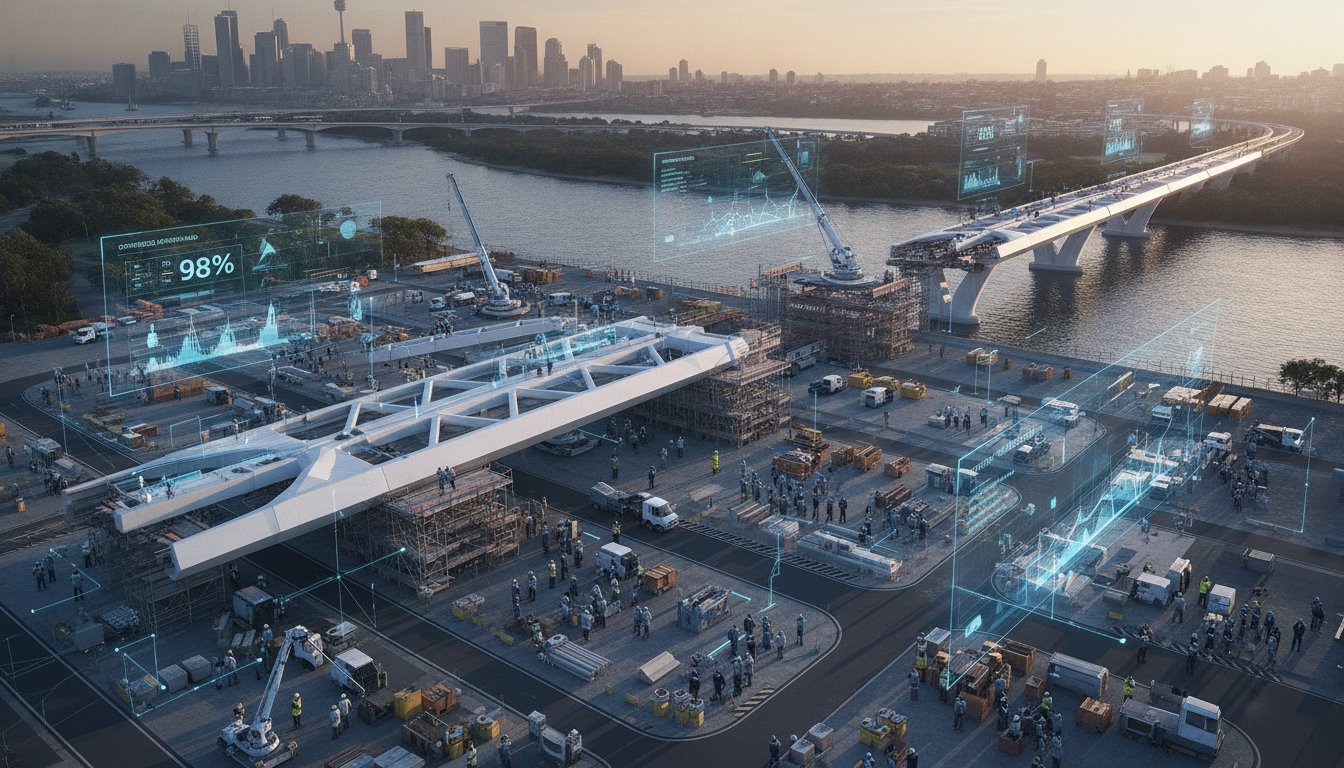
Professional site management requires more than just a lens on a pole. It demands an integrated power and data ecosystem that doesn't fail when the sun goes down or the Wi-Fi drops out. While the limitations of battery powered security cameras often lead to missed incidents and data gaps, solar-powered surveillance towers provide a robust alternative. These units function as a self-sustaining security hub, offering the infinite battery life necessary for continuous, high-definition monitoring across Australian worksites.
The shift from reactive to proactive security is driven by AI-integrated motion alerts. Instead of reviewing grainy footage after a theft has occurred, project managers receive real-time notifications the moment a perimeter is breached. This technological leap is supported by high-speed 4GX connectivity, ensuring that remote access is seamless from any location in the country. A 6-meter tall surveillance tower also provides a physical presence that a small, taped-on battery unit cannot match. It serves as a visual warning to intruders that the site is under professional oversight.
Continuous Power for Uninterrupted Visibility
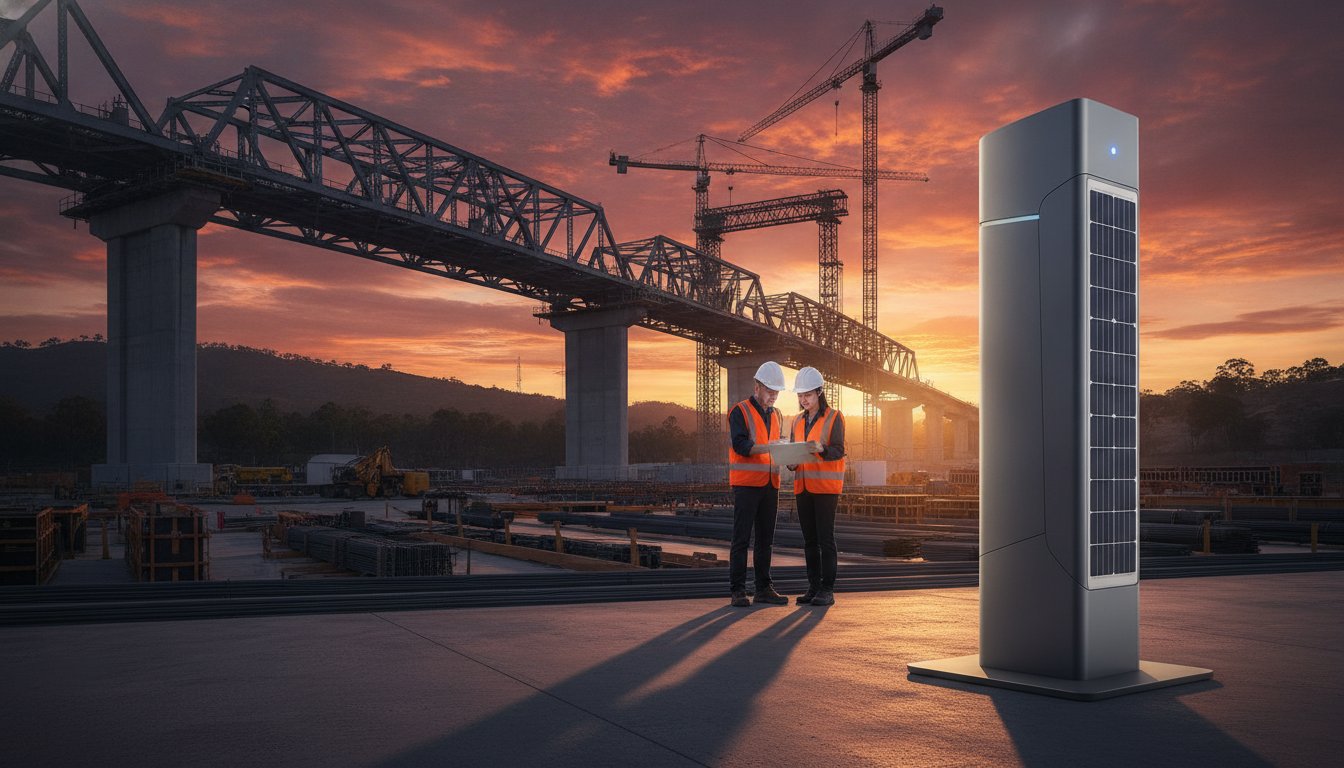
JobCam towers utilize high-efficiency solar panels paired with industrial-grade battery banks to achieve 100% uptime. This configuration supports high-draw components that standard battery cameras simply can't power. Features like Pan-Tilt-Zoom (PTZ) functionality and thermal night vision require consistent energy levels to track movement and identify heat signatures in total darkness. Even during 72 hours of consecutive low sunlight or heavy rain, these systems maintain full operational capacity, ensuring that your site is never left vulnerable due to a flat battery.
Cloud-First Security Architecture
Data integrity is a non-negotiable requirement for corporate and industrial clients. Our rental units employ a cloud-first architecture where footage is synced instantly to AWS servers. This protects evidence from on-site tampering, theft, or physical damage to the tower itself. Beyond security, this connectivity enables professional-grade remote project management through dedicated mobile apps. Stakeholders can access high-resolution time-lapse archives, which serve as a primary tool for reporting and marketing. Since 2023, more developers have utilized these time-lapse capabilities to showcase project milestones to investors and the public.
By choosing a hire model, companies avoid the technical debt and maintenance costs associated with owning rapidly aging hardware. You receive the latest 4GX technology and AI software without the long-term asset management headaches. This approach ensures your security strategy evolves as fast as the limitations of battery powered security cameras are exposed on modern job sites.
Why Hiring Jobcam Solar Security is the Smart Move in 2026
Construction site managers in 2026 require absolute reliability. The limitations of battery powered security cameras, ranging from dead cells to limited local storage, create gaps in your site's defense that no project can afford. Jobcam eliminates these vulnerabilities through a fully managed surveillance hire service. We provide the equipment, the connectivity, and the technical support, allowing your team to focus on the build rather than troubleshooting consumer-grade hardware. It's a professional solution for a high-stakes environment.
Managed Service vs. Hardware Ownership
Owning security hardware is a hidden drain on project resources. Traditional ownership requires your staff to handle technical support, manage cloud storage subscriptions, and physically relocate cameras as site boundaries shift. Jobcam's hire model shifts this entire responsibility to our professional technicians. We provide high-impact solar site cameras across Australia, handling everything from the initial deployment to ongoing maintenance. This approach ensures you always have access to the latest 4K optics without a heavy capital expenditure. Our towers utilize military-grade cloud storage via AWS and the Telstra 4GX network, providing a data link that stays active even in remote or regional locations. We move the towers as your project evolves, ensuring no blind spots remain as the structure rises.
Accountability and Project Peace of Mind
Jobcam provides more than just security; we deliver a comprehensive project management tool. High-definition footage is vital for resolving insurance claims or on-site disputes quickly. By integrating live feeds and professional time-lapse into your daily workflow, you can monitor progress and verify deliveries in real-time. You'll see your site from anywhere without ever needing to check a battery level or adjust a lens. This transparency builds trust with stakeholders and ensures a visual record of every milestone is captured for future marketing. When you hire temporary site security cameras from Jobcam, you're investing in a partner that understands the logistical rigors of the Australian construction industry. We provide the accountability you need to keep your project on track and your site secure.
Don't let equipment failure compromise your project's security or timeline. Our solar towers are built for the grit of the job site, providing 24/7 oversight that battery-only units simply can't match. Secure your site with a Jobcam Solar Tower today and gain the quiet confidence that comes with total visibility.
Upgrade Your Site Oversight for 2026
Relying on domestic hardware creates a liability that your project doesn't need. The limitations of battery powered security cameras become obvious the moment a critical event is missed due to a sleep mode or a dead cell. Manual battery swaps waste your team's time and disrupt site focus. Professional construction environments demand continuous visibility without the constant operational burden of managing hardware.
JobCam offers a streamlined solar-powered tower hire service that replaces these gaps with 24/7 reliability. Our units utilize Telstra 4GX and AWS Cloud integration to maintain 99.9% uptime for every project. We manage the logistics with Australia-wide delivery and professional installation. With no capital outlay and simple, transparent weekly hire fees, you gain high-definition accountability without the long-term asset management headaches. It's the most efficient way to see your site from anywhere while protecting your bottom line. We look forward to supporting your next successful development.
Get a Professional Solar Surveillance Quote for Your Project
Frequently Asked Questions
Do battery-powered security cameras record 24/7?
No, standard battery-powered cameras don't record 24/7. They use motion sensors to wake up only when activity occurs to save power. A typical 5,000mAh battery would die in less than 20 hours if it recorded continuously. For constant 24/7 visibility, project managers hire solar towers that provide uninterrupted power for high-definition streaming throughout the entire project lifecycle.
How long do batteries actually last in a construction site camera?
On a busy construction site with 40 daily vehicle movements, a standard battery typically lasts 3 to 7 days. Manufacturers often base their 6-month battery claims on 5 or 10 daily triggers. Real-world site activity is much higher, often exceeding 200 triggers per day. This illustrates the limitations of battery powered security cameras for industrial use compared to professional solar-charged systems.
What happens if a battery-powered camera loses Wi-Fi connection?
When a battery camera loses its Wi-Fi connection, it stops sending alerts and uploading footage to the cloud. While some units store small clips on a 32GB SD card, you lose the ability to see your site from anywhere in real-time. Our hire towers utilize 4G/5G industrial routers with external high-gain antennas to maintain a stable connection even in remote development zones.
Can I use a solar panel with a standard battery camera?
You can use small 3-watt or 5-watt solar panels with consumer battery cameras, but they struggle to keep up with commercial demands. These small panels fail to charge the unit during 48 hours of heavy cloud cover or rain. Professional hire towers use 300-watt or 400-watt industrial panels. This ensures the system stays operational 365 days a year without manual recharging or battery swaps.
What is the difference between a battery camera and a solar surveillance tower?
The difference lies in power capacity and structural scale. A battery camera is a small, fixed device with limited storage and power. A solar surveillance tower is a mobile, 6-meter tall platform equipped with 400Ah battery banks and AI analytics. Hiring a tower provides a managed security solution with 99.9% uptime, whereas consumer cameras are unmanaged devices prone to power failure and connectivity drops.
Is hiring security cameras more cost-effective than buying them?
Hiring is more cost-effective for temporary sites because it removes the burden of 100% of the maintenance and storage costs. You avoid spending thousands on hardware that becomes obsolete in 3 years. Rental models allow you to scale security up or down based on the project phase. You get the latest technology delivered and installed, ensuring your site remains secure without a large upfront capital investment.
What is a "refractory period" in security cameras?
A refractory period is a programmed cooldown phase, usually lasting 30 to 60 seconds, where the camera won't record even if motion continues. This is one of the significant limitations of battery powered security cameras designed to preserve power. In a security event, this gap means you could miss 90% of the relevant action. Professional towers don't have this limitation and capture every second of activity.
Are battery cameras legal for commercial site security in Australia?
Battery cameras are legal, but they often don't meet the evidentiary requirements of the AS/NZS 4421:2011 standard for commercial security. Low-resolution footage from consumer devices is often inadmissible in Australian courts due to poor frame rates or lack of clear timestamps. Our solar towers provide 4K resolution and secure, time-stamped data logs. This ensures your site documentation meets the high standards required for insurance claims and legal proceedings.