The Ultimate Guide to Surveillance Camera Systems for Australian Project Sites in 2025
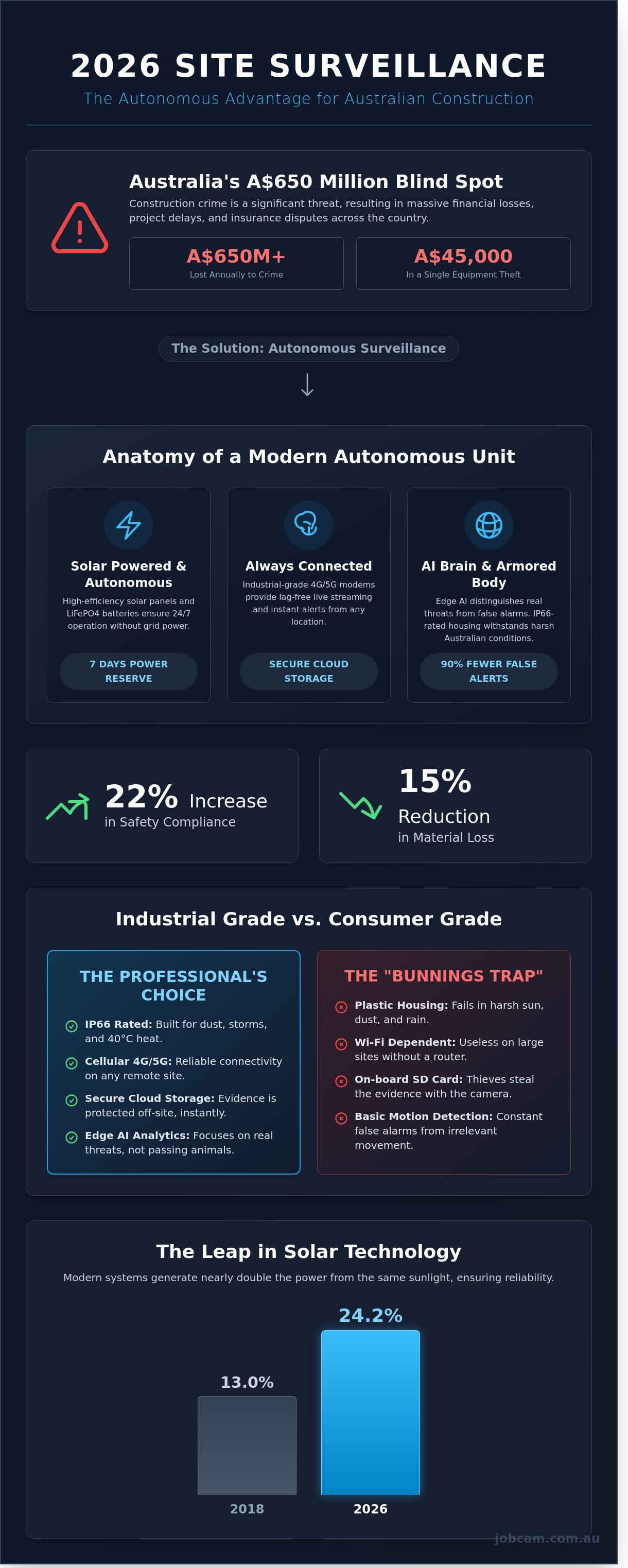
Imagine arriving at your Western Sydney project site on a Monday morning to find A$45,000 worth of earthmoving equipment missing and the perimeter fence cut. With construction crime costing Australian businesses over A$650 million annually according to 2023 industry reports, a lack of a high-performance surveillance camera leaves you with zero leads for the police and a potential insurance dispute. You already know that managing multiple remote locations is a logistical challenge, especially when fixed power isn't an option. It's frustrating to feel blind to your own site's security and progress after the gates close.
This guide demonstrates how modern solar-powered technology delivers total site visibility directly to your mobile phone. You'll discover how to achieve 24/7 high-definition monitoring and site accountability without the need for fixed infrastructure or a single sparky on site. We'll break down the essential surveillance solutions for 2025 that offer seamless deployment and the robust evidence needed to protect your bottom line.
Key Takeaways
- Leverage autonomous solar technology to maintain 24/7 visibility on remote Australian project sites without relying on grid power or fixed infrastructure.
- Reduce site downtime by implementing AI-driven motion detection that filters false alerts and focuses on genuine security threats.
- Compare the commercial reality of hiring versus buying your surveillance camera systems to avoid hidden maintenance and storage costs.
- Learn to assess site perimeters effectively and choose between static units or high-mast towers to eliminate high-value blind spots.
- Access real-time site data from anywhere with secure AWS cloud integration, ensuring your footage remains protected even if hardware is compromised.
What is a Modern Industrial Surveillance Camera?
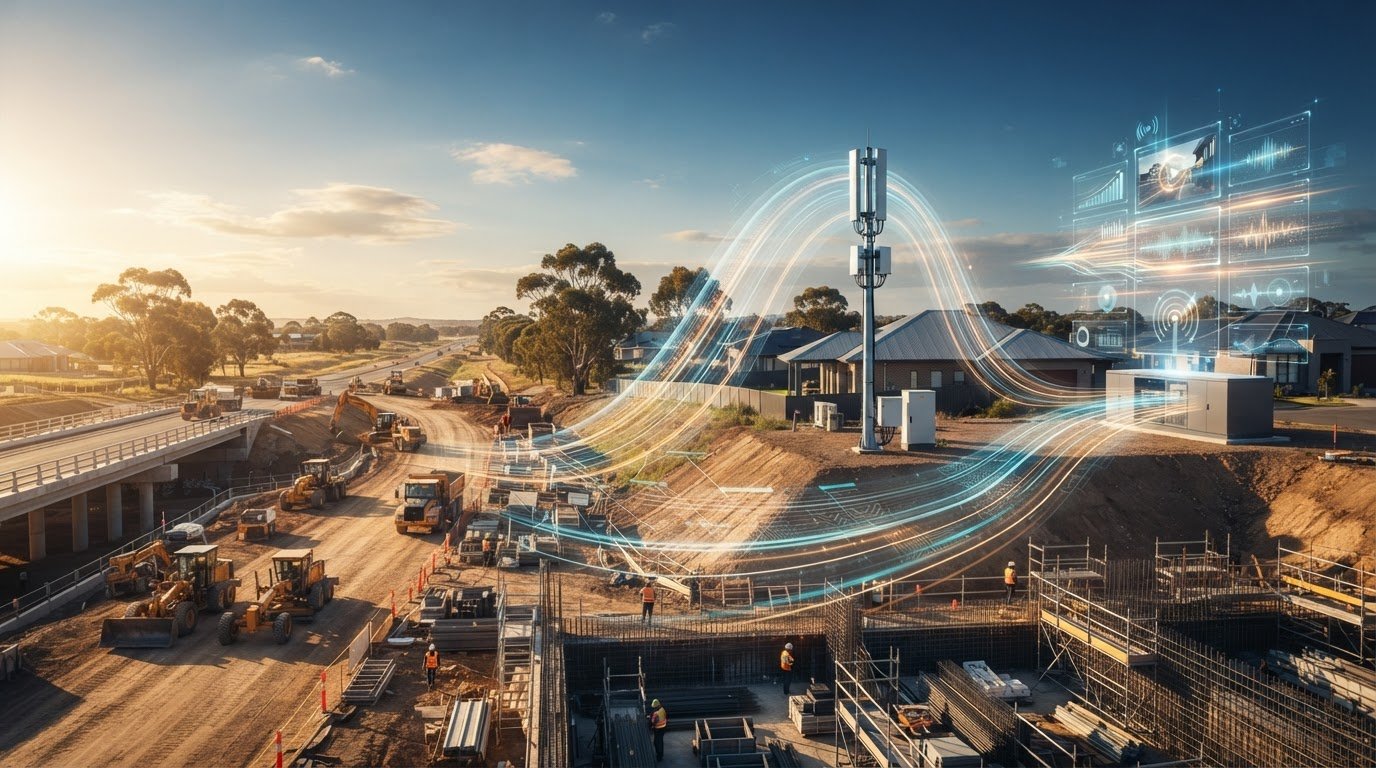
A modern industrial surveillance camera is no longer just a passive recording device tethered to a wall. It's an autonomous IoT (Internet of Things) asset designed to operate in environments where grid power and fixed-line internet don't exist. In the Australian construction sector, this technology has evolved into a self-contained unit that manages its own power and data transmission. This shift from traditional Closed-circuit television (CCTV) to smart, solar-powered systems represents a major leap in site management efficiency for 2025.
Project managers in Brisbane now demand "set and forget" solutions. You can't afford to waste time troubleshooting connectivity or swapping batteries. These systems provide a 24/7 window into your project, ensuring every movement is logged and every safety protocol is followed. Many site audits indicate that projects using active remote monitoring commonly see significant increases in safety compliance and reductions in material loss. It's about maintaining an ironclad digital paper trail for accountability and insurance purposes.
Key Components of an Autonomous System
Reliability starts with the power source. High-efficiency solar arrays are the backbone of the system; they're engineered to keep the surveillance camera running even through three consecutive days of heavy Queensland rain. These arrays feed industrial batteries that ensure the system never goes dark at 2:00 AM when your site is most vulnerable. The hardware must be as tough as the crew on the ground.
- Industrial-grade 4G/5G modems: These provide high-speed data transmission, allowing for lag-free live streams and instant alerts.
- Cloud storage: On-board SD cards are a single point of failure. If a thief takes the camera, they take the evidence. Cloud-first storage is non-negotiable because it secures data off-site the moment it's captured.
- Edge AI: Modern units distinguish between a stray cat and a human intruder, reducing false alarms by up to 90%.
Why Residential Cameras Fail on Commercial Sites
Many firms fall into the "Bunnings trap" by purchasing consumer-grade plastic cameras. These units are designed for sheltered eaves, not the brutal dust and 40°C heat of a Brisbane development site. Consumer gear lacks the ruggedized housing required for industrial use. An IP66 rating is the baseline requirement; it ensures the internals remain bone-dry during a summer storm and free of fine particulate matter during excavation.
Connectivity is another breaking point. Standard Wi-Fi cameras rely on a home router within a 20-meter range. On a sprawling 2-hectare commercial site, Wi-Fi is useless. Industrial towers use dedicated cellular backhaul to bypass these limitations. They function in remote areas where your smartphone might barely get a signal. Choosing a professional-grade system means you're investing in uptime, not just a gadget. It's the difference between having a clear record of an incident and staring at a "Connection Lost" screen when you need the footage most.
How Solar-Powered Surveillance Cameras Work in 2025
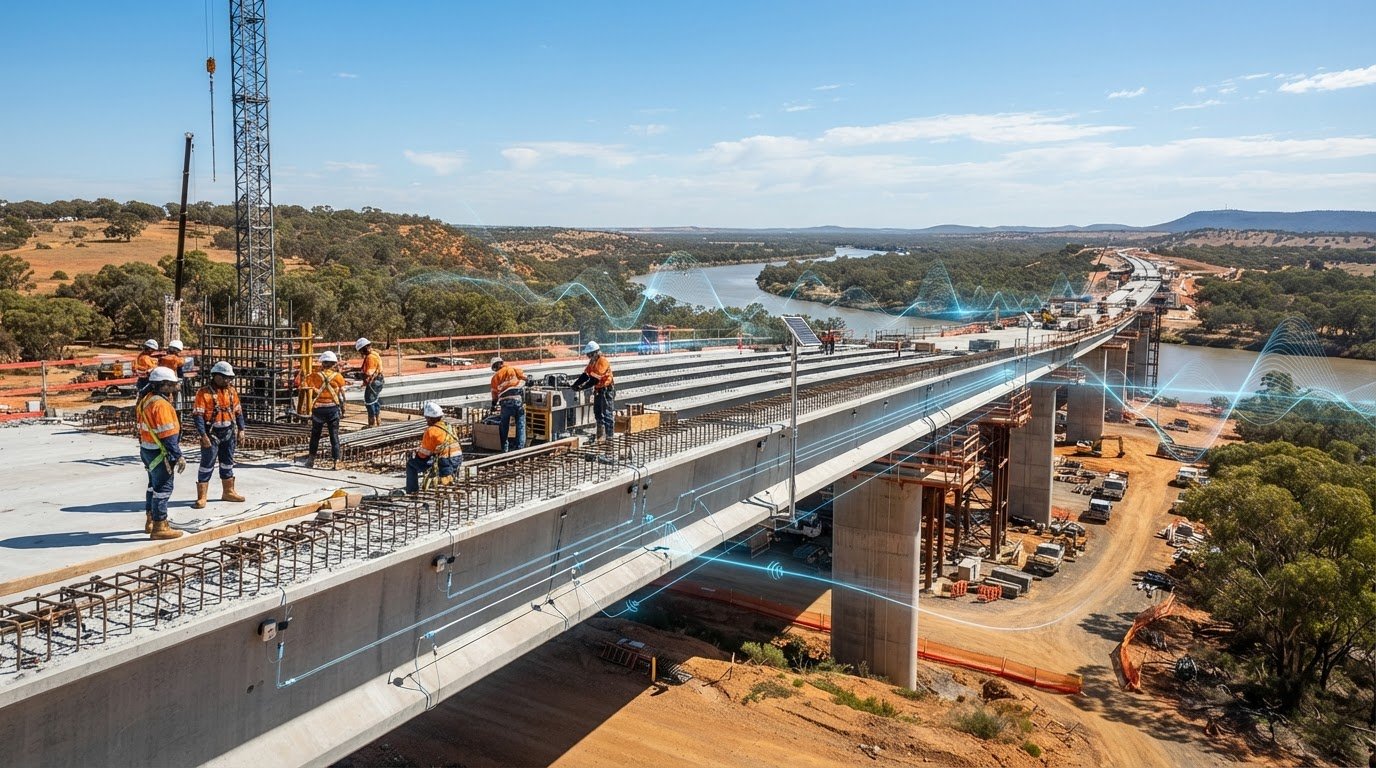
Modern site security relies on a closed-loop system of power and data. A 2025-spec surveillance camera doesn't just record; it processes and protects. These units function as independent power plants. They harvest energy during daylight and store it in high-density lithium iron phosphate (LiFePO4) batteries. This ensures 24/7 operation regardless of grid availability. The technology has evolved to a point where power is no longer a bottleneck for remote monitoring.
The core of this system is the power cycle. During peak sunlight hours, the solar array generates more electricity than the camera consumes. This excess energy charges the internal battery bank. When the sun sets or heavy Brisbane storms roll in, the system switches seamlessly to battery power. It's a silent, automated process that maintains site visibility without human intervention. This reliability is why major construction firms now mandate solar towers for civil projects.
The Science of Solar Reliability
Calculating battery autonomy is essential for project continuity. In 2025, premium surveillance units offer 7 days of autonomy. This means the system remains fully operational through a full week of heavy cloud cover or rain without a single hour of direct sunlight. Smart power management software monitors voltage in real time. If levels drop below a critical 15% threshold, the system prioritises motion-triggered recording over continuous streaming to preserve core security functions. Modern solar cells achieve high conversion efficiency rates, significantly improving on older models.
AI and Edge Analytics
False alarms used to be the biggest drain on project resources. Modern AI-driven motion detection filters out 98% of non-human movement. The system ignores swaying branches, debris, or stray animals; it focuses exclusively on human forms and vehicle profiles. This precision is achieved through "edge analytics," where the processing happens on the camera itself rather than a remote server. This reduces data lag and ensures you only receive alerts that actually matter.
- Human vs. Animal: PIR sensors detect heat signatures while AI algorithms verify the shape. This dual-layer check prevents 3:00 AM wake-up calls caused by a wandering dog.
- 4K Clarity: High-definition sensors capture 8.3 million pixels per frame. This provides the clarity needed for facial recognition and license plate identification at distances up to 30 metres.
- Instant Response: Real-time push notifications hit your smartphone within 2.8 seconds of a detected breach.
Data transmission is the final piece of the puzzle. These towers utilize the Telstra 4GX network to provide 99.2% coverage across Australia. This ensures that even remote development sites in the outskirts of Brisbane stay connected. Every byte of footage is encrypted using AES-256 standards before it leaves the tower. It's then transmitted to secure Australian-based AWS servers. This setup ensures your project data remains private and aligns with Australian privacy laws for security cameras. Using local servers also reduces latency, making the "live view" feature truly live.
Security is no longer just about catching a thief after the fact. It's about constant, verifiable uptime and intelligent reporting. If you're looking to upgrade your site oversight, you can request a tailored surveillance proposal to see how these 2025 specifications fit your project budget.
Hire vs. Buy: The Commercial Reality for Project Managers
Owning a professional surveillance camera tower sounds like a solid investment until the first project ends. A single high-specification solar unit typically costs between A$12,000 and A$18,000 upfront. For a Brisbane project manager, that is a heavy CapEx hit that sits on the balance sheet for years. Once the site fence comes down, the real trouble starts. You need a secure warehouse to store a 500kg trailer. You pay for insurance on an idle asset. By the time your next project starts 14 months later, the 4K sensors and AI detection software are already behind the curve. Total cost of ownership (TCO) includes these storage fees, depreciation, and the inevitable 15% annual spend on repairs and component replacements.
Hiring shifts this entire financial burden to OpEx. Every dollar spent is a direct project cost, making it 100% tax-deductible in the current financial year for most Australian businesses. It's a cleaner, more efficient way to manage a budget. If your site expands from a 2,000sqm lot to a 10,000sqm precinct, you simply call for more units. You don't need to find another A$50,000 in capital. This flexibility allows you to scale security up or down based on the actual risk profile of the site phase, rather than the limitations of your equipment shed.
The Hidden Costs of Buying
The purchase price is just the beginning of the drain on your resources. A professional surveillance camera requires a dedicated industrial data plan, often costing between A$80 and A$150 per month to handle high-definition streaming. If the firmware glitches at 2:00 AM, it's your team's problem to fix. A single technician call-out in Brisbane can cost upwards of A$400 before parts are even considered. Hardware obsolescence is a massive factor. Security hardware from 2024 will likely lack the 2025 edge-computing capabilities required for advanced site analytics. Owners are stuck with yesterday's tech, while hirers always have access to the latest hardware that arrives on-site ready to perform.
The Benefits of a Managed Hire Service
A managed service handles the logistics so you can focus on the build. We manage the professional installation and move the towers as your site boundaries shift, a task that would otherwise cost you A$600 in transport and labor every time. This includes proactive maintenance and regular battery health checks on high-grade LiFePO4 systems to ensure 24/7 operation. Data security is paramount. Your footage is managed on encrypted AWS servers, ensuring you stay compliant with Australian laws for security cameras regarding data storage and access. You get guaranteed uptime and expert support without the headache of ownership.
This managed approach provides the quiet confidence that your site is protected. You don't just get a piece of hardware; you get a functional outcome. Our time-lapse and monitoring services transform a simple security tool into a powerful marketing asset. You can see your site from anywhere, knowing the technical details are handled by experts. This allows your team to remain focused on hitting milestones rather than troubleshooting wireless bridges or checking battery voltages. It's about reliability and the peace of mind that comes from a professional, end-to-end security solution.
Choosing the Right Surveillance Camera for Your Project
Selecting the correct surveillance camera for a Brisbane construction site requires a tactical mindset. You aren't just buying hardware; you're securing a multi-million dollar asset against theft and liability. Brisbane's high-humidity environment and intense sun also mean your gear needs to be industrial-grade. Follow this five-step framework to ensure your site remains visible and protected throughout the project lifecycle.
Step 1: Map your perimeter. Identify the high-value "blind spots" where equipment like a A$120,000 excavator might be parked overnight. Many reports indicate that site breaches commonly occur at poorly lit entry points or "dead zones" behind site sheds. Identifying these areas early dictates where your primary sensors must point to be effective.
Step 2: Match the hardware to the terrain. Decide if a static, compact unit is enough or if the project demands a high-mast surveillance tower. A standard camera works for a 10-metre gate entry, but a 6-metre tower provides the verticality needed for 5,000-square-metre earthworks where a wide field of view is non-negotiable for safety and security.
Step 3: Signal verification. A high-definition feed is useless without a strong data backbone. In Brisbane, Telstra typically offers the most reliable 4G/5G coverage for regional fringes, while Optus 5G performs exceptionally well in the CBD and inner suburbs. Verify signal strength at the exact mounting point before committing to a deployment to avoid laggy feeds.
Step 4: Reporting and marketing. Determine if you need 4K time-lapse capabilities for stakeholder reporting. Beyond security, many project managers now use high-resolution time-lapse to settle contractor disputes and provide weekly updates to investors. It transforms a security tool into a powerful storytelling asset that documents your project’s legacy.
Step 5: User experience. Review the software interface for ease of use across your team. If it takes your foreman more than five seconds to access a live feed on their phone, the system has failed. The interface must be intuitive, allowing for seamless remote site management and instant playback of recorded events without requiring a technical degree.
Standalone Cameras vs. Surveillance Towers
Compact solar units excel at gate monitoring and site office security. They're easy to relocate as the project footprint shifts during different phases. However, for large-scale earthworks, 6-metre surveillance towers offer a tactical advantage. They provide a bird's eye perspective that compact units can't match. Combining both creates a layered security approach where towers monitor the broad site and standalone units secure specific high-traffic gates.
Feature Checklist for 2025
Modern security requires more than a grainy image. In 2025, white light LEDs are the gold standard for deterrence. They illuminate the area upon motion detection, which stops many intruders before they touch the fence. Two-way audio allows your team to talk back to anyone on-site in real-time. This reduces the need for physical patrols. Ensure the system integrates with a mobile app for seamless remote management.
The Jobcam Advantage: See Your Site From Anywhere
Jobcam transforms the standard approach to site oversight by bridging the gap between rugged solar hardware and sophisticated cloud software. We've engineered a system that operates independently of local power grids, utilizing Tier-1 solar panels and high-capacity lithium batteries to ensure 24/7 operation. This hardware integrates seamlessly with a mobile app designed for the fast-paced nature of Australian construction. Whether your project is in Brisbane, Sydney, Melbourne, Perth, or Adelaide, our national network ensures you have eyes on the ground without leaving your office.
Data security is a non-negotiable priority for modern developers. We host all captured footage on AWS cloud servers located in Australian regions. This infrastructure provides 99.99% data durability and ensures your evidence is protected. If a site monitoring equipment tower is vandalised or stolen, your historical footage remains safe and accessible in the cloud. You won't lose a single frame of evidence due to hardware tampering. This level of redundancy provides project managers with the quiet confidence that their site's history is permanently archived.
Our technology serves a dual purpose that extends far beyond simple theft prevention. While a site monitoring equipment is an essential deterrent, the high-definition footage also functions as a powerful marketing and accountability tool. We provide professional time-lapse services that condense months of complex engineering into high-impact visual stories. Many of our clients use this footage for stakeholder presentations and social media marketing. It’s an efficient way to showcase your project’s legacy and maintain total transparency with investors.
Real-Time Monitoring and Playback
The Jobcam app provides an intuitive interface that puts high-definition live streams in your pocket. Project managers save an average of 5 hours per week on site visits by utilizing our remote viewing capabilities. You can grant multi-user access to stakeholders, allowing them to track progress at 10:00 AM or 10:00 PM. If an incident occurs, the playback feature allows you to locate specific timestamps within seconds, making insurance claims and incident reporting a streamlined process rather than a logistical headache.
Turnkey Installation and Support
We deliver a true "no-hassle" experience through our comprehensive managed services. Our technicians handle the delivery, positioning, and commissioning of every unit, usually within 24 to 48 hours of your request. As your site evolves, we provide fast relocation services to ensure your coverage stays optimal through every phase of the build. You don't need to worry about technical configurations or maintenance; we manage the hardware so you can manage the project. Visit the Jobcam Mobile App Access page to see a demo of our interface.
Reliability on a construction site is measured by uptime and clarity. We use industrial-grade 4G and 5G connectivity to maintain a stable link even in high-density urban environments like the Brisbane CBD. Our systems are built to withstand the 40-degree heat of a Queensland summer, ensuring your visibility never wavers. By choosing Jobcam, you aren't just hiring a camera; you're partnering with a tech-savvy expert committed to your project's success and security.
Secure Your Project Performance for 2025
Managing a Tier-1 construction project in 2025 demands more than just occasional site visits. It requires constant visibility and high-definition data. By deploying a modern site monitoring equipment system, you eliminate blind spots and create a transparent record of progress. Opting for a hire model instead of an outright purchase saves your project approximately A$12,000 in upfront hardware costs per unit while ensuring you always have the latest solar-powered technology. This approach shifts the technical burden to us, allowing your team to focus on hitting milestones.
Jobcam is currently trusted by Australia's leading tier-1 contractors to protect and document their most significant developments. Our service includes secure AWS cloud storage as standard, ensuring your site data remains protected and accessible from any device. With a national support network established across all major Australian cities, we provide rapid response times that keep your site online regardless of location. We've built our reputation on being a tech-savvy partner that understands the grit of the job site. It's time to see your site from anywhere with total confidence.
Get a fast quote for your site surveillance hire today
We look forward to helping you streamline your site management and secure your next project.
Frequently Asked Questions
Do solar surveillance cameras work in cloudy weather or during winter?
Yes, our solar surveillance cameras operate 24/7 regardless of cloud cover or seasonal changes. Each unit features high-capacity lithium-ion batteries that provide up to 5 days of continuous power without any direct sunlight. We engineer these systems to withstand the 1,100mm of annual rainfall common in Brisbane. You get uninterrupted visibility and site security throughout the entire year.
How much does it cost to hire a surveillance camera for a construction site?
Hiring a professional surveillance camera typically ranges from A$180 to A$320 per week depending on the tower's technical specifications. This rate usually includes maintenance, data, and 24/7 remote monitoring access. For a standard 12-month construction project in Brisbane, this represents a cost-effective alternative to hiring physical security guards who often charge upwards of A$55 per hour.
Is the footage stored on the camera or in the cloud?
Your footage is stored simultaneously on an internal industrial-grade SD card and uploaded to our secure Australian-based cloud servers. This dual-path storage ensures 100% data redundancy. Even if the local connection drops, the camera continues to capture and store high-definition video locally until the link is restored. You can access live and archived recordings via our web portal or mobile app.
What happens if the surveillance camera is vandalised or stolen?
Our surveillance towers include built-in vibration sensors and GPS tracking to detect and report unauthorized movement immediately. If a unit is tampered with, the system triggers a real-time alert to our monitoring center. The towers are constructed from heavy-duty galvanized steel and feature anti-climb designs to deter intruders. We also offer comprehensive damage waivers to protect your project budget.
Do I need to provide a SIM card or internet connection for the camera?
You don't need to provide a SIM card or any networking infrastructure. Each surveillance camera comes equipped with an industrial 4G/5G multi-carrier modem that connects automatically to the strongest available network. This plug-and-play approach removes the logistical burden from your IT team. We handle all data management and connectivity issues so you can focus on meeting your construction milestones.
How long does it take to install a surveillance tower on my site?
A standard surveillance tower installation takes less than 90 minutes from the time our technician arrives on your Brisbane site. We deliver the unit, position it for optimal coverage, and activate the live stream immediately. You'll receive your login credentials on-site, allowing you to see your project from anywhere before our team even leaves the gates.
Can I use the camera footage for time-lapse marketing videos?
Yes, we specialize in high-definition time-lapse production for project marketing and stakeholder reporting. Our systems capture 4K high-resolution images at scheduled intervals throughout the build. At the end of your project, we compile these frames into a professional-grade video that showcases your construction progress. This serves as a powerful asset for your company's portfolio and future tender submissions.
Is a surveillance camera enough to satisfy insurance requirements for my site?
Most Australian insurers recognize 24/7 monitored surveillance as a primary risk mitigation strategy for construction sites. Installing a tower can lead to a 10% to 15% reduction in insurance premiums depending on your provider and policy terms. Our systems meet the technical standards required for evidentiary footage in police investigations. Always consult with your insurance broker to confirm specific coverage requirements for your Brisbane development.