Wireless Security Cameras for Construction: The 2025 Industrial Hire Guide
The Australian construction industry loses billions of dollars to theft and vandalism each year. For the average project manager, that's not just a statistic; it's a constant threat to timelines, budgets, and site safety. You've likely felt the frustration of securing an unpowered site or dealing with consumer-grade cameras that drop connection at the worst possible moment, leaving you with useless footage and zero accountability.
This guide cuts through the noise. We'll show you how a professional-grade wireless security camera system provides total site autonomy and why hiring, not buying, is the most effective and secure strategy for Australian projects heading into 2025. Discover the technology that guarantees 24/7 visibility from any location, eliminates maintenance headaches, and delivers secure, cloud-backed evidence that stands up to scrutiny.
Key Takeaways
- Calculate the Total Cost of Ownership (TCO) to see why hiring security cameras is a financially superior choice to buying, eliminating hidden costs for maintenance and data.
- Understand the critical difference between a consumer device and an industrial security camera wireless security camera system engineered with solar and 4G for complete site autonomy.
- Learn how to strategically place cameras to cover high-risk blind spots and ensure your construction site meets Australian CCTV compliance regulations.
- Discover how a managed solution delivers real-time, high-definition visibility, providing project managers with total site accountability from anywhere.
Redefining the Wireless Security Camera for Industrial Sites
The term ‘wireless’ has been diluted. For most, it means a camera that connects to a Wi-Fi network instead of an ethernet cable. On an industrial site, this definition is dangerously inadequate. True wireless capability means complete autonomy from all on-site infrastructure: no reliance on mains power, no dependency on a site office router, and no need for a physical connection of any kind. This distinction is the bedrock of effective site security and management.
Consumer-grade cameras are not built for the realities of a construction project. They are built for stable, climate-controlled environments with readily available power and Wi-Fi. The evolution of Wireless security camera technology has been rapid, but applying a residential solution to an industrial problem guarantees failure. For projects planned through 2025, the standard is the 'Autonomous Surveillance Unit' (ASU). This is not merely a camera; it's a self-sufficient operational asset engineered to provide unwavering accountability and enhance site safety, regardless of location or conditions.
Why Consumer-Grade Cameras Fail on Construction Sites
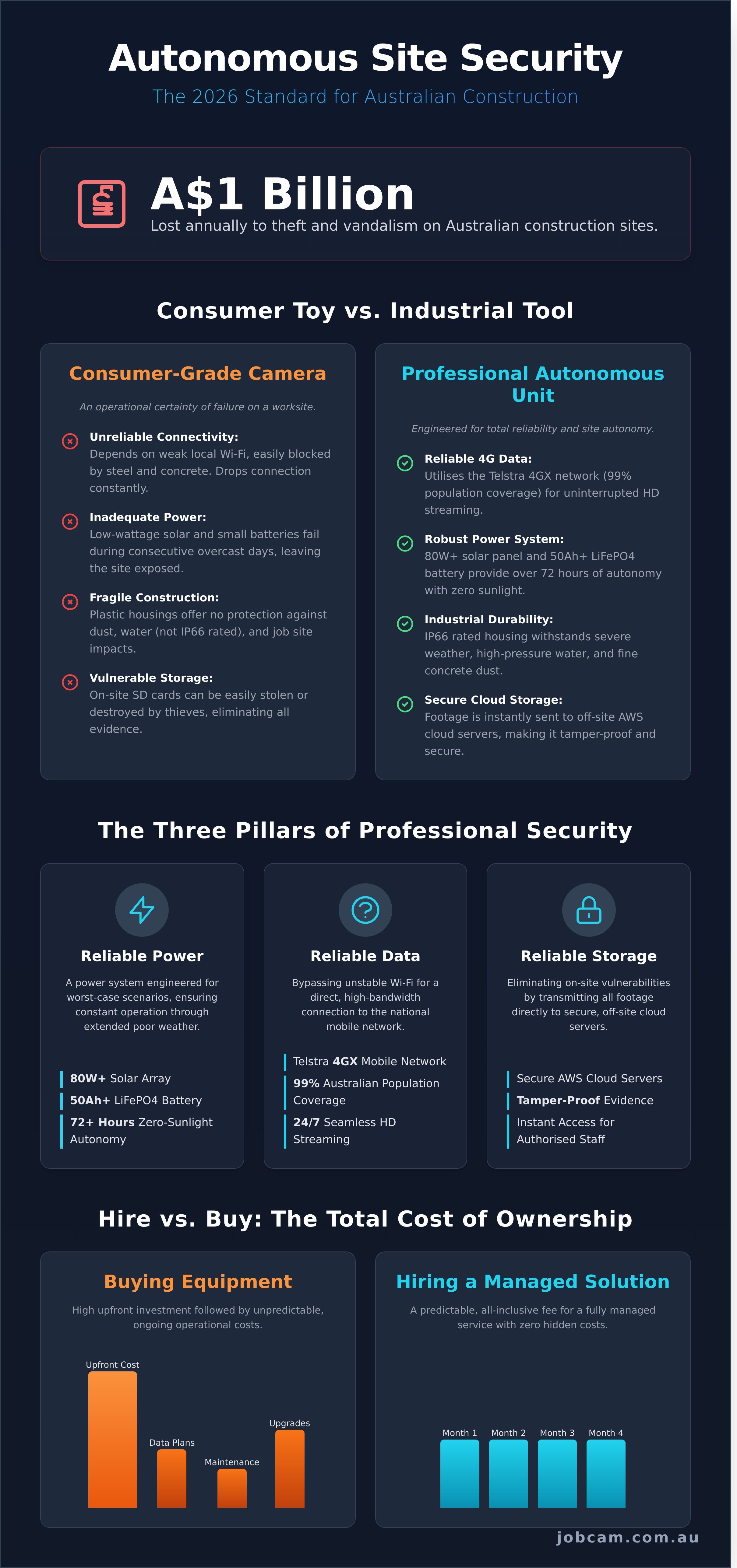
A retail-bought camera is an immediate liability on a dynamic work site. Their failure is not a possibility; it's an operational certainty. The plastic housings offer no meaningful protection against the fine concrete dust that infiltrates electronics, and they lack the IP66 rating required to withstand high-pressure water from cleaning crews or severe weather. The 'Wi-Fi trap' is another critical failure point; a signal designed for a 150-square-metre home simply cannot provide stable coverage across a 2-hectare site filled with signal-blocking steel and concrete. Finally, their low-wattage solar panels and small batteries cannot sustain operation through consecutive overcast days, leaving your site exposed.
The Three Pillars of Professional Wireless Security
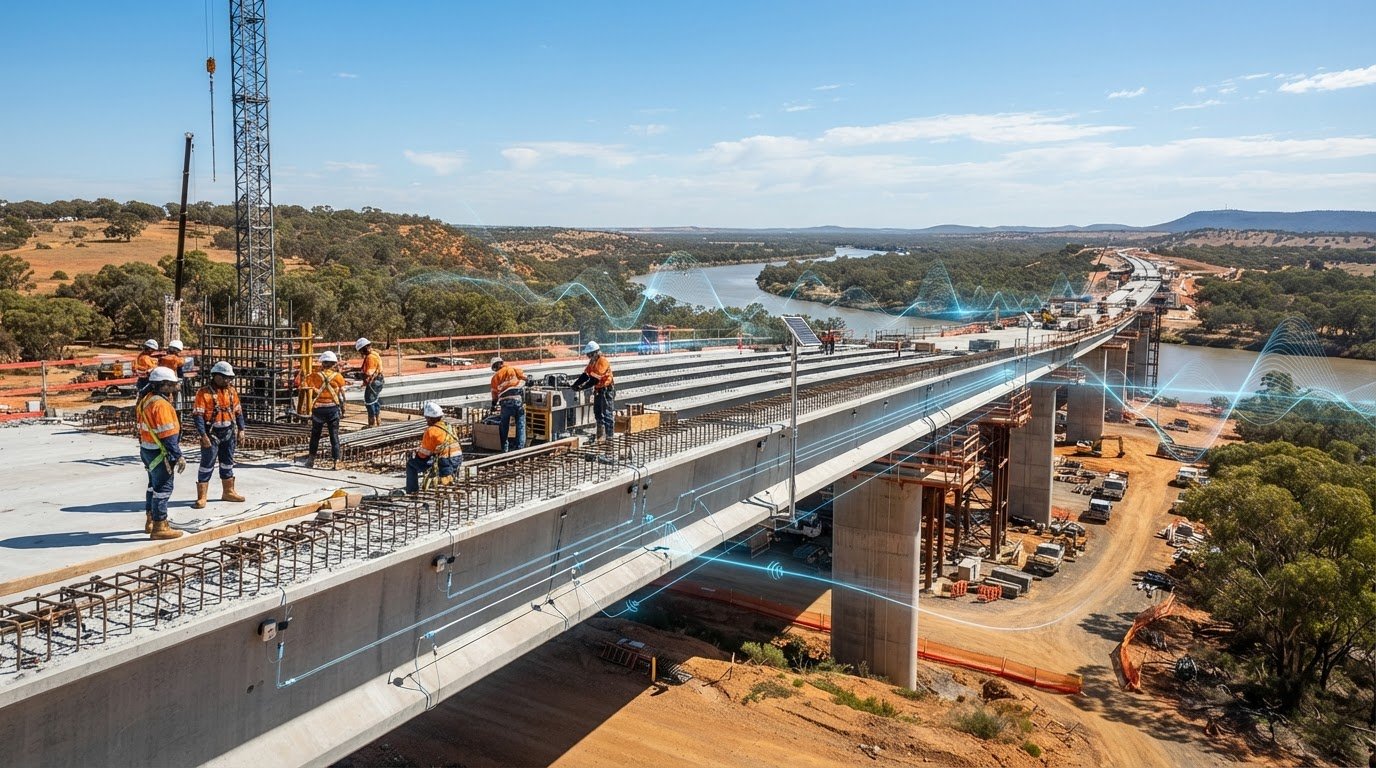
A professional security camera wireless security camera installation is not a single product but an integrated system built on three pillars of absolute reliability. Compromising on any one of these pillars undermines the entire security posture of your project. This system ensures you can see your site from anywhere, at any time, without exception.
- Reliable Power: Industrial-grade security demands a power system designed for worst-case scenarios. This means a minimum 80W solar array coupled with a high-capacity 50Ah+ LiFePO4 battery. This configuration provides over 72 hours of continuous operation with zero sunlight, ensuring your camera stays online through extended periods of poor weather.
- Reliable Data: Your connection to the site must be constant. We bypass unreliable local Wi-Fi entirely, instead utilising the national Telstra 4GX mobile network. With coverage reaching over 99% of the Australian population, this delivers the bandwidth required for seamless, 24/7 high-definition streaming and instant motion alert delivery from virtually any location.
- Reliable Storage: On-site storage like an SD card is a critical vulnerability; a thief can simply destroy or steal the unit, taking the evidence with them. Our systems transmit all footage directly to secure, off-site AWS (Amazon Web Services) cloud servers. This makes the footage immediately tamper-proof and accessible only to authorised project managers.
The Mechanics of Autonomy: How Solar and 4G Power Modern Surveillance
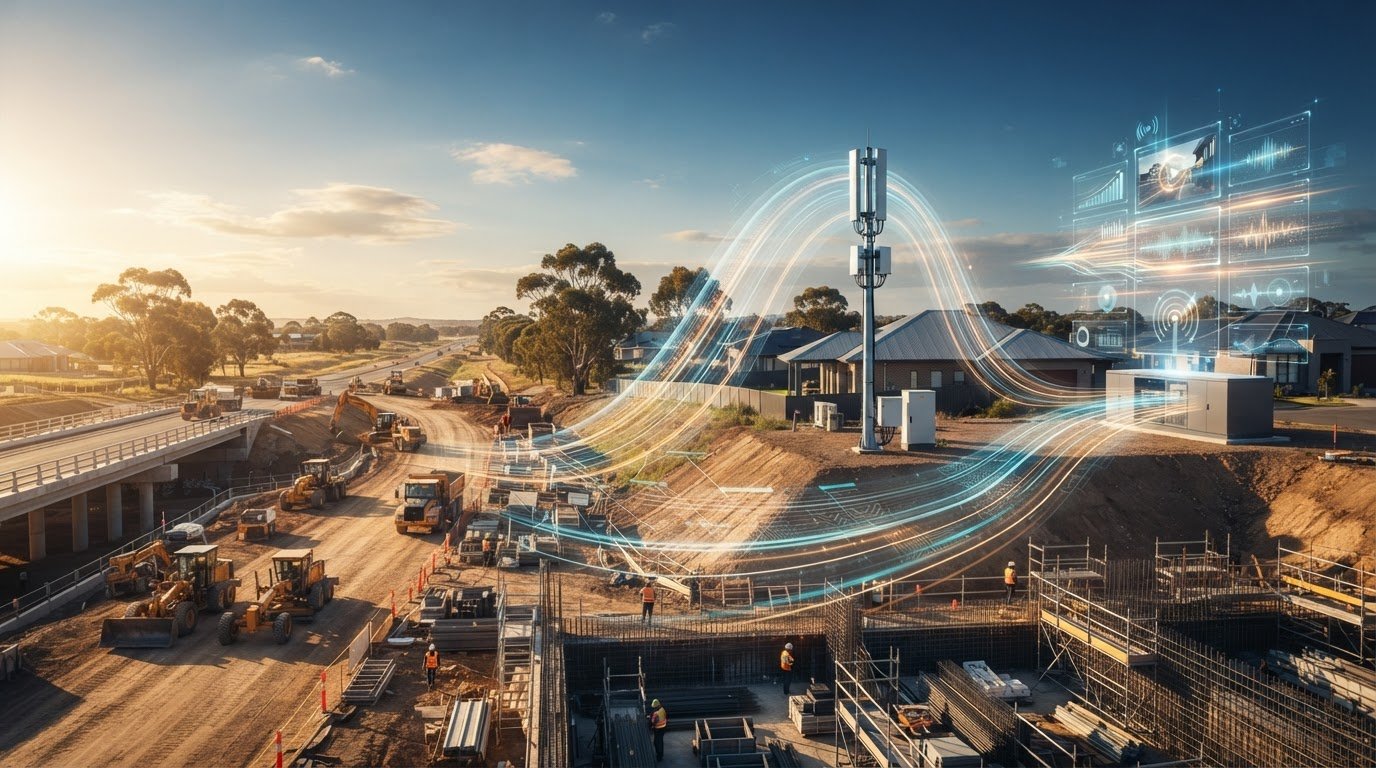
True site autonomy isn't just about cutting the power cord. It’s about severing all ties to fixed infrastructure. A modern security camera wireless security camera achieves this through a robust synergy of solar power for energy and 4G connectivity for data. This combination delivers uninterrupted, high-definition surveillance on any site, regardless of its location or stage of development. You get a live feed and instant alerts without needing a single technician to run power or internet cables.
The system is a closed-loop ecosystem. A high-efficiency solar panel captures solar energy, converting it into electricity that charges a high-capacity lithium battery. This battery then powers the camera, 4G modem, and all onboard processors 24/7. It's a simple, powerful cycle that provides complete grid independence and ensures your site is always monitored. With this technology, you can truly see your site from anywhere, transforming a remote location into a fully transparent asset.
Solar Harvesting in the Australian Climate
Consistent power requires engineering for local conditions. Our engineers optimize panel angles for maximum year-round solar gain, typically set to approximately 34° in Sydney, 32° in Perth, and 38° in Melbourne to capture the optimal amount of sunlight across all seasons. Days of autonomy refers to the battery reserve capacity, measured in days, ensuring uninterrupted operation during extended overcast periods. Jobcam units are built for the harshest Australian conditions, with industrial-grade components rated to function flawlessly in ambient temperatures exceeding 50°C.
The 4G Advantage: Connectivity Without Infrastructure
Forget waiting months for an NBN connection on a new development. A 4G-enabled camera is operational the moment it's installed, leveraging the expansive Telstra 4GX network that covers 99.5% of the Australian population. This isn't just about convenience; it's about immediate security and accountability. When the camera’s analytics detect meaningful motion, the system acts instantly:
- An event is recorded in high-definition 1080p or 4K resolution.
- The footage is transmitted securely over the 4G network.
- A real-time alert with a video snapshot reaches your phone in under 5 seconds.
This rapid response is driven by intelligent analysis that filters out false alarms from wildlife or weather. This is part of a wider industry trend towards leveraging AI in construction site security to create smarter, more efficient systems. All video data is protected in transit using AES-256 encryption, the same standard used by major financial institutions, ensuring your project's data remains secure from interception.
While 5G promises lower latency, the Telstra 4GX network provides the critical combination of vast coverage and proven reliability essential for a remote site monitoring equipment. For transmitting HD video from a fixed asset, 4G's stability is paramount. This self-sufficient ecosystem gives you complete control from day one. See how a Jobcam solar security camera can provide immediate oversight on your project.
Hire vs. Buy: Why Construction Projects Prefer Surveillance Rental
The decision to secure a construction site with surveillance isn't about whether you need cameras; it's about the smartest way to deploy them. While purchasing hardware might seem like a straightforward investment, a detailed analysis of the Total Cost of Ownership (TCO) reveals a different story. For dynamic, project-based industries like construction, the hire model delivers superior financial and operational efficiency. The upfront purchase price is just the entry fee; the real costs accumulate over the asset's lifecycle.
Buying a commercial-grade security camera wireless security camera system saddles your project with long-term liabilities. These hidden costs go far beyond the initial A$3,000 to A$5,000 per unit price tag and create significant drag on resources and budgets.
The Burden of Ownership
Owning security hardware makes your team responsible for its entire lifecycle. When a 4G modem fails or a solar panel is damaged on a remote site, your project manager is now an IT technician, losing valuable time. This model forces you to absorb costs related to maintenance, technological obsolescence, and complex logistics.
- Constant Upgrades: The pace of surveillance technology is relentless. A high-definition 4K camera purchased in 2024 will be functionally dated by 2025 as AI-driven analytics and 8K resolution become standard. Ownership forces a cycle of capital expenditure every 24-36 months just to remain current.
- Repairs and Downtime: Component failure means downtime. You're not just paying for a repair; you're paying for the security gap it creates. The internal cost of diagnosing, shipping, and reinstalling a faulty unit can easily exceed A$500 in labour and lost productivity.
- Off-Project Logistics: What happens to the cameras between jobs? They require secure, climate-controlled storage, which can cost upwards of A$200 per month. You also bear the risk of damage or theft during transit and storage, turning a valuable asset into a logistical headache.
The Managed Service Model
A managed hire service transforms site security from a capital expense (CAPEX) into a predictable, tax-effective operational expense (OPEX). It’s a strategic partnership designed for the realities of the construction workflow. This approach ensures your security systems are always operational and aligned with best practices for comprehensive construction site safety and security, as professionals handle every aspect of deployment.
The key advantage is predictability. Your project budget reflects a simple, all-inclusive weekly or monthly fee. There are no surprise repair bills or upgrade costs. This model includes:
- Professional Deployment: Expert technicians handle initial installation and, crucially, relocation. As your site boundary expands from slab to frame, your surveillance coverage moves with it, seamlessly.
- Proactive Support: A managed site monitoring equipment is never obsolete. All firmware updates, security patches, and remote technical support are included, ensuring your system performs optimally and remains secure against new threats.
- Financial Agility: Hiring allows you to scale your security resources on demand. Start with two cameras for site establishment, scale up to ten during peak construction, and reduce to three for final fit-out. You only pay for what you need, when you need it, preserving capital for core project activities.
Strategic Deployment: Maximizing Coverage and Compliance on Site
An effective security system is more than just hardware. It's a strategic network designed for total site awareness. Your first step is a thorough risk assessment to identify vulnerabilities. Pinpoint 'blind spots' where natural surveillance is low, such as behind stacked materials or along distant perimeter fences. High-risk zones demand priority coverage. These typically include site entry and exit points, fuel storage depots, tool lockups, and high-value material laydown areas for copper, timber, and appliances. A proactive deployment plan neutralizes these threats before they become liabilities.
Integrating advanced technology like mobile surveillance towers provides an immediate, 360-degree oversight of your entire project. These units establish a commanding view, eliminating the blind spots that fixed cameras can miss and creating an unmissable deterrent for would-be intruders. Total site control is achievable from a single, elevated vantage point.
Placement Tactics for Loss Prevention
Positioning is everything. We elevate cameras to heights of 3 to 5 metres, a simple tactic that achieves two critical goals: it prevents easy tampering and dramatically expands the field of view (FOV). Your security camera wireless security camera system must focus on choke points like gates and delivery zones, capturing clear facial and license plate data. This system shouldn't work in isolation. It must coordinate with physical barriers, like temporary site fencing, to create a multi-layered defense against theft, a problem costing the Australian construction industry significant amounts each year.
Compliance and Privacy in 2025
Australian surveillance laws are strict and non-negotiable. To ensure legal compliance in NSW, VIC, and QLD, you must display clear and visible signage indicating that CCTV is in operation. This is a core requirement under state-based legislation like the Surveillance Devices Act 2007 (NSW). Beyond signage, data security is paramount. All recorded footage must be stored securely, with access strictly limited to authorized personnel. To meet the Australian data sovereignty standards outlined in the Privacy Act 1988, Jobcam utilizes onshore Amazon Web Services (AWS) servers, ensuring your critical data never leaves the country.
Your high-definition camera feed serves a dual purpose. While it provides real-time security monitoring, it also captures your project’s progress. This footage is invaluable. We transform it into professional time-lapse videos, a powerful tool for stakeholder reporting, marketing campaigns, and showcasing your company’s capabilities. You don't just secure your site; you document its legacy.
Strategic deployment combines intelligent placement, legal diligence, and technology that serves multiple functions. It's about building a comprehensive system that protects your assets, ensures compliance, and even enhances your brand. Secure your site with a compliant, strategic surveillance plan. Request a free site assessment from Jobcam today.
Seamless Site Visibility with Jobcam’s Managed Wireless Solutions
Setting up custom alerts is only one part of the equation. True project control comes from a fully integrated system that delivers reliable data, on demand, without fail. Jobcam provides a complete managed solution that goes beyond hardware. We deliver total site awareness, turning raw footage into actionable intelligence. This is our promise: see your site from anywhere, at any time, with absolute clarity. It’s real-time accountability, engineered for the demands of complex projects.
Our professional installation teams get you live within 24-48 hours of site confirmation. We handle everything from hardware deployment to network configuration, ensuring your system is optimised from day one. This efficiency and reliability is why national construction firms and developers trust Jobcam to monitor multi-million dollar projects across Australia, from remote mine sites in WA to high-rise developments in Brisbane. A Jobcam system isn't just another site monitoring equipment; it's a strategic asset for project delivery.
The Jobcam App: Your Site in Your Pocket
Our iOS and Android app gives you direct access to your site’s pulse. It’s more than a viewing portal; it’s a command centre designed for project managers on the move. Instantly access critical functions that streamline reporting and enhance security.
- Live & Historical Playback: Stream high-definition video directly to your device or review archived footage from any point in your project’s history.
- Instant Alerts & Snapshots: Receive custom motion alerts with crystal-clear images, allowing for immediate verification and response.
- One-Click Reporting: Generate detailed project reports and stunning time-lapse sequences to share with stakeholders or use for marketing.
Ready to Secure Your Project?
Getting started is straightforward. Our process is designed for speed, allowing you to get a comprehensive surveillance quote tailored to your project's specific needs within hours. We build our solutions on an industry-leading tech stack, integrating the unparalleled reach of the Telstra 4GX network with the security and scalability of Amazon Web Services (AWS). This combination guarantees over 99% network uptime and data integrity, giving you a robust site monitoring equipment that works, no matter how remote your site is. Contact Jobcam to secure your site with an autonomous wireless camera.
Future-Proof Your Site: Your Next Move in Construction Surveillance
The era of untethered site security is here. Solar power and 4G connectivity now deliver robust surveillance to any Australian project, while the hire model makes deploying the latest technology more cost-effective than ever. A strategically deployed site monitoring equipment doesn't just deter theft; it drives accountability, ensures compliance, and offers complete project visibility from anywhere. Achieving this level of control requires more than just hardware. Jobcam delivers a fully managed solution engineered for performance, backed by Telstra's 4GX network reliability, AWS cloud redundancy, and our National Australian Support Network. Secure your site today with Jobcam’s solar-powered wireless cameras. Don't leave your project to chance. Take control and build with confidence.
Frequently Asked Questions
Do wireless security cameras work without Wi-Fi?
Yes, 4G cellular cameras operate independently of Wi-Fi. These cameras use the Australian mobile network, just like a smartphone, to transmit high-definition video and alerts. This makes them the ideal solution for remote construction sites, new developments, or any area lacking stable internet infrastructure. They provide constant, real-time visibility and security for your project assets without relying on a local network connection, ensuring your site is always monitored.
How long does the battery last on a solar security camera?
A fully charged battery in a commercial-grade solar security camera lasts up to 3 weeks without any sunlight. When paired with its high-efficiency solar panel, the system is engineered for continuous, autonomous operation. With just 4 to 5 hours of direct sunlight per day, the battery remains perpetually charged. This design ensures uninterrupted 24/7 surveillance, even through extended periods of overcast weather, eliminating any need for manual intervention or recharging.
What is the best security camera for a remote site with no power?
The best solution for a remote site with no power is a 4G solar-powered security camera. This type of unit is completely self-sufficient, combining a solar panel for continuous power with a 4G connection for data transmission. This removes any dependency on local utilities. This setup is specifically engineered for the demands of Australian construction sites, offering high-definition monitoring and instant motion alerts from the first day of your project, even in the most isolated locations.
Is it better to hire or buy security cameras for a 6-month project?
Hiring is significantly more cost-effective for a 6-month project. Purchasing a commercial-grade 4G solar camera system can cost over A$2,500 per unit, plus ongoing data plan fees. A hire package eliminates this large capital expense and includes professional installation, maintenance, and 24/7 support for the project's duration. For short-term needs, hiring provides a complete, managed security solution without the long-term costs of ownership and technology depreciation.
Are wireless security cameras easy to hack?
No, professional-grade wireless security cameras are not easy to hack. Reputable systems use robust security protocols, including AES-256 bit encryption, which is the same standard trusted by Australian banks. This encrypts the video feed from the moment of capture to the cloud server. Unlike many consumer-grade cameras, our commercial site monitoring equipment systems are built with data security as a core principle to protect your project's integrity and confidential footage.
Can I view my site cameras from my phone while off-site?
Yes, you can view your site cameras from anywhere in the world using your phone. Our platform provides a seamless, real-time feed directly to your smartphone, tablet, or desktop computer through a dedicated application. This gives project managers and stakeholders complete 24/7 visibility. You can monitor site progress, verify asset security, and respond to motion alerts instantly, ensuring you always have a direct line of sight to your job site.
What happens to the footage if the camera is stolen?
All footage remains safe because it's stored securely in the cloud, not on the device itself. Our cameras transmit footage to off-site AWS data centres in real-time. If a camera is stolen or damaged, the recorded video up to that exact moment is already backed up and accessible for review or to provide to authorities. This cloud-based system guarantees your critical evidence is preserved, providing total peace of mind that on-site incidents won't compromise your data.
Do I need a special SIM card for a 4G security camera?
Yes, a 4G security camera requires a data-only SIM card, often called an M2M (Machine-to-Machine) or IoT (Internet of Things) SIM. These are specifically designed for devices like a site monitoring equipment that transmit data but don't need voice or text functions. Major Australian carriers like Telstra and Optus offer these plans. When you hire a system from us, the correctly configured SIM card and data plan are included, ensuring seamless connectivity from installation.