Hiring vs Buying Construction Site Security Cameras: The 2026 Business Case
Owning your surveillance hardware might feel like a smart asset play, but for most 2026 developments, it's actually a rapidly depreciating liability. When weighing the choice between hiring vs buying construction site security cameras, the upfront savings of a purchase often vanish behind the hidden costs of maintenance and obsolete tech. You've likely dealt with the frustration of stolen SD cards, dead batteries, or hardware that's outdated before the second floor is even poured. These gaps in visibility aren't just inconvenient; they're expensive drains on project momentum.
It's natural to want full control over your equipment to protect your bottom line. This guide will show you how to build a robust business case for managed solar camera hire that preserves your capital and ensures 24/7 site visibility. We'll break down the financial logic of shifting from CapEx to OpEx and explain why a managed service is the only way to guarantee secure, remote access to your footage without the internal labor burden. By the end, you'll have a clear framework for choosing the model that truly protects your site and your budget.
Key Takeaways
- Shift from CapEx to OpEx to preserve project capital for new tenders while leveraging the tax advantages of a hire model.
- Understand the long-term financial impact of hiring vs buying construction site security cameras to avoid the costs of maintenance and rapid hardware obsolescence.
- Eliminate the risk of lost footage by using managed 4GX connectivity and secure off-site storage that protects evidence even if hardware is tampered with.
- Gain site agility with solar towers that can be relocated or scaled up within 48 hours as your project boundaries and laydown yards evolve.
- Transform surveillance into a high-value asset by using remote feeds and high-definition time-lapse for stakeholder reporting and future marketing.
CapEx vs. OpEx: The Financial Logic of Hiring Site Security
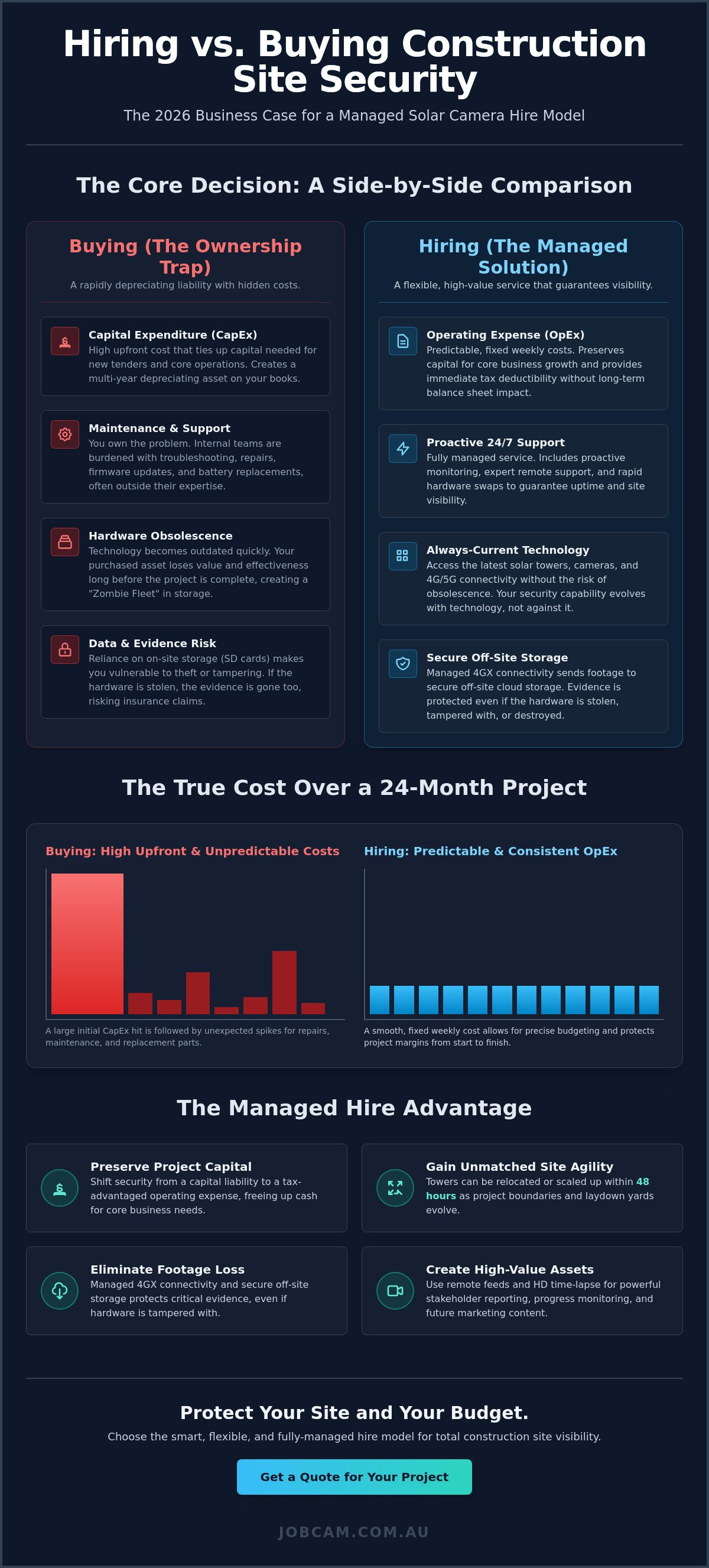
Construction firms often view security as a one-time hardware purchase. It's a mistake that can stifle growth. While buying equipment might look like building equity, it's actually a fast track to technical debt. High-end solar towers aren't static tools; they're complex systems that require constant updates and maintenance to remain effective. Over a typical 24-month project lifecycle, the total cost of ownership for owned gear skyrockets when you account for storage between jobs, insurance premiums, and the logistical headache of moving towers between sites. When you compare hiring vs buying construction site security cameras, the hire model wins because it eliminates these ghost costs entirely.
Modern Closed-circuit television (CCTV) has evolved far beyond the grainy, wired systems of the past. Today's solar-powered units are sophisticated, mobile data centers. Treating them as a simple capital expenditure ignores the reality of their rapid depreciation. By choosing a managed hire model, you keep your balance sheet lean and your cash reserves ready for higher-value investments, like new plant machinery or specialized labor.
Preserving Cash Flow for Core Operations
Managed hire keeps your balance sheet flexible. It prevents the common "Zombie Fleet" problem where thousands of dollars in equipment sits in a shed gathering dust between contracts. Every day an owned camera isn't on a site, it's a drain on your ROI. Hire fees for site security provide immediate tax deductibility as an operating expense, unlike the multi-year depreciation schedules required for owned capital assets. This OpEx approach ensures your capital is always working where it matters most: winning and delivering projects.
Predictable Budgeting for Tenders
Fixed weekly hire costs are a project manager's best friend. They allow for precise margin protection during the bidding phase. When you build temporary site security cameras into your tender as a known line item, you remove the risk of mid-project emergency spending. Firms that buy cheap hardware often face unexpected repair bills or replacement costs when a unit fails in the field. A managed hire agreement guarantees uptime without these financial spikes. You pay for the result—total site visibility—rather than the burden of equipment ownership. This predictability is essential for maintaining healthy margins in a competitive 2026 market where every dollar in a tender counts.
The Hidden Liabilities of Owning Construction Security Hardware
Ownership is often seen as a one-time cost. In reality, it's the start of a maintenance cycle that most construction firms aren't staffed to handle. When comparing hiring vs buying construction site security cameras, it's easy to forget that hardware is only a small part of the equation. The rest is the operational support required to keep that hardware functional in punishing Australian conditions. Dust, extreme heat, and constant vibration degrade solar panels and lithium batteries much faster than standard office electronics. If you own the gear, you own the replacement costs when these components inevitably fail under the sun.
The Maintenance and Support Gap
Who fixes the system when it drops offline at 2:00 AM? Internal IT teams usually specialize in office networks, not remote 4G or 5G surveillance towers. If a camera fails during a weekend, your site is left blind. This creates a massive insurance liability. Most carriers require documented evidence for a theft claim to succeed. If your owned camera was offline due to a neglected firmware update or a flat battery, your insurance payout is at risk. Managed hire provides a safety net. It ensures high uptime through proactive monitoring and rapid hardware swaps, meaning you never have to send a site supervisor to troubleshoot a camera tower on their day off.
Hardware Obsolescence and the 4GX Evolution
Technology moves fast. A 2024 camera model is already a legacy device compared to the AI-driven 2026 standards. As cellular networks evolve from 4G to 4GX and 5G, older hardware becomes a literal brick. Hiring ensures you always have access to the latest solar site cameras equipped with advanced analytics. This isn't just about security; it's about sophisticated risk management. Integrating AI in construction project management allows for automated PPE detection and behavioral alerts that older, owned hardware simply cannot support.
Moving these towers is another hidden cost. They aren't "set and forget" tools. As your site boundaries change, you must relocate them. Without professional transport and calibration, you risk damaging the sensitive optics or misaligning the solar arrays. A managed hire service handles the logistics, ensuring the tower is positioned for maximum sun exposure and site coverage at every stage of the build. If you're looking to offload these technical burdens, choosing a managed solar tower hire is the most efficient path for your next project.
Managed Connectivity: Why DIY Security Systems Fail on Remote Sites
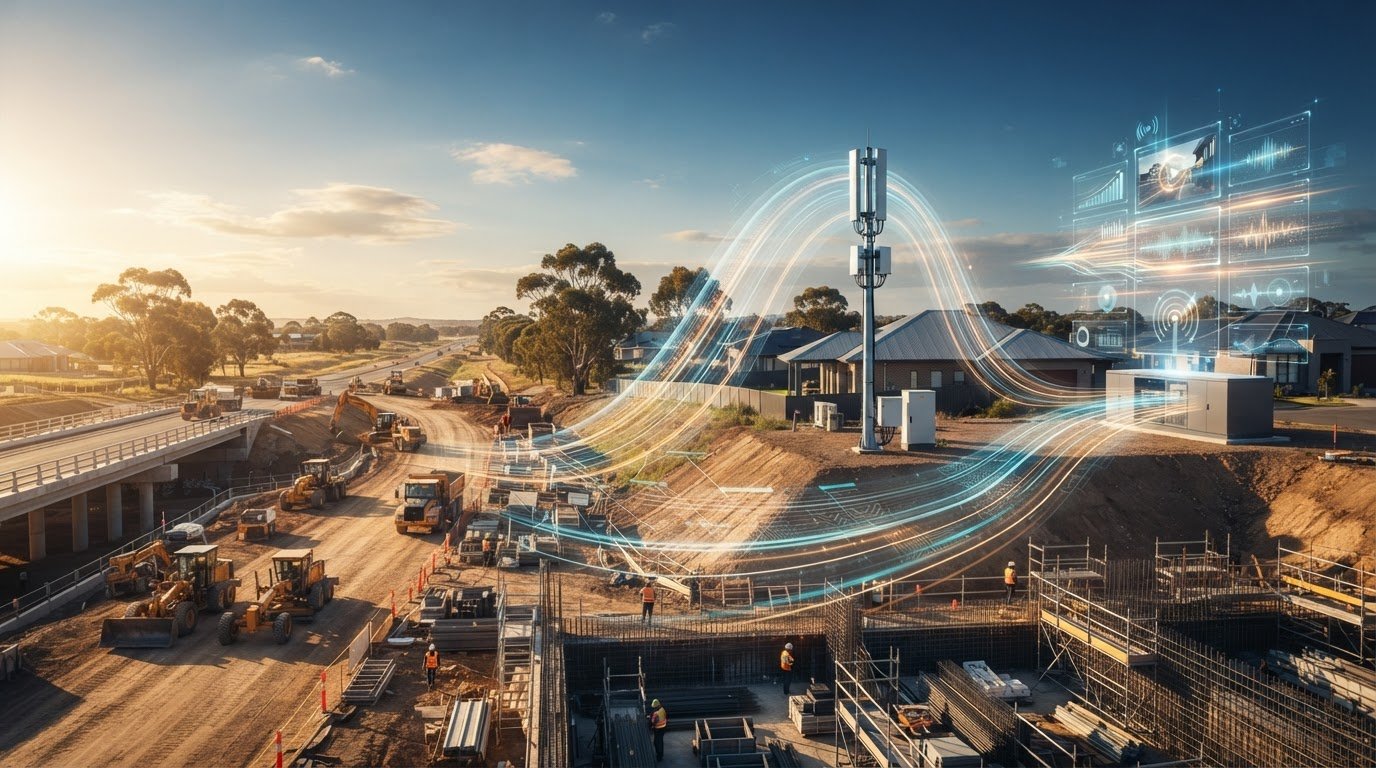
DIY security often collapses at the first sign of professional interference. When you choose between hiring vs buying construction site security cameras, the method of data storage is a critical security frontier. Local storage, such as SD cards or on-site NVRs, represents a single point of failure. If a thief removes the camera, they take the evidence with them. A managed hire model bypasses this risk by streaming encrypted footage directly to the cloud in real time. This shift from reactive "checking the tape" to proactive alerting is a cornerstone of modern Risk Management in Construction.
Most project leads underestimate the bandwidth required for consistent surveillance. Unreliable site Wi-Fi or consumer-grade SIM cards are insufficient for high-definition video. These consumer options often throttle speeds once a data cap is reached, which usually happens exactly when you need visibility the most. Managed surveillance towers utilize industrial-grade connectivity to maintain a constant link, regardless of site conditions. This ensures that real-time alerts actually reach your phone before a crime is completed, rather than hours after the site has been cleared out.
Professional Grade 4GX and Data Management
Consumer-grade SIMs fail in industrial environments because they aren't designed for the high data throughput of constant video streaming. They lack the priority access needed when towers are congested. By contrast, a managed hire service provides dedicated Telstra 4GX connectivity. This professional-grade link allows for seamless 24/7 live streaming through the Jobcam App, giving stakeholders total visibility from any device. For a deeper technical breakdown of these systems, see our Secure Cam Technology Guide.
Cloud Redundancy and AWS Hosting
Cloud redundancy is the gold standard for 2026. AWS servers provide a secure, encrypted audit trail that is admissible in Australian courts because it prevents the data tampering and corruption common with physical recorders. This infrastructure allows stakeholders to access footage from any location, whether they're in a site shed or the corporate head office. Managed cloud storage eliminates the risk of hardware failure or theft resulting in lost footage. It provides a permanent, searchable record of every project milestone and safety incident without the need for internal IT support or manual backups.
Scalability and Site Fluidity: Adapting to the Project Lifecycle
Construction sites are dynamic environments that rarely look the same two weeks in a row. As the build progresses from initial excavation to fit-out, your security perimeter must evolve. This is where the debate over hiring vs buying construction site security cameras becomes a matter of operational agility. A purchased system is inherently static. Once you've bolted cameras to a fixed point, moving them requires specialized labor, new cabling, or the risk of damaging expensive hardware. If your laydown yard moves fifty meters to make way for a new slab, your owned cameras often become useless observers of empty space.
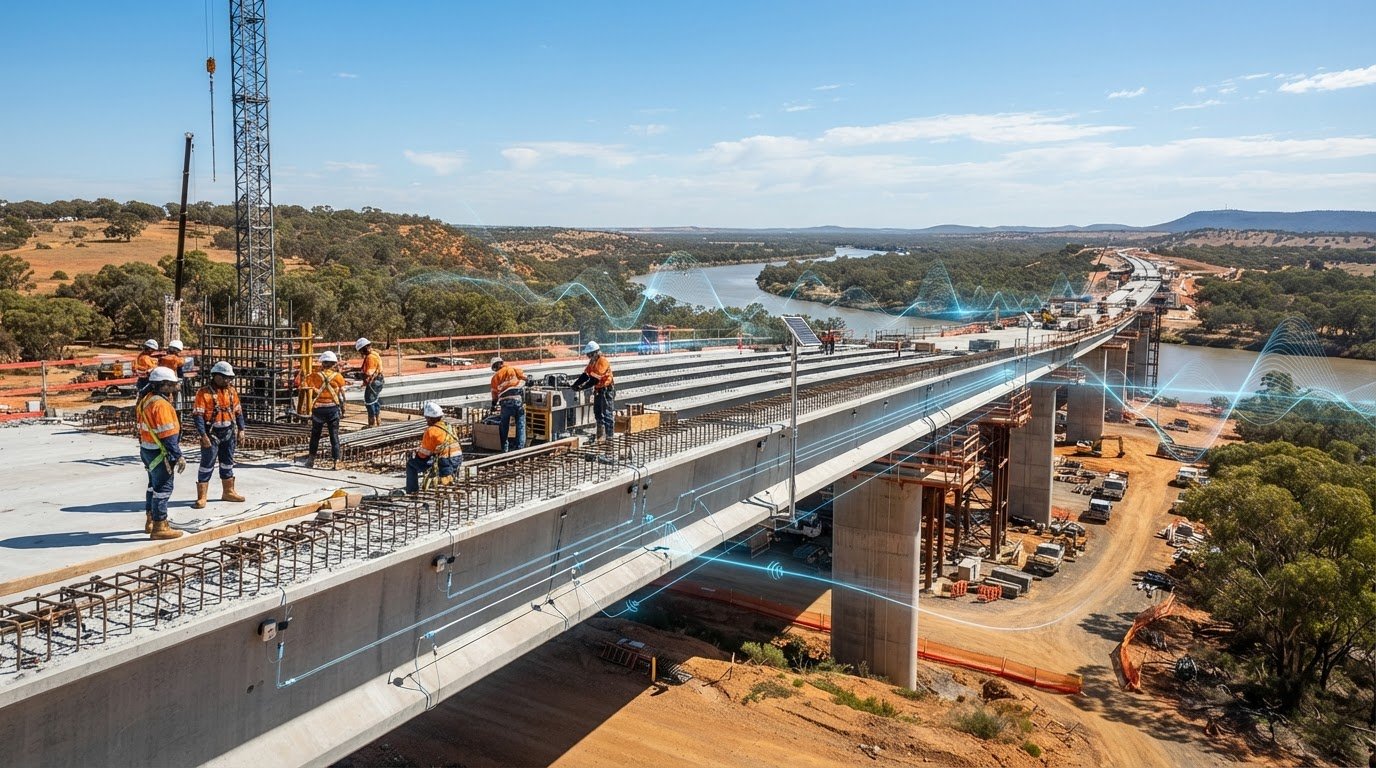
Managed solar towers solve this through rapid deployment and professional relocation. When site boundaries shift, a managed service handles the physical move and recalibration of the units. This ensures your high-definition coverage remains continuous during critical handovers. For national developers, the logistics of shipping owned, heavy solar equipment between states is a nightmare of freight costs and potential transit damage. Hiring locally through a national network allows you to have eyes on a remote site within 48 hours without the burden of long-haul logistics.
Relocation and Perimeter Management
Effective civil works security requires a setup that can follow the machinery. As trenches are dug and pipes are laid, the areas of highest risk move daily. Managed hire services provide the flexibility to reposition towers as the project footprint expands or contracts. This proactive approach prevents the common "blind spot" trap that occurs when fixed systems are left behind by the pace of the build. You get professional placement that prioritizes both sun exposure for the solar arrays and maximum visual clarity for the site team.
Responding to Evolving Site Risks
Project risks aren't uniform across the project lifecycle. You might only need high camera density for the three weeks when high-value copper or expensive kitchen appliances are stored on-site. Hiring allows you to scale your surveillance up for these high-risk windows and scale back once the materials are installed. This model also lets you swap hardware types as needs change. You can move from standard surveillance to specialized PPE detection cameras to ensure safety compliance during high-activity phases. For a deeper look at managing these transitions, consult The Professional Guide to Construction Site Security Cameras.
Don't let rigid hardware limit your project's safety. You can secure your next project phase with a scalable hire plan that adapts as fast as your site does.
The Business Value of the Jobcam Managed Hire Model
The decision of hiring vs buying construction site security cameras often centers on theft prevention. While security is the baseline, the managed hire model delivers significant returns through improved operational efficiency and stakeholder engagement. A solar surveillance tower isn't just a guard; it's a high-definition witness and a project management tool. By outsourcing the technical ecosystem to a specialist, your team spends less time troubleshooting hardware and more time hitting project milestones. It's about moving from a reactive security posture to a proactive management strategy.
Professional installation and decommissioning are built into the managed service. This removes the burden of assembly and calibration from your site supervisors. When a project concludes, the towers are removed without leaving behind a fleet of outdated gear in your storage yard. This creates a clean operational cycle where you only pay for the utility you consume. You get a fully managed, 24/7 monitored ecosystem that provides peace of mind without the internal labor costs of maintaining owned equipment.
Project Management and Remote Oversight
High-definition remote monitoring allows project leads to oversee multiple sites from a single dashboard. This visibility can reduce the need for routine site visits by up to 30%, saving significant travel time and fuel costs for senior staff. Beyond oversight, these cameras provide an objective record to resolve subcontractor disputes. When a delivery is claimed but not seen, or a site incident occurs, the visual evidence is indisputable. Integrating construction time-lapse cameras into your workflow transforms daily operations into a searchable, high-resolution archive of progress.
Marketing and Stakeholder Communication
The value of a managed hire model extends into the boardroom and the marketing department. Providing investors and developers with a secure web portal to view live progress builds trust through transparency. It turns a closed construction site into a visible success story. This "window" into the project is a powerful tool for keeping stakeholders informed without requiring them to step foot on a dangerous, active site.
Time-lapse footage serves as a high-impact asset for future tenders. It demonstrates your firm’s commitment to modern project management and provides a narrative of efficiency that static photos cannot match. This professional storytelling celebrates your team's achievements and documents the project's legacy for years to come. The choice between hiring vs buying construction site security cameras ultimately comes down to whether you want to manage hardware or manage a project. Build your site business case with Jobcam's managed hire services today.
Secure Your Site Visibility for 2026
The business case for the modern development landscape is clear. Shifting from equipment ownership to a managed service eliminates the technical and financial risks of hardware obsolescence while preserving your capital for core operations. By choosing a managed hire model, you gain more than just a camera; you secure a dedicated technology partner that handles the logistics of connectivity and maintenance. This ensures your project remains visible, documented, and protected from start to finish.
When evaluating hiring vs buying construction site security cameras, the true value lies in the reliability and professional grade Telstra 4GX connectivity that DIY systems cannot match. Your footage remains protected in secure AWS cloud storage, accessible via a remote app whenever you need to verify site progress or resolve a dispute. With professional installation and ongoing maintenance included, your team stays focused on the build, not the technology. It is time to transform your site surveillance from a cost center into a powerful asset for project management and stakeholder reporting.
Request a Managed Hire Quote for Your Site
Take the first step toward total site transparency and let our solar towers document your next project's success story.
Frequently Asked Questions
Is it cheaper to hire or buy security cameras for a 12-month project?
Hiring is generally more cost-effective for a 12-month project once you factor in the total cost of ownership. When comparing hiring vs buying construction site security cameras, purchase costs only cover the hardware. Hiring includes professional installation, managed data, and the removal of the unit once the job is complete. This keeps your capital free for core operations and prevents you from owning obsolete gear.
What happens if a hired solar camera tower is stolen or vandalised?
If a tower is compromised, our managed service handles the recovery and replacement process while your footage remains safe in the cloud. Unlike owned equipment where theft results in lost evidence, our towers stream data instantly to AWS. This ensures you have a secure record of the incident for insurance claims and police reports, even if the physical hardware is removed from the site.
Do I need to provide a SIM card or internet connection for hired cameras?
You don't need to provide any connectivity as our towers come with built-in industrial-grade Telstra 4GX. We manage the data plans and network stability to ensure your feed remains live 24/7. This eliminates the frustration of unreliable site Wi-Fi or consumer SIM cards that often throttle speeds during high-definition streaming, providing a seamless remote viewing experience for all project stakeholders.
Can I move the hired camera towers myself if the site layout changes?
While the towers are designed for mobility, we provide professional relocation services to maintain optimal performance. Moving a solar tower requires precise alignment for sun exposure and camera calibration for site coverage. Our team handles these shifts as your site boundaries change, ensuring your security perimeter remains intact without risking damage to the internal electronics or sensitive solar arrays.
How quickly can a managed security system be installed on a new site?
Managed solar surveillance towers can typically be deployed and fully operational within 48 hours. This rapid deployment allows you to secure a site immediately after a contract is won or a new project phase begins. We handle the logistics and setup, so your team can focus on the build while we ensure your site is visible to all stakeholders through our secure app.
What is the benefit of cloud storage over an SD card in the camera?
Cloud storage offers a tamper-proof, encrypted audit trail that an on-site SD card cannot provide. If a thief steals a camera with an SD card, the evidence is gone. By using AWS cloud hosting, your footage is saved in real-time. It's accessible from any location and remains admissible in Australian courts, providing a level of data security that physical storage simply lacks.
Does hiring include maintenance and technical support if the feed goes down?
Yes, proactive maintenance and technical support are fully included in the managed hire fee. We monitor the health of our fleet remotely to identify potential issues before they cause downtime. If a technical fault occurs, our specialists handle the repair or swap the unit out, ensuring your site never remains blind due to hardware failure, flat batteries, or firmware glitches.
Can I use the hired cameras for time-lapse videos and project marketing?
Our solar towers are powerful tools for project marketing and stakeholder reporting. The high-definition feeds are used to generate professional time-lapse videos that celebrate project milestones. This footage is a valuable asset for future tenders and keeps investors informed through a secure web portal, proving that your site is managed with the highest technical and professional standards.