OHS Incident Investigation Using CCTV: 2026 Guide
What if the clearest view of a workplace incident still doesn’t explain what caused it? OHS incident investigation using cctv footage can help establish what happened, but video may capture only part of the event. Relevant footage may also become unavailable if it isn’t secured promptly. A fair investigation treats CCTV as one source of evidence, not the final verdict.
It’s understandable to turn to footage for a clear sequence of events. The challenge is preserving the right recording, handling sensitive material responsibly and checking what the camera could not see. This guide explains how to secure relevant footage, review it alongside witness accounts and other evidence, and document findings without drawing conclusions from video alone.
Investigation findings should inform practical corrective actions, so the process supports safer work rather than simply assigning blame. For temporary and remote worksites, hired solar-powered camera towers can provide cloud-based access to recorded footage through an app or web interface. That access can help investigators retrieve material when needed, while the wider evidence and context determine what it means.
Key Takeaways
- In OHS incident investigation using cctv footage, separate what the video directly shows from assumptions about cause, intent or responsibility.
- Define the relevant incident window and secure the recording promptly, documenting how the footage is handled.
- Compare video observations with witness accounts, work records and site conditions to identify corroboration, gaps and contradictions.
- Turn supported findings into practical controls, with an assigned owner, due date and a way to verify each action.
- Hired solar-powered camera towers can provide remote access to recorded site footage through Jobcam’s app and web interface.
What CCTV footage can, and cannot, show in an OHS incident investigation
Video can give investigators a time-stamped view of visible activity, movement and changes in a work area. In OHS incident investigation using cctv footage, treat it as one evidence source, not a complete account of what happened. A recording may help establish where a person or vehicle was in view, or whether an object moved before or after an event. It cannot automatically explain why an action occurred or whether a particular person was at fault.
What can recorded footage contribute?
Start with what is plainly visible. Review relevant camera angles and, where appropriate, footage from before and after the reported incident. A sequence may show a worker entering an area, equipment moving or a change in site conditions. Use those observations to form focused follow-up questions and identify what other evidence to collect, such as work records or details of the task underway.
Visibility depends on the camera’s position, field of view, lighting and any obstructions. A person might be visible in one angle but hidden behind equipment in another. A distant or poorly lit view may not show a detail clearly enough to support a firm statement. Record these limits instead of filling gaps with assumptions.
Recorded observations describe what appears in view; conclusions explain what investigators think those observations mean.
Why video is not the whole investigation
A recording captures only what falls within its view at the time. It may not show an earlier instruction, a hazard outside the frame or the condition of equipment from another angle. Timing matters too: confirm that the footage corresponds to the reported event window before using it to build a sequence. Treat uncertain details as questions to investigate, not facts established by the clip.
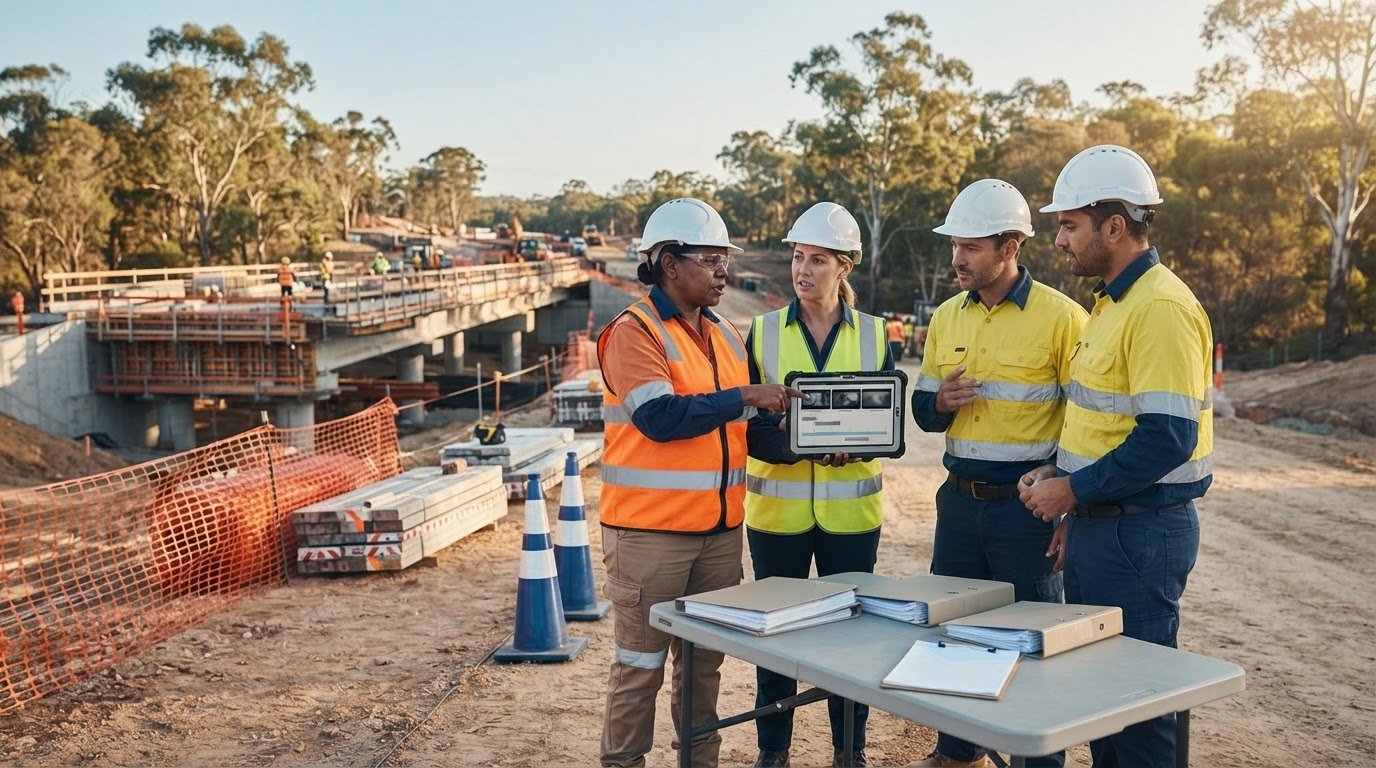
Compare what the video appears to show with witness accounts, relevant work records and physical site conditions. Agreement between sources may strengthen a finding; differences can point to missing context or a need for further inquiry. A witness may describe something outside the camera’s view, while the recording may help clarify movement or timing. Don’t dismiss either source simply because it conflicts with another.
For example, footage might show a worker near a work area shortly before an incident, but not show the task setup or the hazard itself. That image alone doesn’t establish what caused the incident or who was responsible. Record what is visible, what remains unclear and what evidence could help resolve the uncertainty. Handle identifiable footage in line with the organisation’s procedures and applicable requirements.
For construction teams, building site CCTV can provide recorded views of active work areas. The footage can support a review, but investigators still need to assess its coverage and compare it with other evidence.
How to preserve and review CCTV footage after a workplace incident
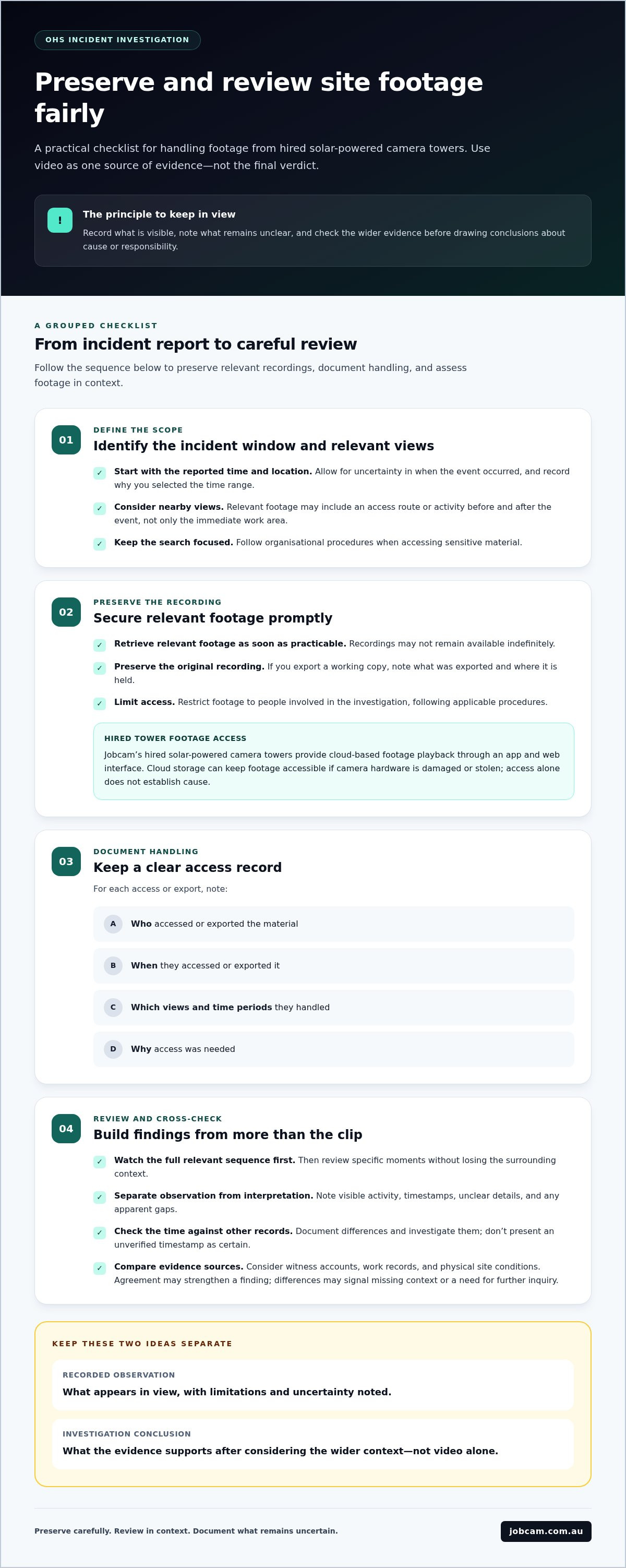
Once an incident is reported, follow a clear sequence: define the likely time window, identify relevant camera views, secure the footage, document who handled it, then review the recording. Retrieve it promptly because footage may not remain available indefinitely. Preserving relevant footage promptly protects the opportunity to review it; it doesn’t determine what caused the incident.
Start with the reported time and location, allowing for uncertainty in when the event occurred. Consider nearby views that may show people or equipment approaching or leaving the area. On a construction site, that could mean reviewing an access route as well as the immediate work zone. Keep the scope connected to the incident and follow the organisation’s procedures for accessing sensitive material.
Secure the relevant recording and document access
Retrieve relevant footage through the camera platform as soon as practicable. Preserve the original recording. If you create an exported working copy, record what was exported and where it is held. Log who accessed or exported material, when they did so, which camera views and time periods they handled, and why they needed access. Restrict access to people involved in the investigation, in line with applicable procedures.
Jobcam’s hired solar-powered camera towers provide cloud-based footage playback through an app and web interface. Cloud storage can keep footage accessible if camera hardware is damaged or stolen, helping investigators retrieve recordings without treating access as proof of cause.
Review the clip systematically
Watch the full relevant sequence before focusing on individual moments. This preserves surrounding context and reduces the risk of interpreting a short clip in isolation. Note observations separately from interpretations, including visible activity, timestamps, unclear details and any apparent gaps in the recording.
Check recorded times against relevant work records or incident accounts. If the footage time appears inconsistent with another record, document the difference and investigate it before relying on the sequence. Don’t silently adjust timestamps or present an unverified time as certain.
- Incident window: Record the reported time range and why it was selected.
- Footage handled: Note the relevant views, original recording and any exported copies.
- Access record: Log who accessed the material, when and for what purpose.
- Review notes: Separate visible events from uncertainties and interpretations.
This disciplined process supports OHS incident investigation using cctv footage while keeping the recording’s limits visible. The OSHA Incident Investigation Guidance also frames investigations around identifying causes and preventing future incidents, rather than stopping at a description of what happened. For projects that need remote access to site recordings, hired solar-powered camera towers provide a practical footage source as part of a managed hire service.
How to assess CCTV evidence fairly alongside other investigation evidence
After reviewing a recording, test what it appears to show against evidence from other sources. A clip can support or challenge an account, but it can’t independently establish every factor that contributed to an incident. Use a comparison table to keep observations, supporting information and unanswered questions visible to the investigation team.
Corroboration means comparing independent evidence sources to see where they agree, differ or leave gaps. It doesn’t mean making every account fit the video. If evidence conflicts, record the difference and investigate it rather than choosing the explanation that seems simplest.
Compare footage with accounts and records
Match visible actions and timing against accounts collected through the investigation process. Then check relevant task information, work records and site conditions. If an account describes a warning that isn’t audible or visible in the footage, that doesn’t prove the warning wasn’t given; the camera may not capture it. Record inconsistencies as questions to follow up, not automatic evidence that someone is being dishonest.
| Evidence source | What to record | Follow-up question |
|---|---|---|
| CCTV footage | Visible movement, actions, sequence and timestamp | What is outside the camera view or unclear? |
| Witness account | What the person recalls seeing, hearing or doing | Where were they, and what could they observe? |
| Work records | Task information and relevant recorded activity | Do records align with the event sequence? |
| Site conditions | Relevant layout, equipment position or conditions | Could these conditions explain a gap or difference? |
For example, footage may show a person entering a work area while a witness recalls that access had been restricted. Treat both as evidence to examine. Check the recording’s field of view and relevant work information, then clarify what the witness observed and when. The aim is to establish what each source can reliably contribute, not to force a single account prematurely.
Handle privacy, access and interpretation carefully
Keep footage review focused on the incident and its legitimate investigation purpose. Limit access under the organisation’s procedures, and handle identifiable footage in line with applicable policies and requirements. Privacy obligations can vary, so verify the requirements that apply to the workplace before sharing or using recordings beyond the investigation.
In investigation notes, separate three things: confirmed observations, reasonable inferences and unresolved questions. For instance, “a vehicle enters the visible area” is an observation; “the vehicle may have obstructed the worker’s view” is an inference to test. This distinction helps prevent a plausible explanation from being reported as a proven cause.
In OHS incident investigation using cctv footage, video is most useful when it helps test a hypothesis against accounts, records and physical conditions. Agreement can strengthen a finding. A contradiction can reveal where more evidence is needed. Either way, document the basis for conclusions and keep uncertainty visible until the available evidence supports a reasoned finding.
Turn CCTV investigation findings into corrective actions
An investigation is only useful if its findings lead to safer work. Treat footage as a way to identify or test contributing conditions, not as the corrective action itself. Separate confirmed findings from assumptions, then ask what work practice, equipment condition, site layout or control may have contributed. Avoid assigning blame where the evidence doesn’t support it. Focus on changes that reduce the chance of a similar event.
For example, if the investigation confirms that vehicles and workers shared a poorly separated route, consider practical controls such as changing traffic flow, improving separation or revising the work procedure. The right response depends on the confirmed site conditions and the organisation’s risk controls. Document why each action was selected and how it addresses the finding.
Translate findings into site controls
For each supported finding, define a clear action and record who is responsible, when it is due and how completion or effectiveness will be verified. An action such as “remind workers to be careful” is difficult to assess. A more useful action identifies the change, assigns an owner to implement it and sets out how the revised process will be checked.
- Finding: State the evidence-supported hazard or process gap.
- Control: Describe the practical change intended to address it.
- Owner and due date: Assign responsibility and a completion date appropriate to the organisation.
- Verification: Specify how the team will confirm the action is complete and working.
Include decisions and follow-up in the organisation’s investigation records. Footage can help show where a process broke down, but a site control or work-practice change is what addresses the underlying risk. This distinction keeps OHS incident investigation using cctv footage focused on prevention, rather than treating review of a recording as the end of the response.
Close the loop after the investigation
Share relevant findings with affected teams in a way that supports learning and protects sensitive information. Track actions until they’re complete, then assess whether the change is effective in practice. If it isn’t, review the remaining risk and decide whether further controls are needed. Keep the review proportionate to the action and the organisation’s processes.
Consider whether camera positioning or the process for accessing footage needs adjustment. A recording may reveal that a critical part of a work area wasn’t visible, or that project teams need a clearer way to retrieve relevant views. Any change should support site oversight and incident review while remaining aligned with the organisation’s procedures for footage use. For permanent commercial facilities, security specialists like AlphaLVC can help optimize camera placement to eliminate blind spots, while teams planning temporary coverage for a project can consider how solar-powered camera towers fit into their wider safety processes.
For projects where remote access to recorded site footage would support timely review, explore hiring solar-powered camera towers for your site.
How hired solar camera towers can support site incident investigations
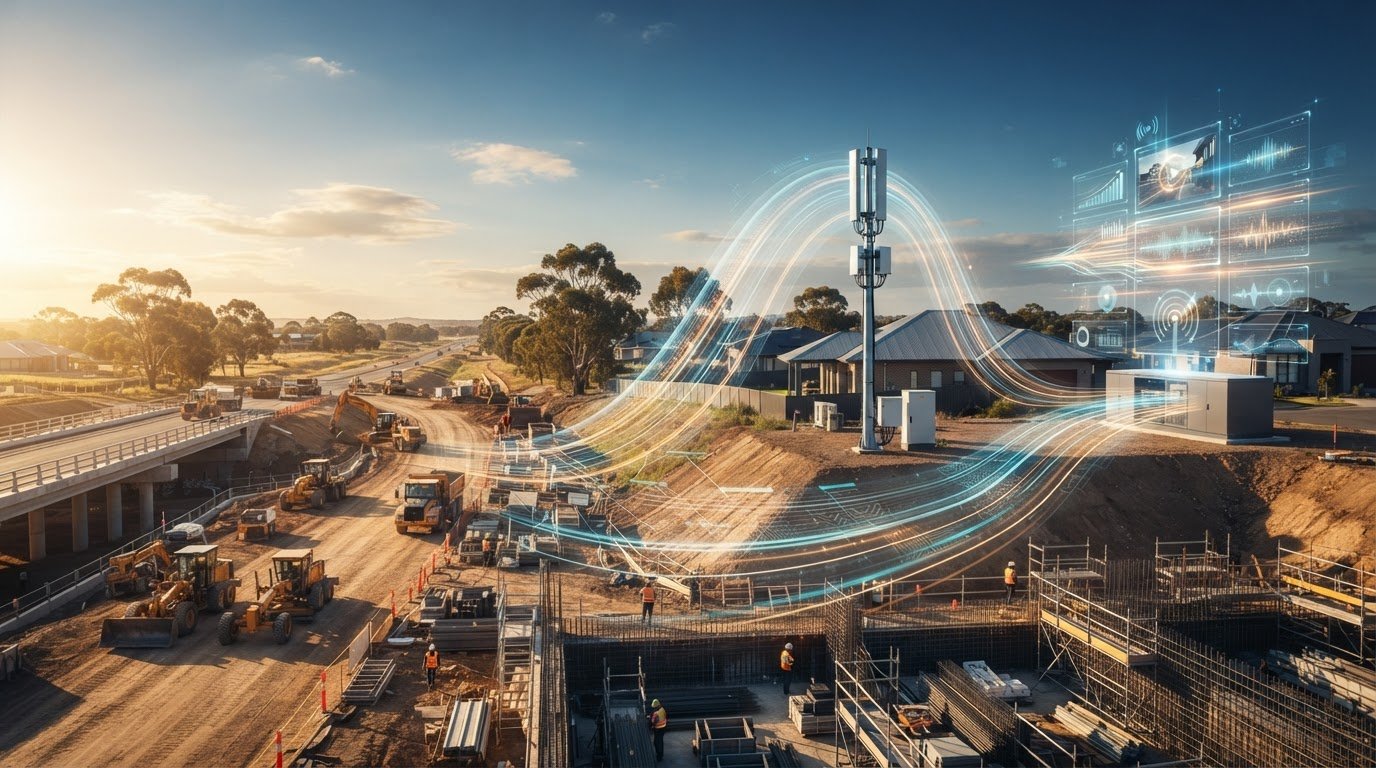
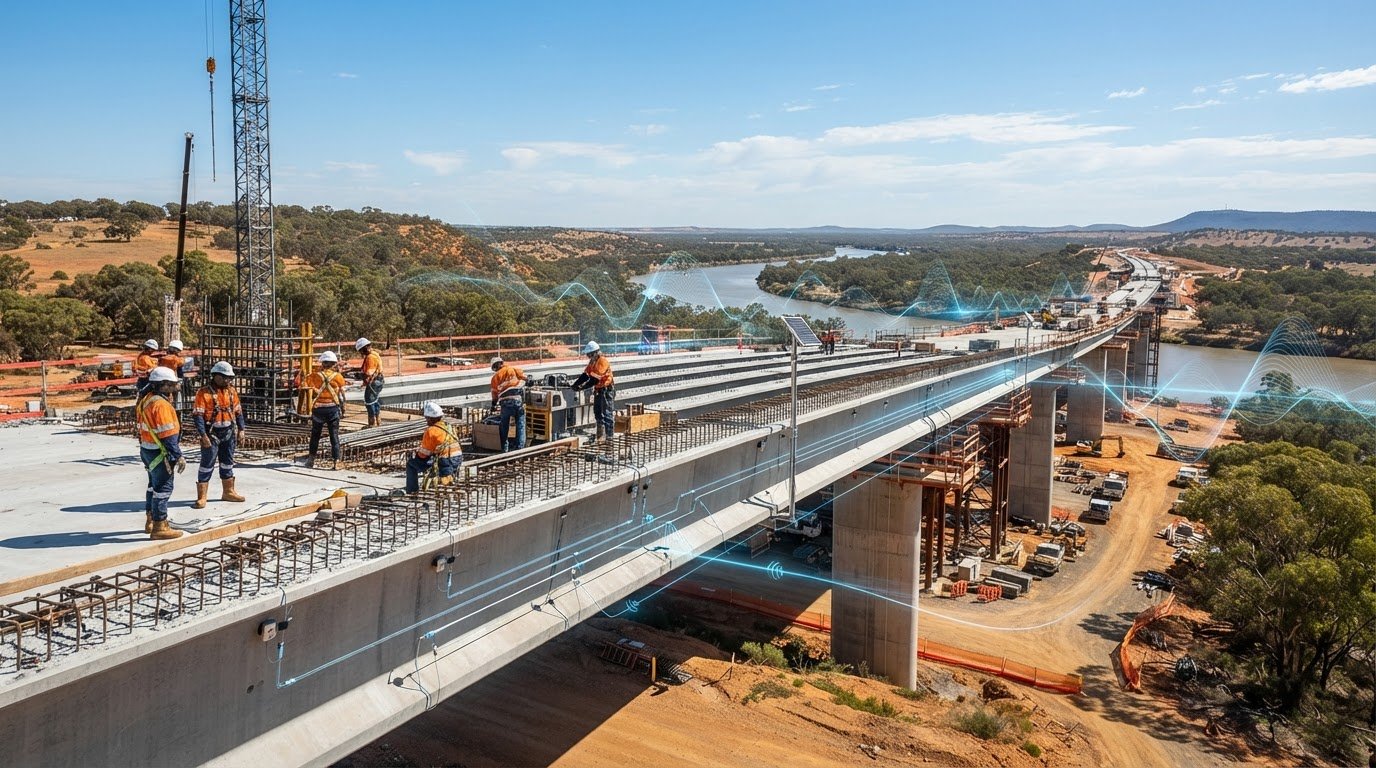
On construction projects, work areas can shift and permanent infrastructure may be impractical. While permanent facilities might rely on dedicated services for CCTV installation Abu Dhabi or local security contractors elsewhere, temporary sites can hire a solar-powered camera tower to provide access to site footage without fixed infrastructure. For investigations, the practical value is that recorded views may help authorised teams review activity around an event. They remain one source of evidence, not a complete account of what happened or why.
Plan camera coverage around investigation needs
Consider where work takes place, how people and vehicles move through the site, and which access points or work areas may be relevant. Positioning should provide useful visibility while accounting for obstructions, changing layouts and areas outside the camera’s view. Coverage planning can improve what is visible, but it can’t guarantee that every event or contributing condition will be recorded.
For example, a camera view covering a site entry may help show movement through that access point, while a separate view of a work area may provide context about nearby activity. A camera coverage plan should reflect the project’s layout and changing site activities. Jobcam’s building-site CCTV hire supports site visibility with a flexible camera setup.
Use remote access as part of a managed hire service
Jobcam’s cloud-based platform provides recorded footage playback through an app and web interface, so authorised project teams can access available recordings remotely. Telstra 4GX connectivity supports the platform, while footage is stored in AWS-hosted cloud storage. This can help investigators retrieve recordings if camera hardware is damaged or stolen, but access to a clip doesn’t establish cause on its own.
The hire service includes installation, maintenance and technical support. These services help keep a site-camera setup in place as project conditions change. Remote access can also let team members review available footage without being at the site, subject to the organisation’s procedures for accessing and handling recordings. Details of remote monitoring cameras explain how remote viewing can support oversight across project locations.
For OHS incident investigation using cctv footage, plan camera coverage before an incident occurs. Identify relevant work areas, consider how site activity may change and make sure teams understand how to access recorded footage. A hired tower can provide another useful view, while investigators still need to assess the recording alongside accounts, work records and site conditions.
Explore Jobcam’s solar camera tower hire service for construction and remote project sites.
Build investigation readiness into your next project phase
Make incident readiness part of project planning, not a task improvised under pressure. Decide who will coordinate a review, how relevant footage will be accessed and documented, and how investigation actions will be tracked through to verification. Revisit the process as work areas and site activities change. A clear approach helps teams move from an incident to informed decisions and practical prevention.
Use OHS incident investigation using cctv footage as one part of a broader effort to learn from events and strengthen how work is planned. Appropriate site visibility can support that effort, while fair assessment and follow-through remain the responsibility of the investigation team.
Explore Jobcam’s solar camera tower hire service and plan for clearer site visibility on your next project. A practical process helps your team respond with confidence and keep safety improvements moving forward.
Frequently Asked Questions
Can CCTV footage be used in an OHS incident investigation?
Yes. CCTV footage can be considered as one source of evidence, provided its use is appropriate for the investigation and handled under relevant workplace procedures. It may help clarify visible movement or timing, but it won’t capture every factor behind an event. In OHS incident investigation using cctv footage, keep the review focused on the reported incident and assess the recording alongside other available information.
How should you preserve CCTV footage after a workplace incident?
Identify the likely time and location of the event, then preserve relevant footage before it becomes unavailable. Include the surrounding sequence and any camera views that may add context, not just a short clip of the incident itself. Keep the original recording intact, document any working copies and note who handled the footage. Follow your organisation’s procedures for storage and access.
Can CCTV footage alone determine the cause of a workplace incident?
No. Footage can help test a possible explanation, but it may not show instructions, equipment condition, hazards outside the camera view or what a person could see at the time. Compare visible events with accounts, task information and site conditions. If more than one explanation fits the recording, keep those possibilities open until other evidence supports or rules them out.
What happens if CCTV footage does not clearly show the incident?
Record the limitation rather than treating unclear footage as proof that an event did or didn’t happen. Check whether another view or a wider time period provides useful context, then identify what the recording cannot establish. Investigators can pursue other evidence, such as worker accounts, relevant work records or physical site conditions. Be clear in the findings about what remains uncertain.
Who should be allowed to review workplace CCTV footage?
Access should be limited to people with a defined role in the investigation or another authorised workplace function. Set clear expectations about confidentiality, permitted use and how observations should be recorded. Avoid circulating clips broadly or using them for unrelated purposes. Your organisation’s policies and applicable privacy or surveillance requirements should guide access, handling and any further sharing of identifiable footage.
How can solar camera towers support an OHS investigation on a remote site?
Hired solar-powered camera towers can provide recorded views at remote or temporary worksites where fixed infrastructure is challenging. Jobcam’s cloud platform allows authorised teams to access available footage through an app or web interface, supporting review when investigators aren’t on site. Plan coverage around relevant work areas and access points, and remember that a recording may not capture every event or explain its cause.